Are slip-and-fall accidents a concern in your commercial kitchen or warehouse? These incidents can lead to costly injuries and downtime, making workplace safety more important than ever.
Slip-resistant epoxy coatings offer a proven solution, reducing slip-and-fall risks by up to 85%. By creating a textured, high-traction surface using aggregates like aluminum oxide and quartz, these coatings remain effective even on wet or oily floors. They also meet OSHA’s safety standards with a friction coefficient above 0.42.
Durable for 5–7 years with proper maintenance, slip-resistant epoxy is a smart investment that protects your team and your business.
Key Highlights
- Slip-resistant epoxy coatings use specialized aggregates such as aluminum oxide and quartz to enhance traction in wet or oily environments.
- Regular upkeep, including daily sweeping and weekly mopping with pH-neutral cleaners, helps maintain long-lasting slip resistance.
- Solutions tailored for specific needs include silica sand additives and textured surfaces, designed to tackle kitchen grease and accommodate warehouse forklift traffic.
- High-performance coatings achieve a coefficient of friction above 0.6 in wet conditions, surpassing OSHA’s minimum requirement of 0.42.
- Applying the coatings at temperatures between 10°C-35°C can reduce slip-related accidents by up to 60% in commercial spaces.
Understanding Slip-Resistant Epoxy Technology
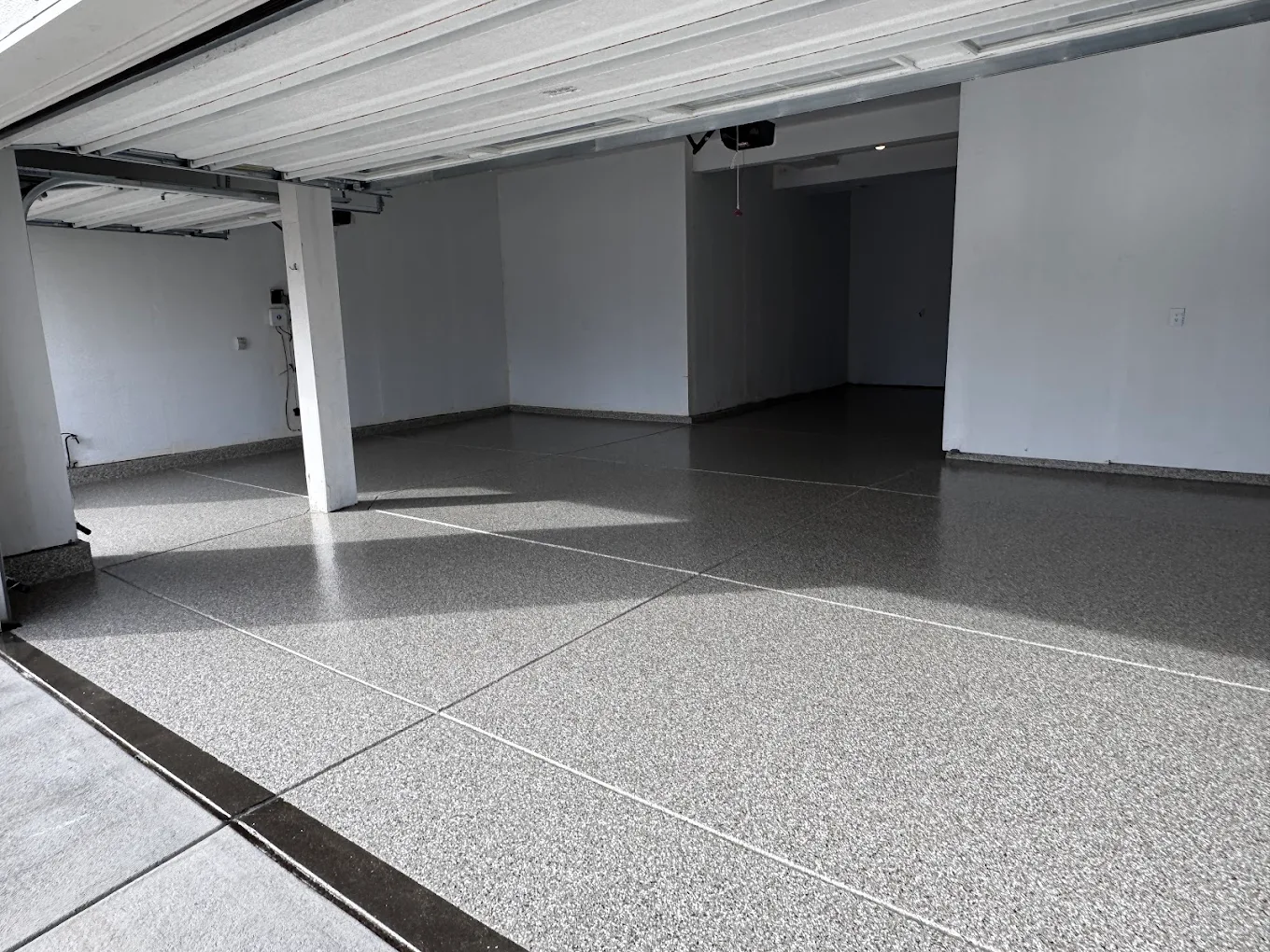
Traditional epoxy flooring has long been recognized for its strength, but slip-resistant variants take safety to the next level. By incorporating specialized aggregates such as aluminum oxide, quartz, and sand, these advanced formulations create microscopically textured surfaces that significantly reduce slip hazards, especially in wet or oily environments.
This technology ensures that your workplace is not just durable but also safe, minimizing the risk of costly accidents. Additionally, EvrStep’s commitment to quality ensures that these coatings provide long-lasting protection against wear and tear. The seamless application of this flooring type also enhances hygiene, making it ideal for environments like commercial kitchens.
What sets slip-resistant epoxy apart is its customizable nature. You can select texture levels ranging from fine to coarse based on your specific environment—think locker rooms versus industrial kitchens. Additionally, water-based options are ideal for barefoot areas, maintaining a safe and comfortable surface. The use of 100% solid content further guarantees lasting durability and chemical resistance, making it a smart choice for businesses that prioritize both safety and longevity. Moreover, EvrStep epoxy coatings offer additional anti-slip options to further enhance workplace safety.
The non-slip properties are achieved through a meticulous process of blending aggregates into the coating during application, ensuring a uniform distribution of grip-enhancing particles across the entire surface. This approach not only enhances traction but also preserves the integrity of the coating, offering consistent slip resistance throughout its lifespan.
By addressing common safety concerns with a proven solution, you can create a workplace where employees feel secure and focused, ultimately benefiting your bottom line. Investing in commercial epoxy flooring ensures a robust solution that withstands daily wear while promoting safety.
Regulatory Requirements and Safety Standards
The Occupational Safety and Health Administration (OSHA) sets a benchmark with a minimum dynamic coefficient of friction of 0.42 for wet conditions. This is not merely a number; it represents the threshold between a safe workplace and one fraught with risk. Regular safety inspections are vital to ensure that flooring retains its traction, particularly in environments exposed to moisture, grease, or oil. Additionally, using exterior epoxy coatings can provide enhanced resistance to moisture and surface abrasion, further contributing to safety. Utilizing UV-stable polyaspartic coatings can also enhance traction and durability in high-traffic areas.
In food processing facilities, regulatory compliance is multifaceted. The Food and Drug Administration (FDA) and the United States Department of Agriculture (USDA) impose stringent requirements for surfaces that are not only slip-resistant but also non-porous and seamless. These surfaces must endure harsh cleaning chemicals and extreme temperatures, aligning with standards set by ASTM International. For instance, ASTM C1028 evaluates friction, while ASTM D4060 assesses abrasion resistance.
When considering industry-specific applications, additional attributes come into play. For pharmaceutical labs, static-dissipative properties are essential to prevent electrostatic discharge, while aviation facilities must consider fuel resistance to ensure safety and compliance. Organizations are tasked with meticulously documenting maintenance protocols and safety measures, as failure to do so can result in severe penalties—ranging from hefty fines to potential facility closures for serious violations.
Understanding and implementing these regulatory requirements is key to not only maintaining a safe work environment but also protecting the organization from financial and operational setbacks. The emphasis on safety should never be underestimated; it is both a business imperative and a moral obligation. Furthermore, utilizing durable epoxy coatings can enhance both safety and aesthetic appeal in high-traffic areas.
Application Methods and Performance Benefits
Slip-related accidents in workplaces can lead to significant financial losses and productivity drops. With slip-resistant epoxy coatings, you can reduce these incidents by up to 60%, especially in high-risk areas like commercial kitchens. Mastering the application of these coatings is crucial, and it requires meticulous techniques and the right environmental conditions to ensure their effectiveness.
One effective method involves broadcasting additives onto wet epoxy, which enhances traction while maintaining a smooth surface. Alternatively, using textured rollers can also achieve this goal. Proper application is essential, as it mandates a strict temperature range of 10°C-35°C, with a cure time of 24-48 hours before foot traffic and 72 hours before equipment use. A notable tip is to incorporate light sanding between coats, which can improve mechanical bonding by an impressive 40%.
The end result? A surface that maintains a coefficient of friction above 0.6 in wet conditions and can endure over 10,000 scrub cycles in commercial environments. Moreover, these high-performance coatings exhibit remarkable chemical resistance, standing up to degreasers, fats, and thermal shock ranging from -30°C to 120°C. This durability not only enhances safety but also promises a service life of 5-7 years, even under heavy industrial use. Additionally, you can contact EvrStep for a free estimate to discuss tailored solutions for your specific project needs.
Maintenance Strategies for Long-Term Protection
Are you aware that slip-resistant epoxy coatings can significantly enhance safety in your facility, but without proper maintenance, their effectiveness can diminish quickly? Many business owners underestimate the importance of routine upkeep, leading to potential hazards and costly repairs. In fact, a well-maintained epoxy floor can last for over a decade, but neglecting it can cut that lifespan in half or more.
To ensure these coatings perform optimally, start with daily sweeping using soft-bristled brooms to eliminate abrasive particles that can wear down the surface. Weekly mopping with pH-neutral cleaners not only maintains the aesthetic appeal but also preserves the slip resistance that is critical for safety. Addressing spills immediately with non-abrasive tools can prevent both chemical degradation and unsightly stains.
Preventive measures are essential. High-quality entrance mats can trap dirt before it enters your facility, while color-coded floor markings improve hazard visibility, guiding employees and visitors safely throughout the space. To protect the surface, consider applying a high-gloss polyurethane topcoat annually. Additionally, using anti-fatigue mats at stationary workstations can enhance comfort and productivity.
Regular inspections are vital for spotting issues early. Monthly checks can identify potential cracks or delamination before they escalate into serious problems. Furthermore, quarterly slip resistance testing is crucial to ensure that safety standards are consistently met.
For optimal performance, maintaining adequate lighting levels is essential, as it influences overall safety and visibility. Training staff on proper cleaning protocols ensures that everyone is on the same page regarding maintenance. Storing emergency spill kits in easily accessible locations can save precious time during unforeseen incidents.
Industry-Specific Solutions and Case Studies
Ensuring safety in high-traffic environments is a top priority for business owners, especially when slip-and-fall incidents can lead to costly injuries and liability claims. Implementing slip-resistant epoxy coatings can reduce these incidents by up to 85%. This underscores the importance of investing in specialized flooring solutions that meet the unique needs of various industries.
Take commercial kitchens, for instance. These bustling spaces are notorious for grease accumulation and frequent liquid spills, making safety a constant concern. By utilizing innovative materials such as silica sand additives and textured surfaces, these kitchens have significantly improved their safety profiles, effectively combating slip hazards.
Warehouse environments face their own set of challenges. Here, heavy-duty epoxy solutions crafted from advanced polymer blends are proving their worth under extreme conditions. Distribution centers have reported notable enhancements in workplace safety after adopting customized coatings designed to endure the rigors of forklift traffic and fluctuating temperature conditions. These tailored solutions not only safeguard employees but also enhance operational efficiency.
Food processing facilities, in particular, benefit from USDA-approved epoxy formulations that offer both antimicrobial properties and enhanced grip. These coatings are essential for meeting stringent regulatory requirements while ensuring optimal traction, even in wet conditions. The combination of safety and compliance is critical for maintaining a smooth operation and protecting your bottom line.
For business owners navigating the complexities of workplace safety, investing in high-quality, industry-specific coatings is not just a recommendation—it’s a necessity. By understanding the real-world applications and benefits of slip-resistant epoxy, you can make informed decisions that enhance safety and performance in your environment.
In Summary
Slip-resistant epoxy coatings are essential for safety in commercial kitchens and warehouses, helping prevent workplace accidents and ensuring compliance with safety regulations. Proper application and regular maintenance enhance both durability and efficiency.
EvrStep Seamless Coatings offers expert epoxy solutions for businesses and homes across the Denver Metro area. Our precise application ensures safer environments, with customized, reliable coatings that protect and perform.Discover how our services can enhance safety and efficiency with durable, slip-resistant surfaces designed for demanding environments, such as commercial kitchens and warehouses, by visiting EvrStep Seamless Coatings for more information on slip-resistant epoxy coating solutions.