
A garage floor that looks clean on the surface can still fail within two years if moisture vapor pushes up through the concrete, and most coatings rely on a single day’s test reading to decide whether protection is needed. The delamination starts at the edges or in patches, and by the time it is visible the only fix is removal and reinstallation. EvrStep Epoxy Coatings installs garage floor coatings in Parker using a moisture vapor barrier base coat on every floor, eliminating the guesswork and protecting the investment from day one.
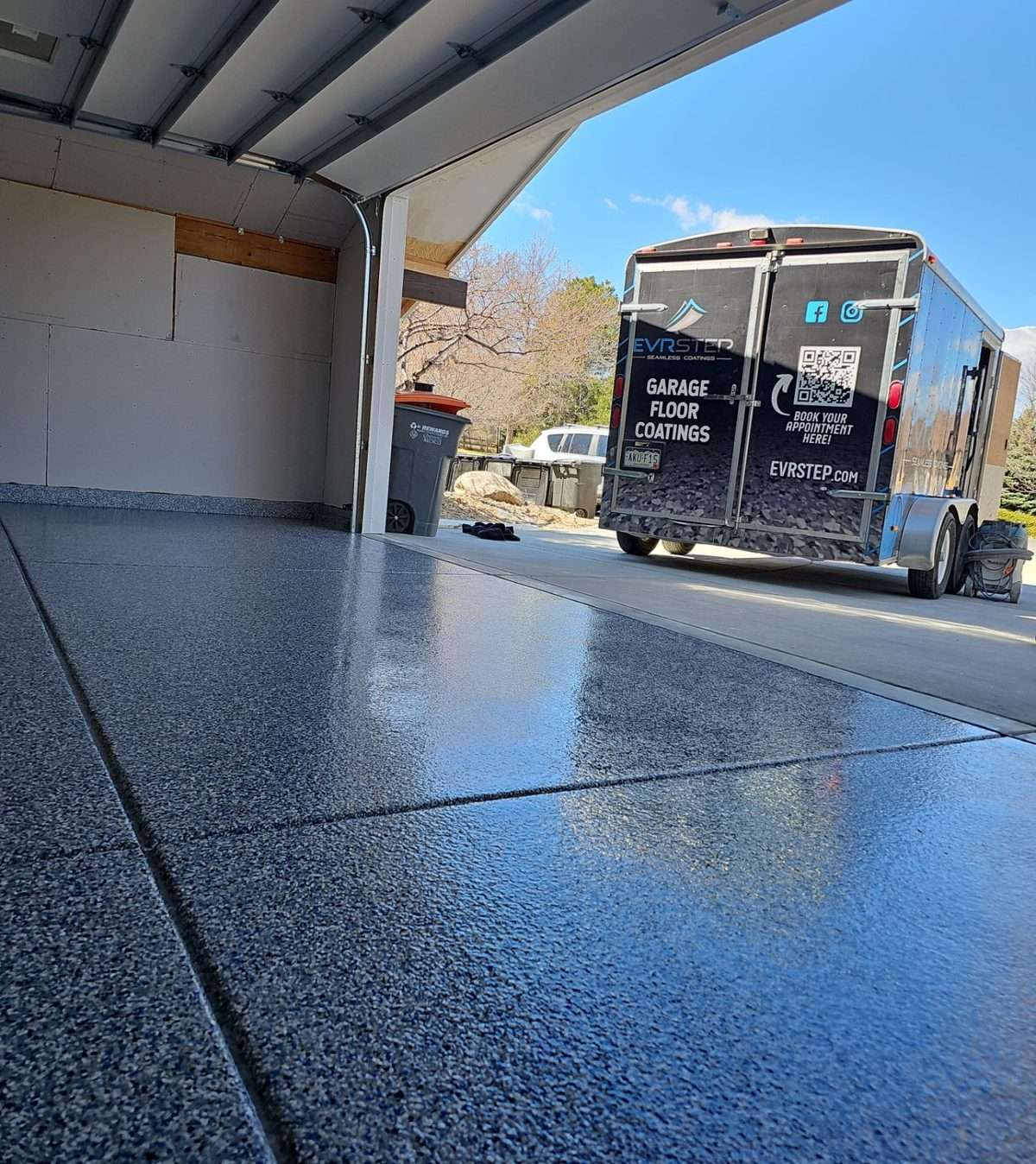
The durability of garage floor coatings in Parker’s freeze-thaw climate depends on verifiable prep standards and warranty backing. EvrStep Epoxy Coatings maintains documented mechanical profiling protocols, an A+ Better Business Bureau rating, and a 21-year delamination warranty that reflects confidence in long-term adhesion performance.
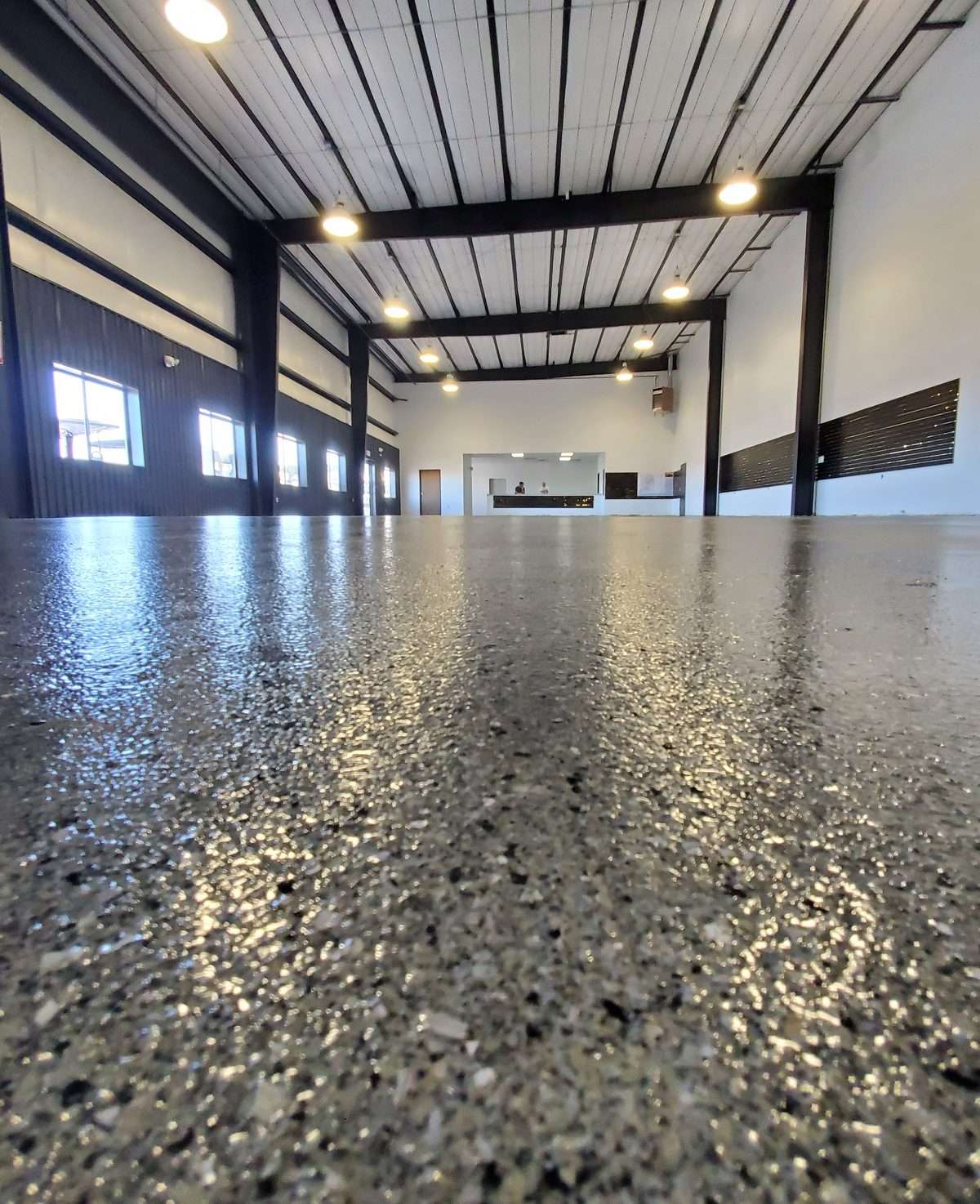
Before committing to garage floor coatings, one thing is worth saying plainly: the application temperature determines more than the cure schedule. Concrete that reads 45°F at 8 a.m. in a Parker garage will reject primer adhesion no matter how expensive the resin system, and most failures traced back to delamination started exactly there.
Audrey came to us anxious about moving her freezer and navigating steps during the project; we staged the work in phases, so essential garage access stayed open, and the floor held through two freeze-thaw cycles without a single edge lift. Bobbi arrived frustrated after years of watching cracks widen and stains set into aged concrete; after crack chasing, spall repair, and a six-inch cove base install, cleanup that used to require scrubbing took one pass with a damp mop.
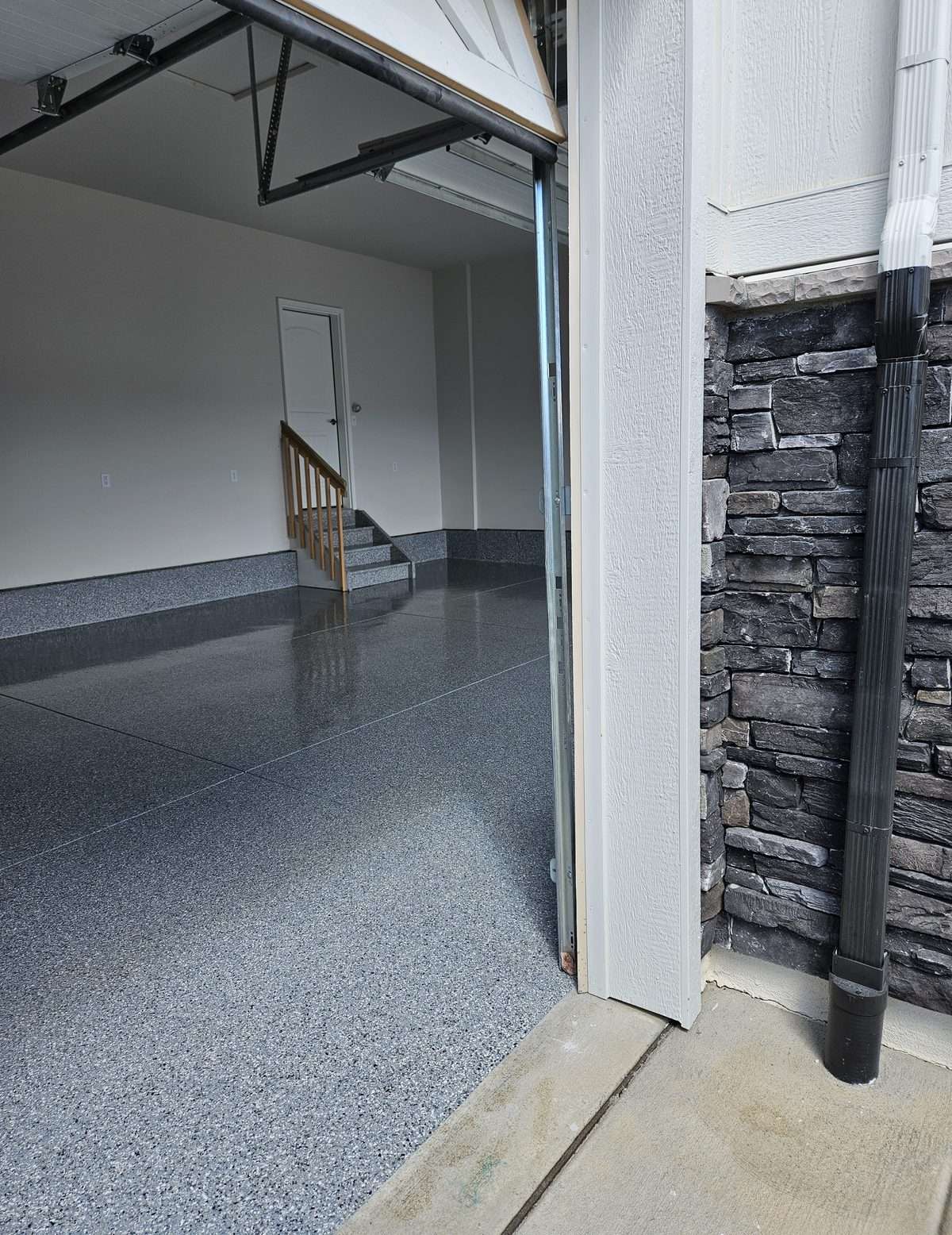
Garage floor coatings that last are the ones installed over a substrate that was actually ready for them. Moisture testing, mechanical profiling, and UV-stable topcoats are not upsells; they are the variables that decide how long the floor stays bonded to the slab.
We run ASTM F2170 in-situ RH probes on every slab before specifying the system, which removes the guesswork behind most delamination failures.
Diamond grinding to ICRI CSP-2 creates the mechanical bond that holds under thermal cycling; crack chasing and urethane fill prevent telegraph-through within the first winter.
Troy came to us after researching systems that could handle Parker’s UV exposure without yellowing; we installed a polyaspartic topcoat over an epoxy base, and his garage held through two winters of magnesium chloride tracking without a single lift at the threshold, at a typical installed cost of $4 to $10 per square foot, depending on prep requirements and flake customization.
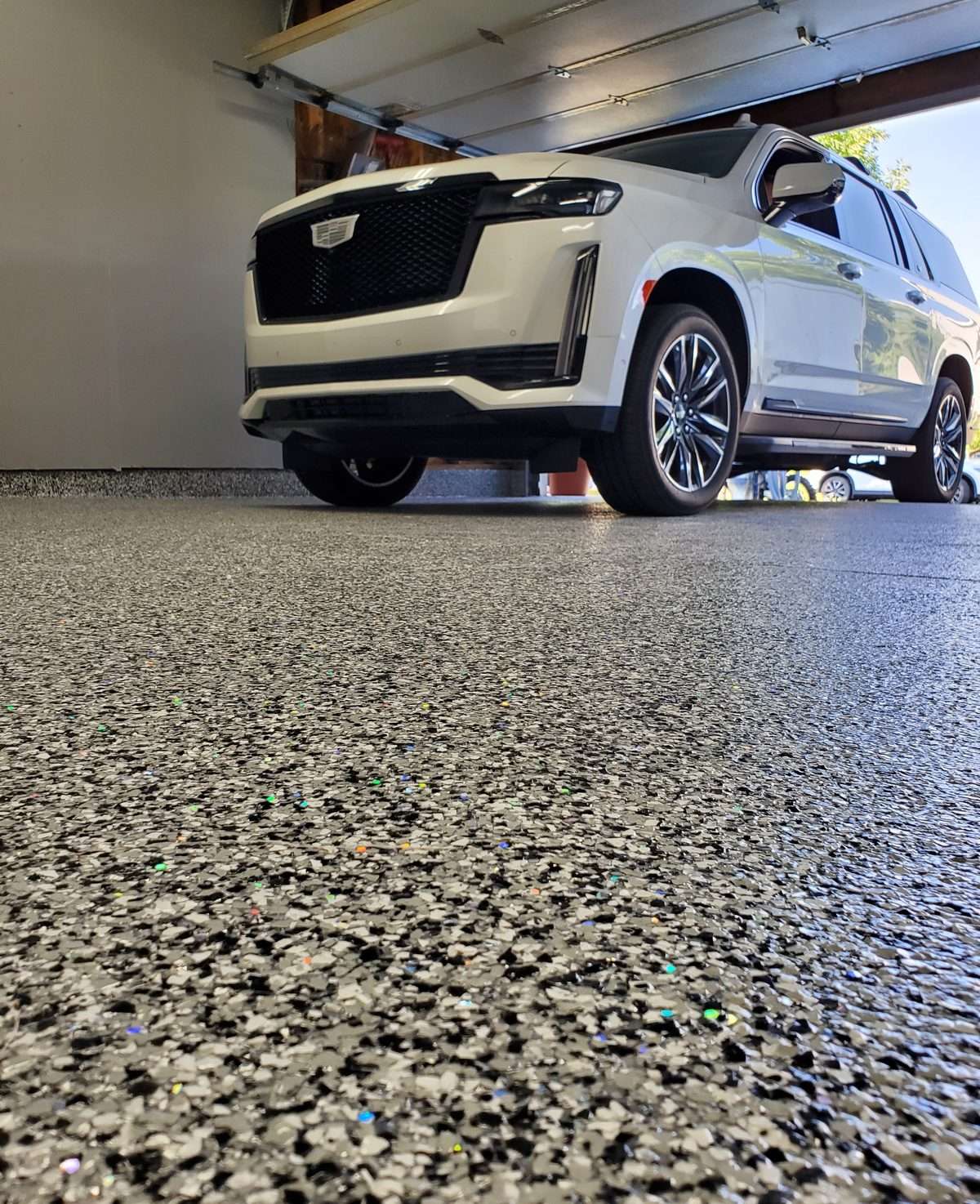
Garage floor coatings projects that finish on time in Parker depend less on installer speed and more on whether the slab was tested for moisture and profiled correctly before the first coat goes down. The variable that delays most jobs is discovering a condition during the application that should have been caught during the walkthrough.
Substrate temperature determines cure chemistry more than ambient air readings. A slab that sits at 48°F overnight in March will reject adhesion even when the garage feels warm by noon, creating delamination risk that only surfaces months later when thermal cycling starts.
Moisture remediation and crack repair drive the timeline, not the coating application itself. David came to us needing foam expansion joints flattened and smoothed before we could apply epoxy; the prep work took a full day, but the two-day project delivered a floor that handled the mountain climate without issue. Most two-car garages with clean, dry slabs finish in one visit at a typical cost of $4 to $10 per square foot for professional epoxy systems.
Properties at higher elevations or on dirt roads face heavier dust infiltration and more pronounced freeze-thaw cycling, which means the substrate prep and moisture barrier become non-negotiable rather than optional upgrades. Sherry needed her project started early and completed ahead of schedule so the floor could cure fully before winter weather arrived; we moved freezers and finished ahead of the original schedule.
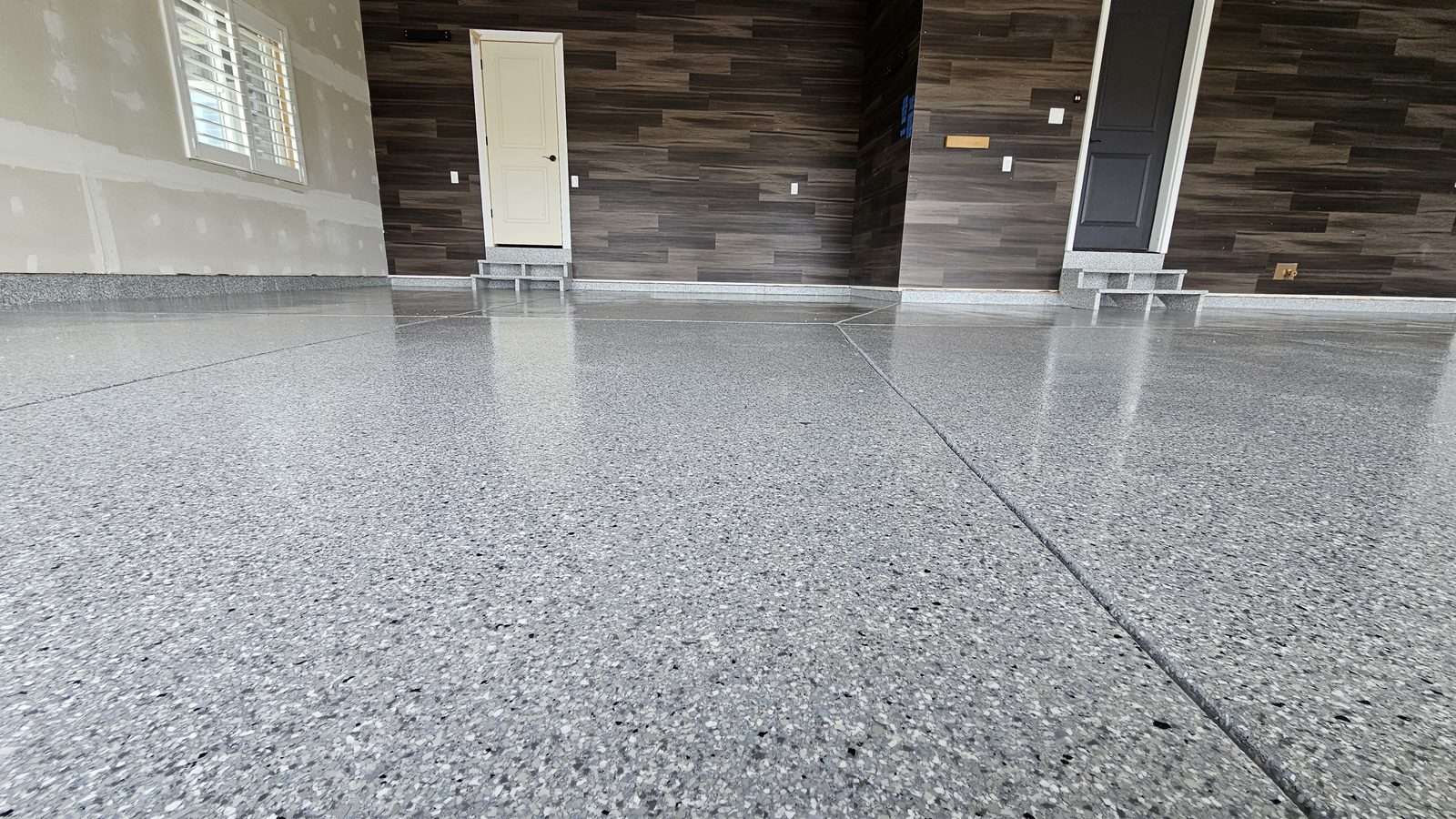
Most of the decisions on this page are about preparation, because preparation is what decides whether a floor lasts. The other decision is what actually goes down on top, and the three garage floor coatings systems we install answer different questions.
Epoxy base coats do the structural work. Epoxy is the layer that bonds to the prepared slab and carries the film thickness, which is why it sits underneath almost everything else. On its own it is the most economical route, and it gives up some resistance to sunlight, so it suits a garage that takes little direct light through the door or windows. Our epoxy garage floors page covers that build in detail.
Polyaspartic topcoats are about what the floor has to survive afterwards. They hold color under UV where a standard epoxy will amber, and they cure faster in the cold, which matters when the work happens outside high summer. They go over an epoxy base rather than replacing it, and the detail sits on our polyaspartic garage coatings page.
Flake broadcast is the texture and appearance decision. Vinyl flake is scattered into the wet base coat and locked under a clear topcoat, which hides slab imperfections, adds grip underfoot, and sets how the finished floor reads. Density and blend are chosen rather than assumed, and the options are on our garage floor flake systems page.
Most Parker garages end up with all three: an epoxy base, a flake broadcast, and a polyaspartic clear over the top. The reason to understand them separately is that a quote can leave one out. Comparing two quotes for garage floor coatings means checking which layers each one actually includes, not just which total is lower.
Ask three contractors when you can park on a new floor and you will get three answers, each stated as a fact. The reason is that cure time is not a fixed property of the coating. Garage floor coatings cure as a function of the temperature the slab and the air hold while the chemistry finishes, and it moves a long way across the range a Parker garage actually sees.
Manufacturers publish this rather than leaving it to judgement. The data sheet for a two-part epoxy floor coating gives the schedule as a grid:
Those figures come from a published epoxy floor coating data sheet, and their shape matters more than the exact numbers: the distance between the coldest row and the warmest is more than double.
Two things follow for garage floor coatings in Colorado. A March installation and a July installation are not the same job even with identical materials, so a return-to-service date quoted without reference to temperature is a guess. And the same manufacturers set a floor as well as a curve: a flake broadcast system in the same range specifies a minimum of 50 degrees Fahrenheit for both the air and the substrate, which is why a slab sitting at 48 degrees gets rescheduled rather than coated.
EvrStep takes the slab reading before committing to a date, so the figures on a quote describe the garage being coated rather than a generic average.
EvrStep Epoxy Coatings serves homeowners throughout Parker and surrounding Douglas County communities, providing garage floor coatings directly at residential properties. From Stonegate to The Pinery, Meridian, and Castle Rock, the team reaches Parker-area garages via I-25, E-470, and Parker Road. EvrStep Epoxy Coatings applies a moisture vapor barrier base coat to every floor as standard practice, and sets the return-to-service schedule from the slab temperature measured on the day rather than quoting a fixed figure in advance.
Service Area Coverage
Installations typically complete within one day, with the team arriving with all equipment, materials, and surface preparation tools required for the job.
Lifespan is decided far more by how the slab was prepared than by which product went down, so the honest answer is a range that prep sets rather than a single number.
A coating bonded to diamond-ground, clean concrete behaves very differently from the same product applied over a sealed or contaminated slab, and preparation is where that difference is set. UV exposure through windows degrades some formulations faster, and polyaspartic topcoats resist sun damage better than standard epoxy alone. Winter salt tracked in from driveways accelerates wear where the coating was not sealed correctly. What EvrStep puts in writing is a 21-year warranty against delamination, covering adhesion failure and moisture-related bond loss, which is a commitment about the bond rather than a prediction about appearance.
Proper surface preparation involves concrete grinding, crack repair, and moisture testing to ensure coating adhesion. Skipping these steps leads to peeling and delamination within months of installation.
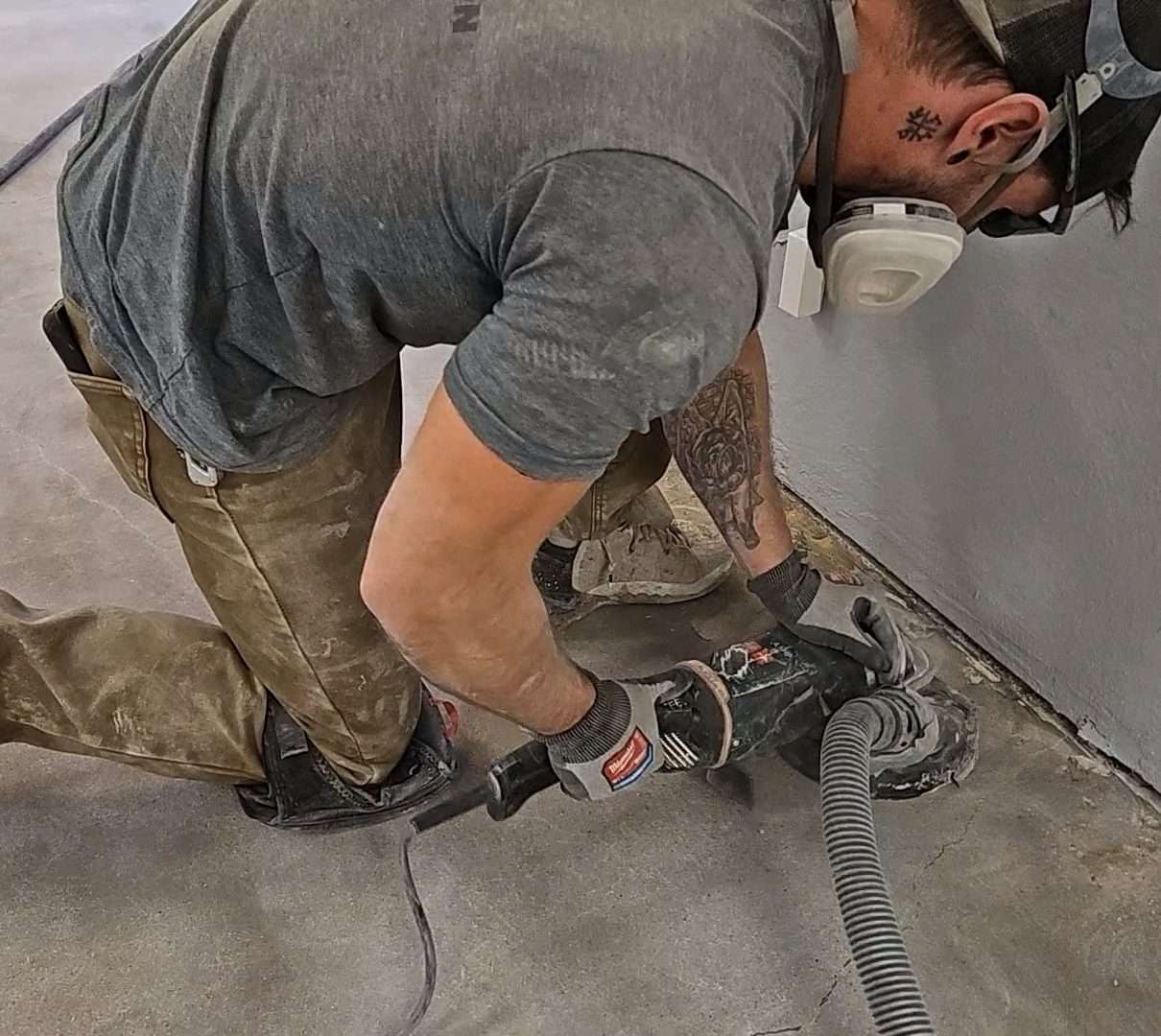
Concrete grinding removes the top layer of the slab, opening pores that allow epoxy to bond mechanically rather than just sitting on the surface. This step eliminates contaminants like oil stains, old sealers, and laitance that prevent adhesion. Cracks wider than a credit card need routing and filling with flexible epoxy compounds before the main coating goes down. Moisture testing matters more in Colorado than contractors from drier climates expect. A calcium chloride test left for 72 hours reveals whether the slab is releasing vapor that will push coatings off from underneath.
Floors that fail prematurely share a common thread: someone rushed the prep work to save a day. The coating itself takes hours to apply. The preparation takes most of the project timeline, and cutting corners there is what produces callbacks.
Professional installation involves surface grinding, crack repair, primer application and topcoat layers. Most two-car garages with a clean, dry slab are coated in a single visit, and the wait before the floor carries traffic again is set by the slab temperature rather than by a fixed number of days.
Surface preparation determines coating longevity more than the product itself. Contractors diamond-grind the concrete to open pores, remove contaminants, and create the mechanical bond that prevents peeling. Cracks get routed wider before filling. Oil stains require degreasing agents that actually work, not just surface cleaners. This prep phase creates dust and noise but skipping steps here is what produces failures within months.
Contractors who rush curing timelines to finish faster create coatings that look fine initially but delaminate under thermal stress. Temperature swings in Colorado make proper cure time non-negotiable. The installation disrupts garage use temporarily, but attempting to use the space prematurely wastes the entire investment.
Professional preparation removes contaminants and profiles concrete to create mechanical bonding, while DIY cleaning misses embedded oils and surface porosity issues that cause delamination within months.
EvrStep Epoxy Coatings uses diamond grinding equipment to open concrete pores and remove surface laitance that household cleaners cannot touch. Oil stains penetrate deeper than most homeowners realize. Acid etching alone won’t expose aggregate properly. The Parker team profiles floors to specific roughness standards, creating anchor points the coating needs. DIY kits skip this step entirely. That’s why garage floors fail at the edges first.
Professional installation delivers proper surface bonding and uniform thickness that DIY kits rarely achieve. Adhesion failures from inadequate prep or rushed curing account for most coating failures within the first year.
DIY kits fail at the moisture vapor test. Concrete releases water vapor constantly, and without proper moisture mitigation, coatings delaminate in sheets within months. EvrStep Epoxy Coatings uses vapor emission testing before any application in Parker garages, a step that box store kits skip entirely. The difference shows up when Colorado’s freeze-thaw cycles hit. Professional-grade materials bond at the molecular level when surface prep removes contaminants down to open pores. Garage floors that look clean still carry oil residue, efflorescence, and curing agents that prevent adhesion. A rented grinder from the hardware store does not remove what needs removing.
EvrStep Epoxy Coatings applies coatings in controlled temperature windows and enforces full cure times before allowing vehicle traffic. Rushed installations crack under tire torque. The warranty difference reflects real performance gaps, not marketing.