
EvrStep Epoxy Coatings installs anti-slip commercial floor coatings in Parker, Colorado, engineered to give traction you can specify and measure, and to withstand heavy traffic in warehouses, retail spaces, and industrial facilities. Our family-owned team uses industrial-grade epoxy and polyaspartic systems with meticulous surface preparation, backed by a 5-star rating from 128 reviews.
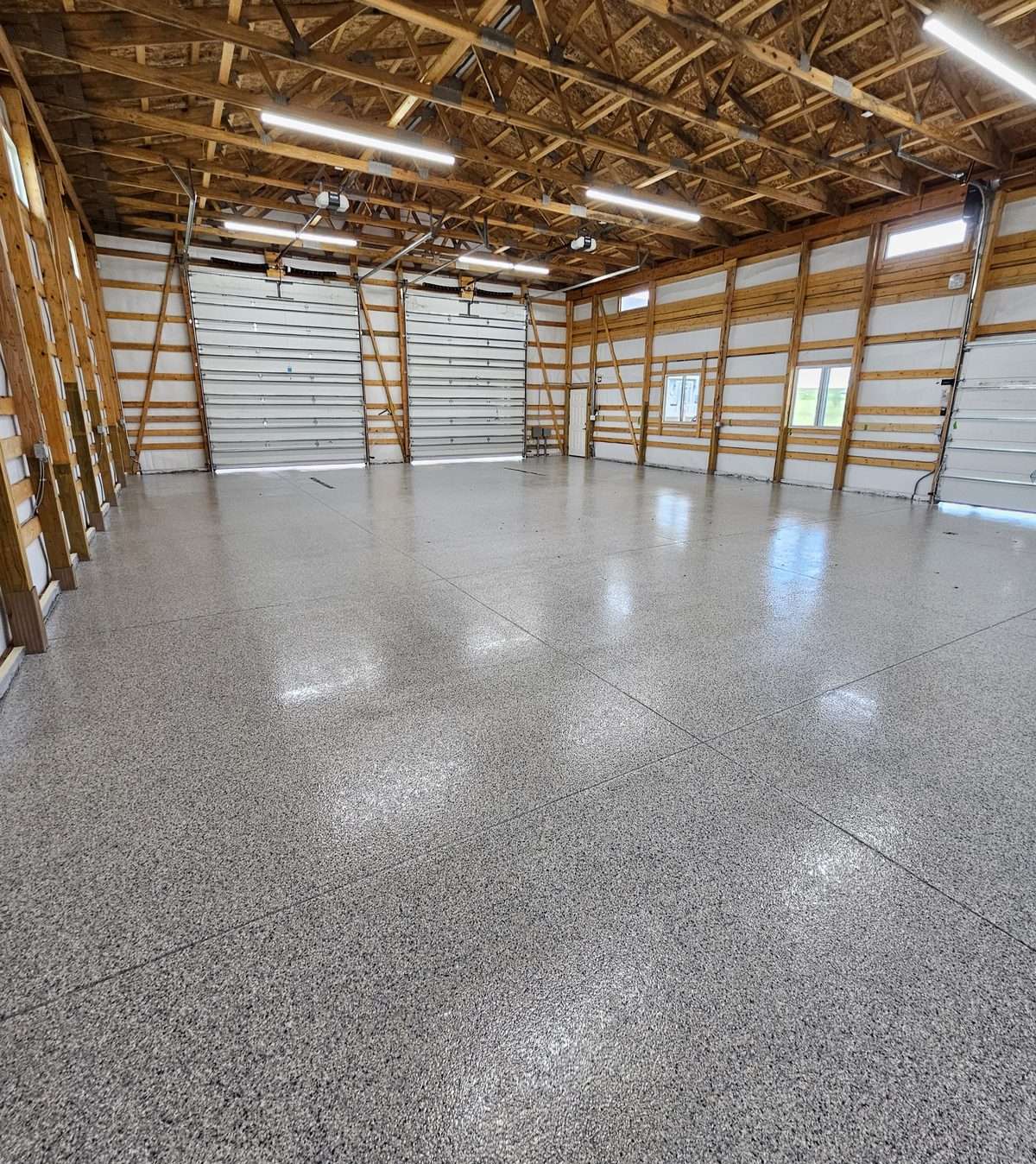
The businesses that see the clearest return from an anti-slip commercial floor coating are not the ones chasing compliance checkboxes. They are the ones tired of watching employees slow down near loading docks every time it rains.
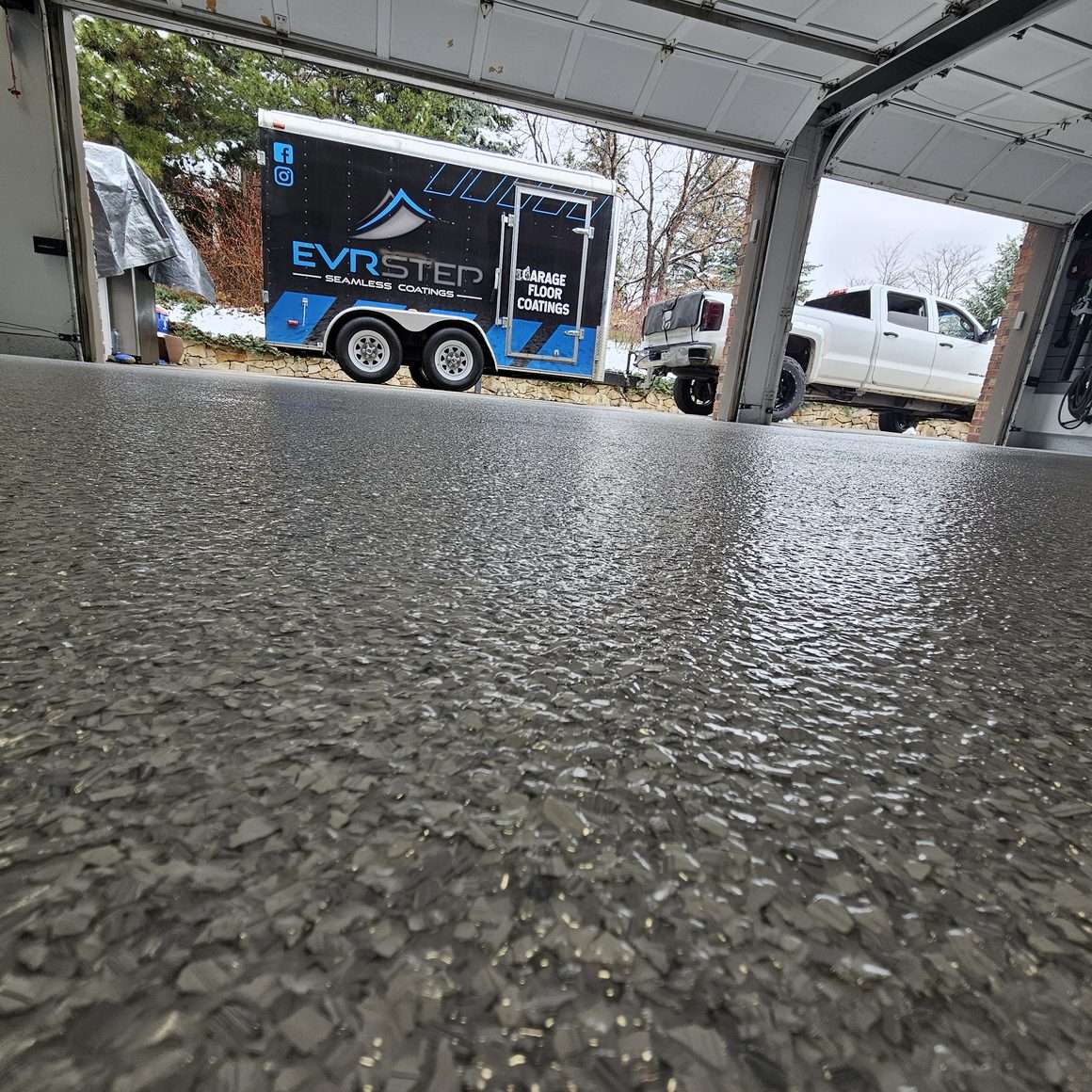
If you have ever watched an employee slow down before crossing from carpet to a polished concrete entry during a winter morning, you already understand what the traction problem actually is. That hesitation costs time, creates liability exposure, and signals to customers that the floor itself is a hazard they need to navigate around rather than walk across confidently.
The system that fails fastest in Parker warehouses is usually the one specified for aesthetics first and traction second. When a facility manager selects a finish based on showroom appearance rather than the actual contaminants tracked across the surface daily, the anti-slip commercial floor coating performs as specified until the first winter storm proves the specification was wrong.
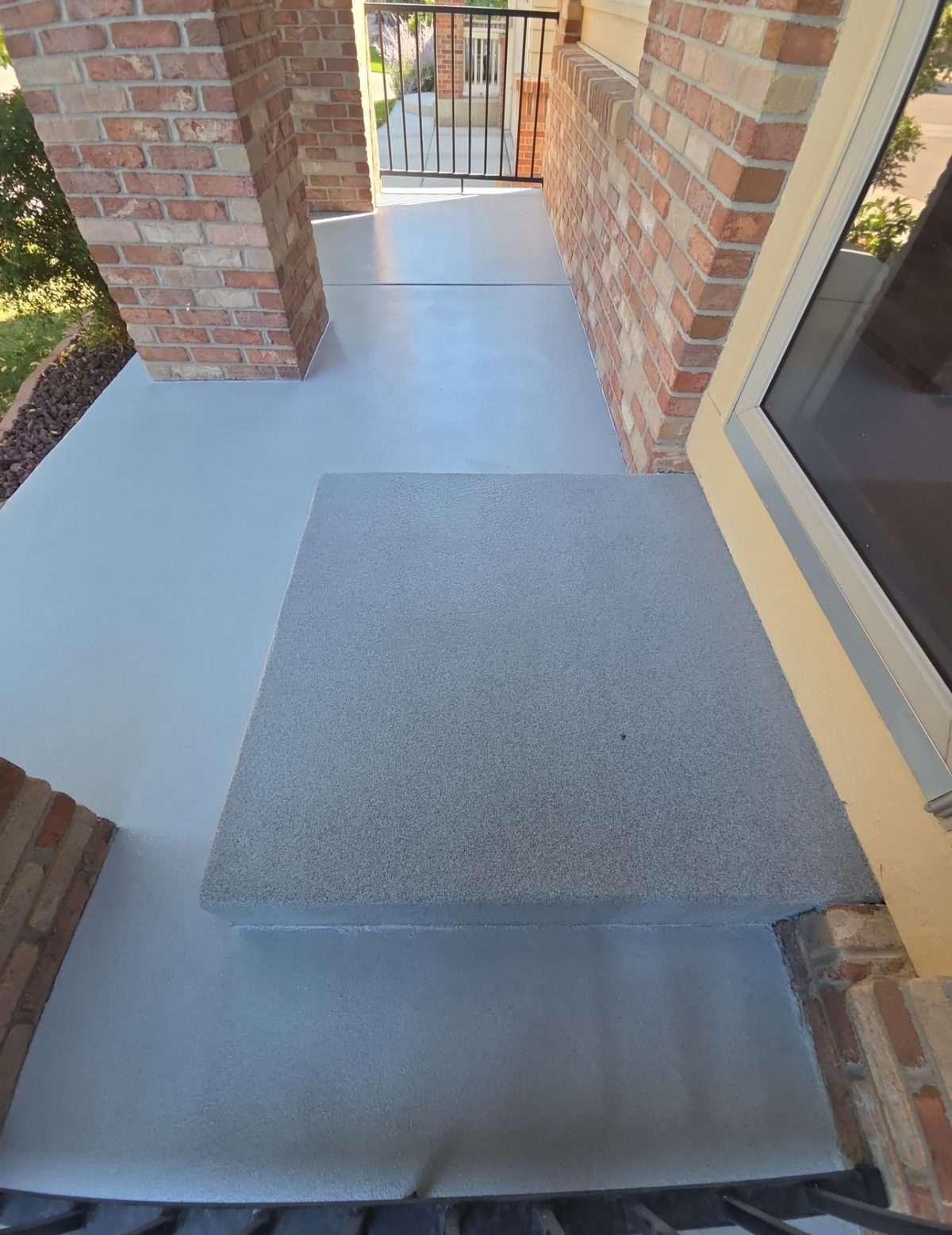
Most anti-slip commercial floor coating failures trace back to skipped diagnostics. The substrate condition, traffic pattern, and contamination type determine which aggregate size and broadcast density will hold. Testing traction after application confirms the system works before employees return to the floor.
We map where employees slow down, where spills pool, and where the slab shows wear patterns that predict future traction loss under load.
Bobbi came to us after years of cracks compromising her floor; we ground the substrate to CSP-3 and filled every fissure before coating.
Clarence needed reliable grip for his workspace; we broadcast silica at $7 to $10 per square foot and tested DCOF above 0.42 before final cure.
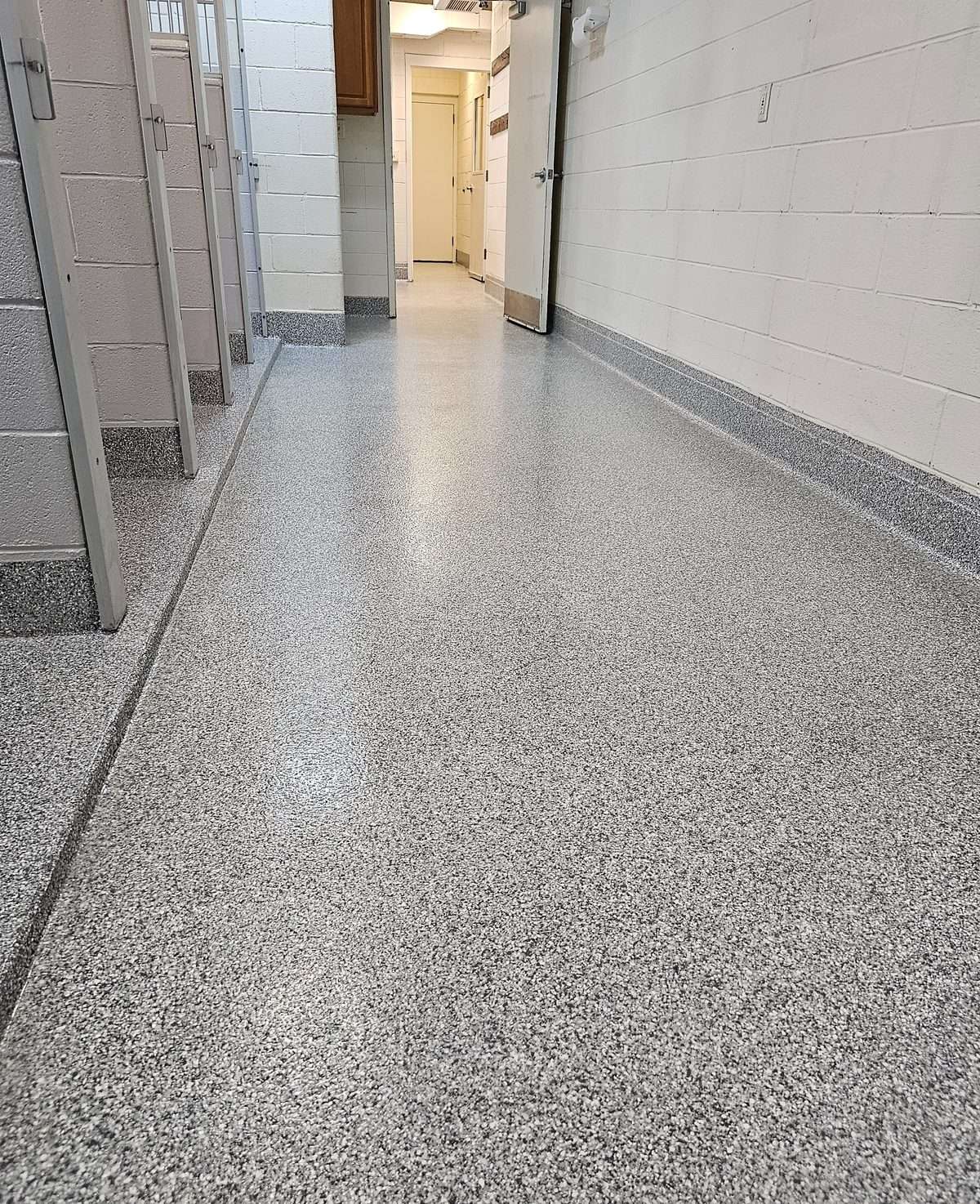
The system that performs longest in Parker commercial spaces is the one matched to actual contamination patterns and substrate moisture levels, not the one with the highest published DCOF rating. Application temperature during cure and aggregate distribution consistency determine whether an anti-slip commercial floor coating holds traction under real conditions or fails within the first year.
Moisture trapped in the slab creates vapor pressure that weakens bond strength, causing delamination despite high-grade epoxy. Measuring relative humidity with ASTM F2170 before application confirms a dry substrate, preventing premature failure under forklift traffic.
Rapid cooling slows cross-linking, leaving polymer chains partially cured and susceptible to abrasion. Following ANSI A326.3-2021, technicians schedule applications within a stable temperature window and adjust catalyst rates, which maintains hardness and reduces scuffing in high-traffic areas.
Laboratory DCOF measurements reflect clean-surface traction, but contaminants such as grease dramatically lower real-world performance. A laboratory figure is measured on a clean surface, so the useful question is what the floor reads once it carries what it actually carries. ASTM D2047 covers the static coefficient of friction measurement used on polish-coated flooring, and aggregate size and topcoat chemistry are what hold that figure under oily conditions.
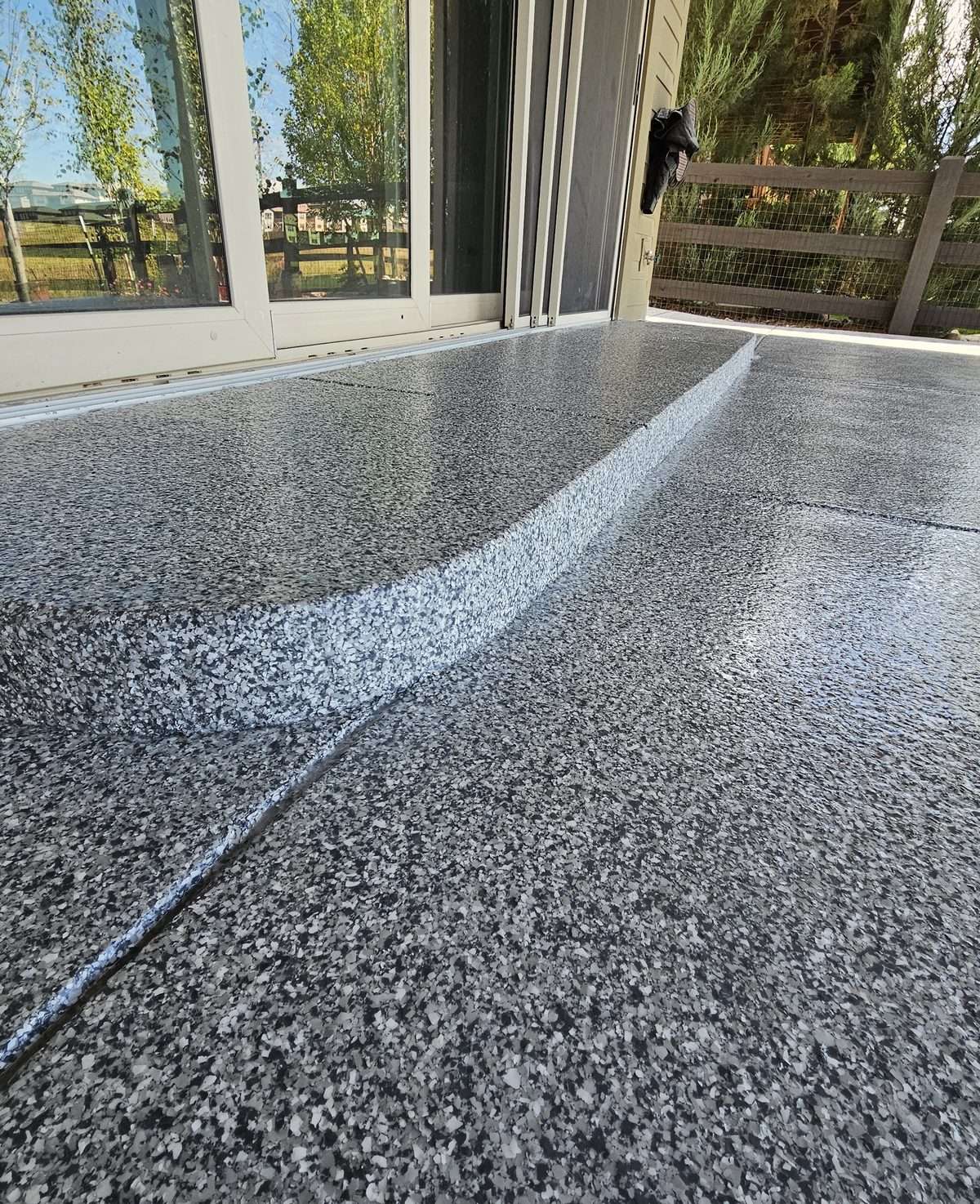
It is tempting to treat grip as something you simply want more of. In practice an anti-slip commercial floor coating buys traction with something else, and knowing what you are spending makes the specification a decision rather than a default.
What you spend is cleanability. A surface that grips is a surface with texture, and texture holds what lands on it. The same profile that keeps a boot planted in a washdown bay also traps grease, flour, fine grit and mop fibers, which means more frequent cleaning and a stiffer brush rather than a quick pass. Push a loaded cart across it and you feel the difference too.
That trade is why traction is specified by area rather than by building. A kitchen line, a ramp and a loading dock earn the coarsest finish they can be cleaned at. Aisles and assembly areas usually want less. A showroom or a customer-facing space often wants very little, because the floor is dry, the risk is low and the finish is doing a different job. One building can carry three levels of grip, and an anti-slip commercial floor coating is easier to justify when it is placed where it earns its keep.
Numbers help the conversation. Dynamic coefficient of friction gives a measured figure for a surface, and 0.42 is the benchmark widely used for level interior floors expected to get wet. Treat it as a reference point rather than a pass mark: it is measured under defined conditions, and a floor carrying oil or flour is not those conditions.
The honest brief to give an installer is not “make it non-slip”. It is where the floor gets wet, what gets spilled on it, who walks it in what footwear, and how it will be cleaned. Those four answers pick the finish, and they are the same four that decide whether the commercial flooring around it should match or deliberately differ.
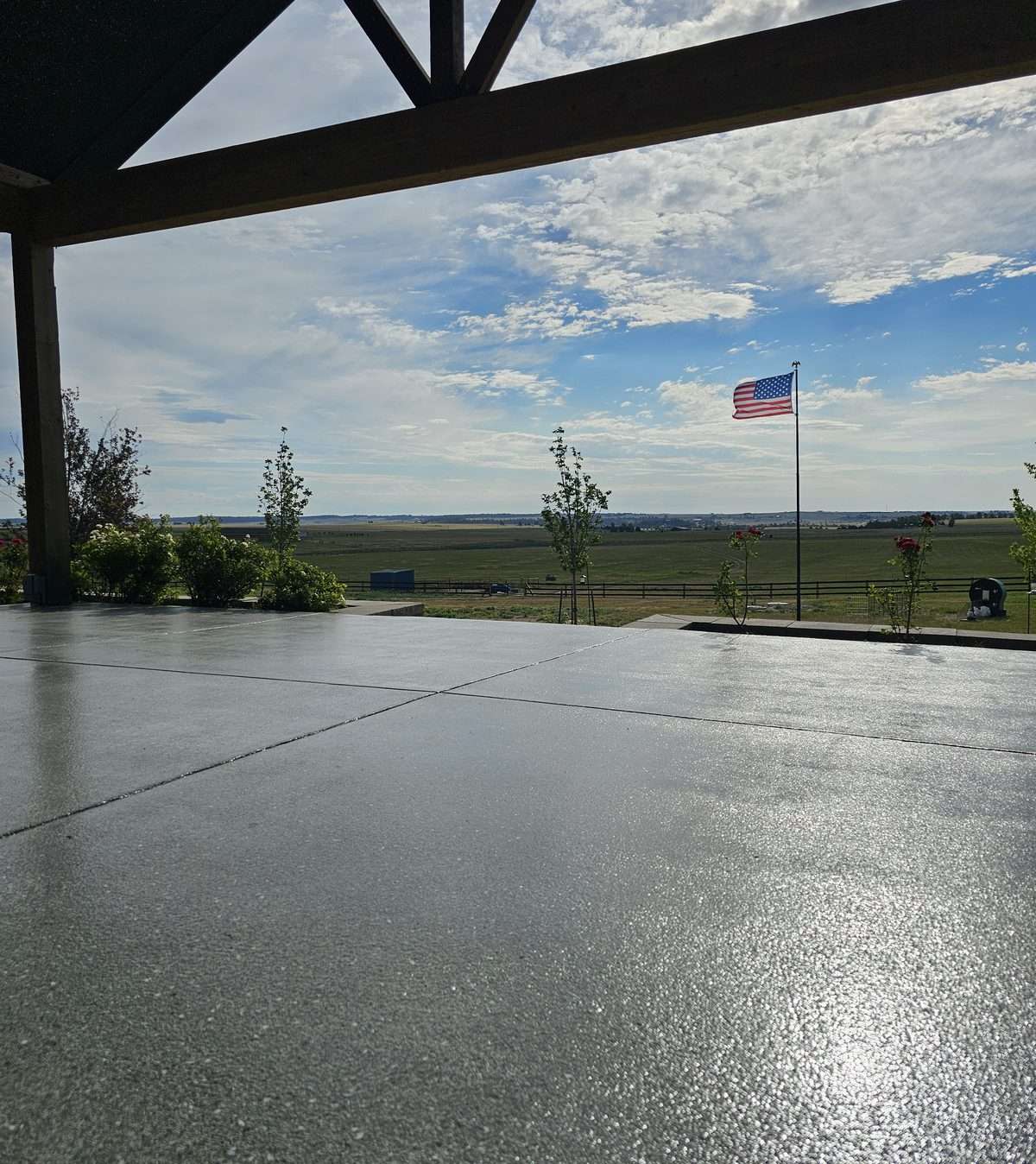
Step three above says broadcast aggregate and verify traction. Which aggregate goes into an anti-slip commercial floor coating changes the result as much as how much of it goes in, and the choice is rarely explained on a quote.
Silica sand is the common default. It is inexpensive, it is graded in predictable sizes so the finish can be dialed in, and it does the job in most dry or occasionally wet areas. It is also the softest of the usual options, so in a heavy traffic lane the exposed grains round off over time and the surface gradually gets smoother.
Aluminum oxide is harder and sharper. It holds its edge far longer under abrasion, which makes it the sensible choice for ramps, dock edges and anywhere wheels turn on the spot. The trade is that the same sharpness is unkind to mop heads and to bare skin, so it belongs in work areas rather than places people might kneel or sit.
Polymer and rubberized grit sits at the other end. It is softer underfoot and gentler to clean around, which suits kitchens, locker rooms and customer-facing spaces, and it gives up some durability in exchange.
Two things matter beyond the material. Grain size sets how aggressive the finish feels, and a fine broadcast in a heavy grade is a different floor from a coarse broadcast in a light one. And whether the aggregate is broadcast into the coat or blended through it decides what happens as the surface wears: broadcast grains sit proud and eventually polish, while a blended grit keeps presenting fresh material as the topcoat thins. Worth asking which method a quote assumes, and why, since it is the same question worth putting to a broadcast quartz system.
EvrStep Epoxy Coatings serves commercial property managers, facility operators, and business owners throughout Parker and surrounding Douglas County areas, delivering anti-slip commercial floor coating installations directly at warehouses, retail spaces, restaurants, and industrial facilities. From Stonegate to Castle Rock, the team reaches Parker-area commercial properties via I-25, E-470, and Parker Road, covering Douglas County facilities that need traction specified for wet and contaminated areas. EvrStep Epoxy Coatings completes mechanical surface preparation and polyaspartic topcoat application within temperature windows that meet manufacturer cure specifications, backed by documented 21-year delamination warranty coverage.
Parker Coverage Zone
Installation scheduling accounts for freeze-thaw windows between April and October when substrate temperatures support proper epoxy bond strength and polyaspartic cure rates required for commercial traffic loads.
Epoxy aggregate blends, polyurethane with grit additives, and polyaspartic systems deliver the strongest traction in high-traffic zones. Selection depends on substrate condition, chemical exposure, and whether the space operates during installation.
Epoxy aggregate systems handle the heaviest foot traffic without losing grip. Polyurethane topcoats with aluminum oxide grit work well in areas exposed to oils or moisture. Polyaspartic coatings cure fast. That matters when downtime costs revenue. Parker facilities with forklift traffic need thicker broadcast layers. Thin coatings fail within months under wheeled loads. The substrate dictates half the decision. Cracked concrete requires repair before any coating performs as rated.
Many businesses skip diagnostics to save time, but surface moisture, contamination, and substrate condition directly determine coating adhesion and longevity. Failures traced to skipped assessments cost more than the diagnostic would have.
Surface preparation drives coating performance more than product selection. A concrete slab that looks clean can harbor residual oils, curing agents, or moisture vapor that prevents proper bonding. Coatings applied over compromised substrates delaminate within months, not years. The diagnostic process in Parker identifies these hidden variables before any material touches the floor. Moisture testing, contamination screening, and profile assessment take hours but prevent expensive do-overs. Businesses that treat diagnostics as optional discover the cost difference when a failed installation shuts down operations for emergency repairs.
The firms with the longest-lasting anti-slip commercial floor coatings share a pattern unrelated to budget: they treat surface evaluation as non-negotiable. Skipping it to meet a deadline creates a different kind of delay later, one that involves removing failed material and starting over with the assessment that should have happened first.
EvrStep Epoxy Coatings evaluates substrate condition, traffic patterns, and contamination exposure before recommending a coating system. The diagnostic step prevents adhesion failures that appear months after installation when mismatched products break down under operational stress.
EvrStep Epoxy Coatings starts every project by testing the concrete itself. Surface moisture, oil penetration, and existing sealant residue all dictate which anti-slip commercial floor coatings will bond correctly. A warehouse floor that looks clean can still reject epoxy if solvent contamination sits two millimeters below the surface. The diagnostic catches what visual inspection misses.
EvrStep Epoxy Coatings in Parker runs adhesion pull tests and moisture vapor emission readings before quoting any project. Coatings that work in one facility fail in another with identical traffic but different substrate history. The floor tells you what it needs if you ask the right questions first.
EvrStep Epoxy Coatings begins every anti-slip commercial floor coating project with a diagnostic assessment of substrate condition, traffic patterns, and contamination risks. This prevents adhesion failures that occur when installers skip surface profiling and apply generic traction additives without site-specific analysis.
EvrStep Epoxy Coatings runs a full diagnostic before recommending any anti-slip commercial floor coating. Surface moisture, existing sealers, and oil contamination all kill traction performance if ignored. Most installers apply broadcast aggregates without testing substrate porosity. That works until it doesn’t. EvrStep Epoxy Coatings measures concrete pH, checks for delamination, and profiles the surface to match the coating chemistry to actual conditions in Parker facilities. The diagnostic catches failures before they happen.
Professionals assess substrate condition, traffic patterns, exposure to liquids, and existing surface chemistry before recommending anti-slip commercial floor coatings. The wrong coating on the right floor still fails when application conditions are ignored.
Surface preparation dictates durability more than coating brand. A warehouse floor exposed to hydraulic fluid needs different aggregate profiles than a restaurant kitchen dealing with grease and hot water. Professionals test moisture vapor transmission rates, measure surface porosity, and document contamination history before selecting texture additives or broadcast media. Facilities in Parker with concrete poured during different seasons often show varying alkalinity levels, which affects adhesion. The diagnostic step identifies whether mechanical anchoring, chemical bonding, or hybrid systems will survive the specific wear patterns present. Skipping this creates expensive failures within months, not years.
The coating that works in one environment often underperforms in another with different chemical exposure or temperature swings. Professionals match aggregate size, resin chemistry, and cure schedules to actual conditions rather than applying universal solutions. That specificity prevents premature wear and maintains traction over the coating’s intended lifespan.