
Elevate Your Space with EvrStep
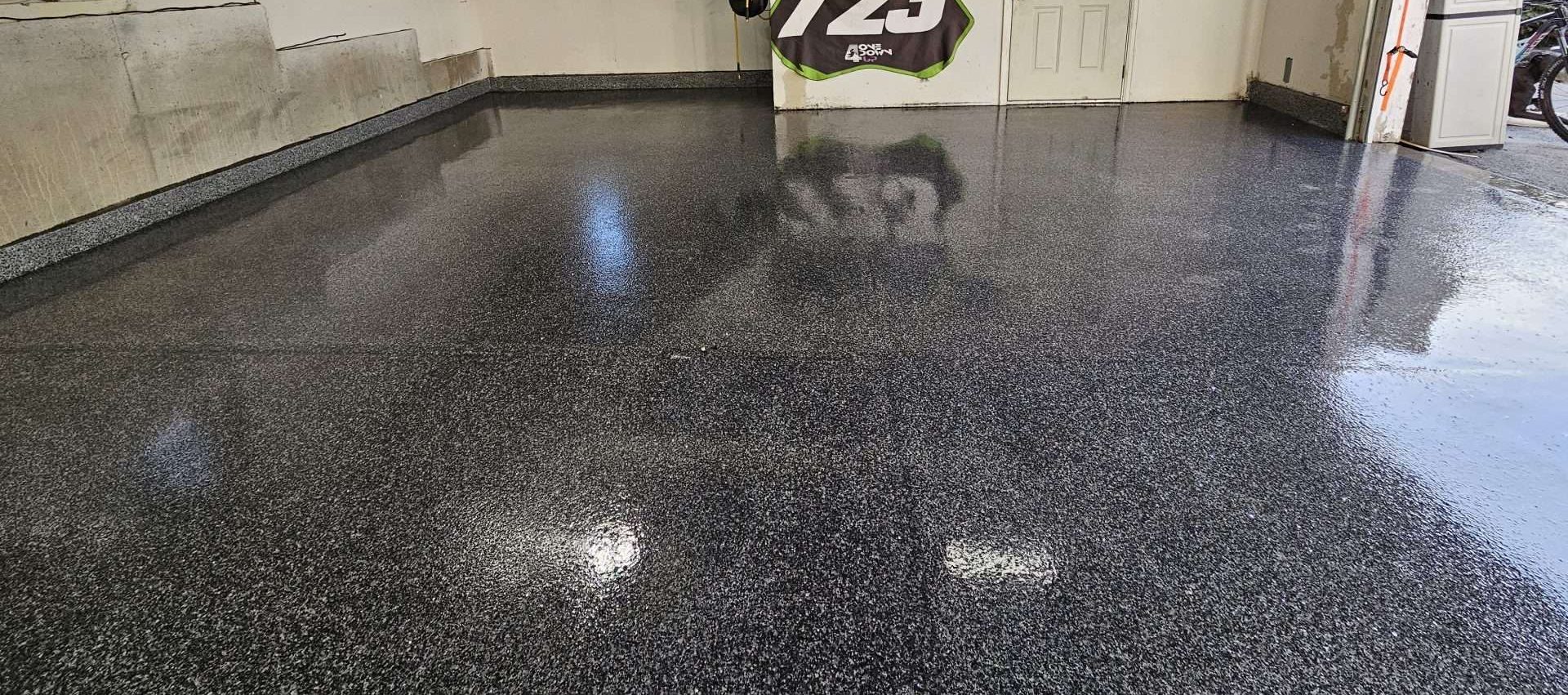
Polyaspartic is the name of a chemistry, not a specification. The products sold under it are aliphatic polyurea coatings built on polyaspartic ester resins, and within that family individual products behave very differently. Two floors can both be called polyaspartic and differ in solids content, in the number of coats, in how fast they set and in how much abuse the finished surface will take.
That matters when comparing quotes. A single thin topcoat over bare concrete and a full system with a base coat, a broadcast layer and a wear coat are both accurately described as polyaspartic, and they are not the same purchase. Film hardness can be measured under ASTM D3363, which draws graded pencil leads across a cured coating to find the point where it gouges, and abrasion under ASTM D4060, which runs a weighted abrasive wheel across a coated panel for a fixed number of revolutions and weighs what survives.
So the useful question about polyaspartic coatings in Castle Rock is not whether a quote says polyaspartic, but how many coats it includes, what goes between them, and what the finished film is expected to resist. Those answers describe the floor. The family name on its own does not.
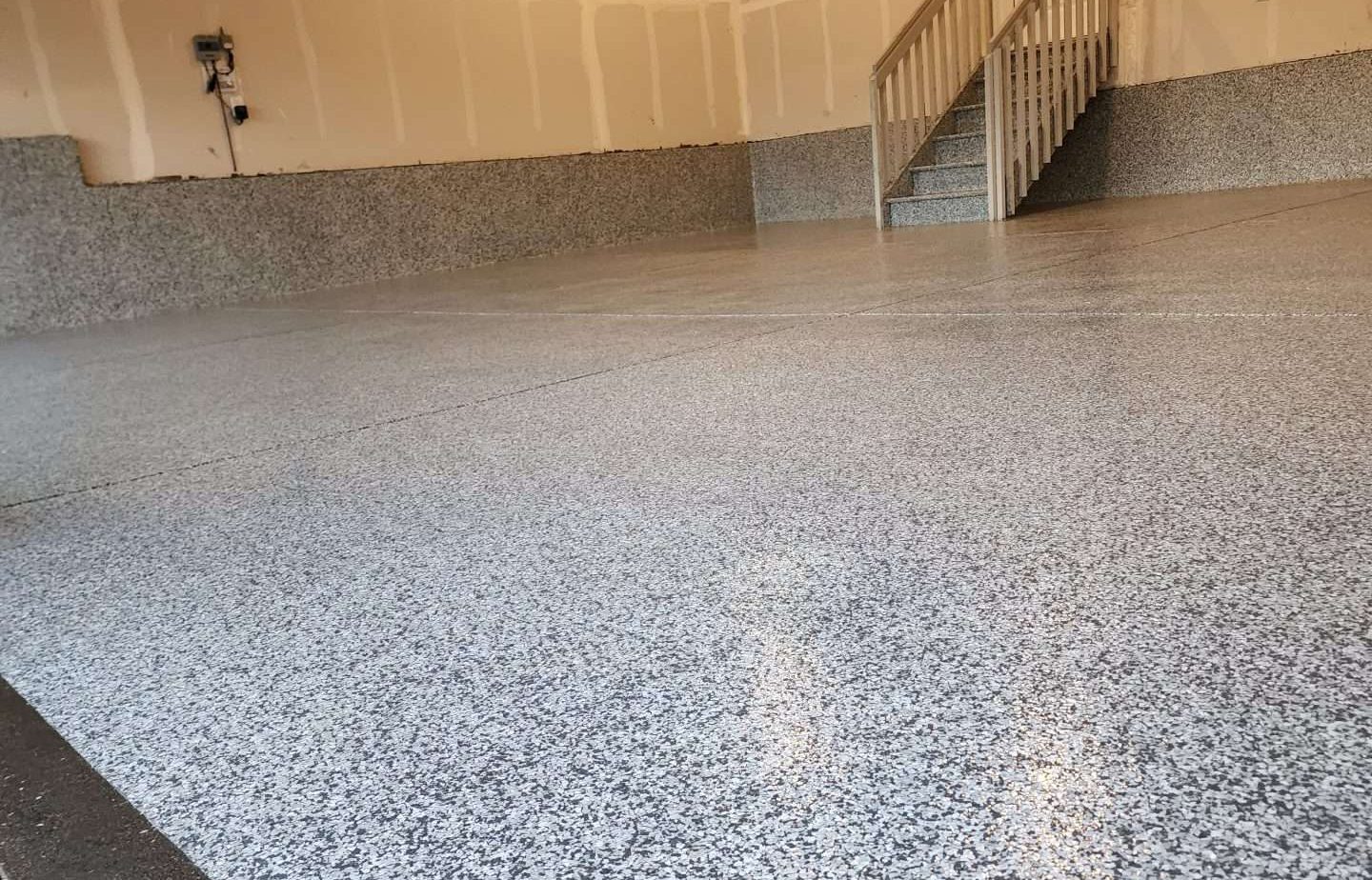
Protect and Beautify Your Property
The property that makes polyaspartic attractive is also what makes it unforgiving. Once the two components are mixed, the usable working time is measured in minutes rather than the hours an epoxy allows. The material begins to set in the pail whether or not it has reached the floor.
That single fact shapes the whole install. Sections get planned and prepped before anything is mixed, batches are kept small enough to be spread before they thicken, and edges are cut in ahead of the main pour so nobody is doing detail work while the material is going off. A crew set up for it works quickly and calmly. A crew that is not leaves roller marks, lap lines and a visible seam where one batch met the next after it had already begun to skin.
It is also the honest reason polyaspartic coatings in Castle Rock are not a weekend project. Epoxy is forgiving enough that a careful homeowner can get a reasonable result from it. Polyaspartic punishes hesitation, and the faults it produces sit inside the film rather than on top of it, so they cannot be buffed out later. Correcting them means going back to the substrate in that area.
Standard epoxy has a fairly narrow application window. Toward the bottom of the range manufacturers publish it thickens, wets the concrete poorly and can stay soft. That is a real constraint in a town where the overnight low and the afternoon high can differ by thirty degrees for much of the year.
Polyaspartic tolerates a wider band. It will cure at temperatures where an epoxy is marginal, which is why it turns up on shoulder-season work and in unheated garages that would otherwise wait for spring.
The constraint that does not go away is the slab. A cold slab is often a damp slab, because concrete sitting under snowmelt holds water long after the surface looks dry, and no coating chemistry bonds to a wet substrate. Slab moisture is measured under ASTM F2170, which calls for sealed sleeves in drilled holes, left to equilibrate before anyone takes a reading. Temperature tolerance buys a longer working season for polyaspartic coatings in Castle Rock. It does not remove the need to test the slab first.
Often yes, and it is worth asking. Many systems use a separate base coat to bond to the concrete and build film, with polyaspartic as the wear layer over the top. Others are single-product builds. Neither is automatically better, but they cost different amounts and perform differently, so a quote that lists the coats tells you far more than one that only names a product.
They are related but not the same. Both get used as wear coats over a base, and both are harder and more UV-stable than epoxy. Polyaspartic is a polyurea variant that sets much faster, which is what makes fast-turnaround work possible and also what makes it demanding to apply. Urethanes generally allow a longer working time. Which one suits a floor depends on the building and how soon it has to carry traffic again.
Because of the working time. Once mixed it starts to set within minutes, so there is no opportunity to stop, re-read the instructions and fix a run. The faults it produces are inside the film rather than on top of it, which means they cannot be sanded off and corrected afterwards. Epoxy is far more forgiving of a first attempt.