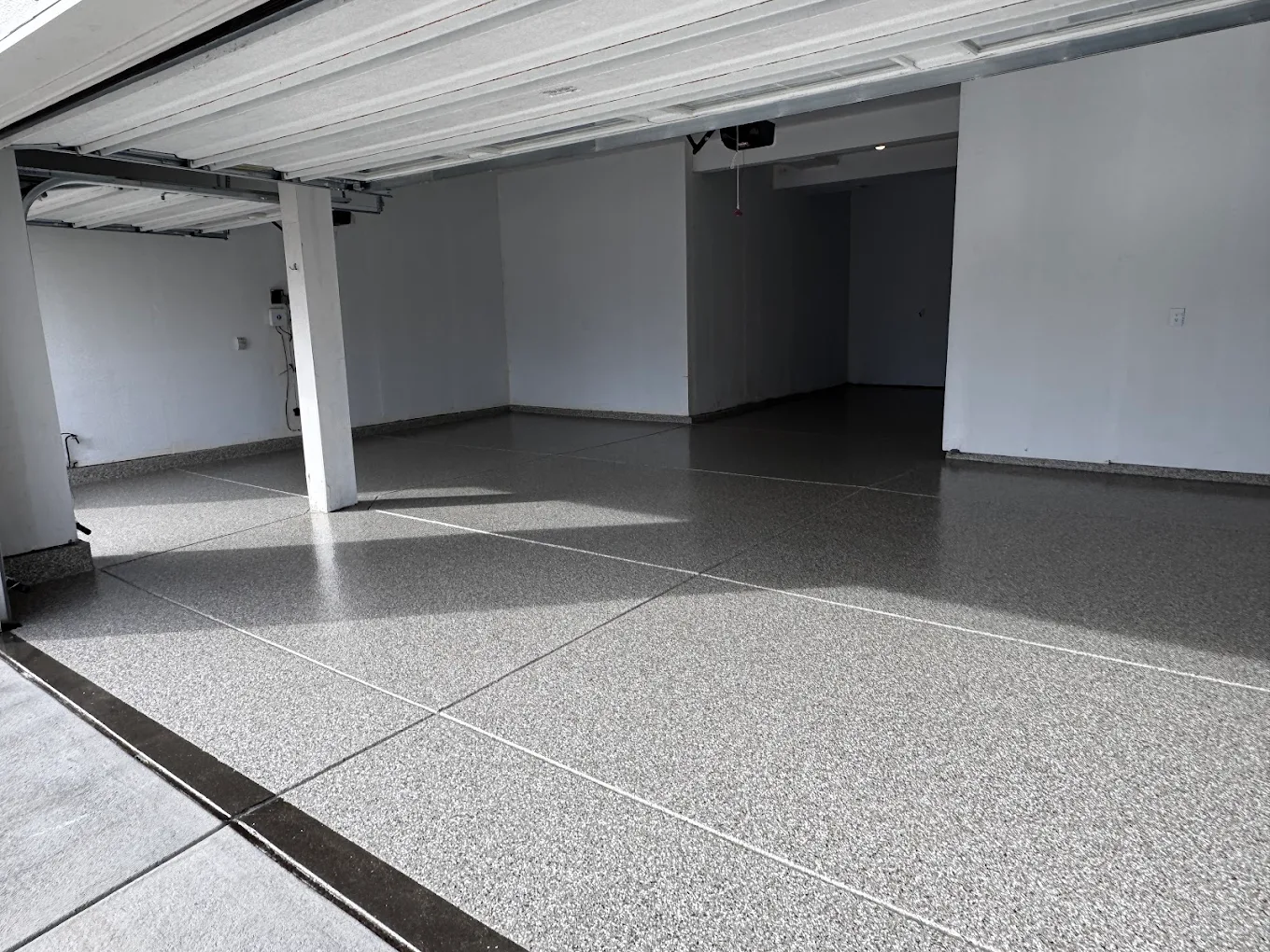
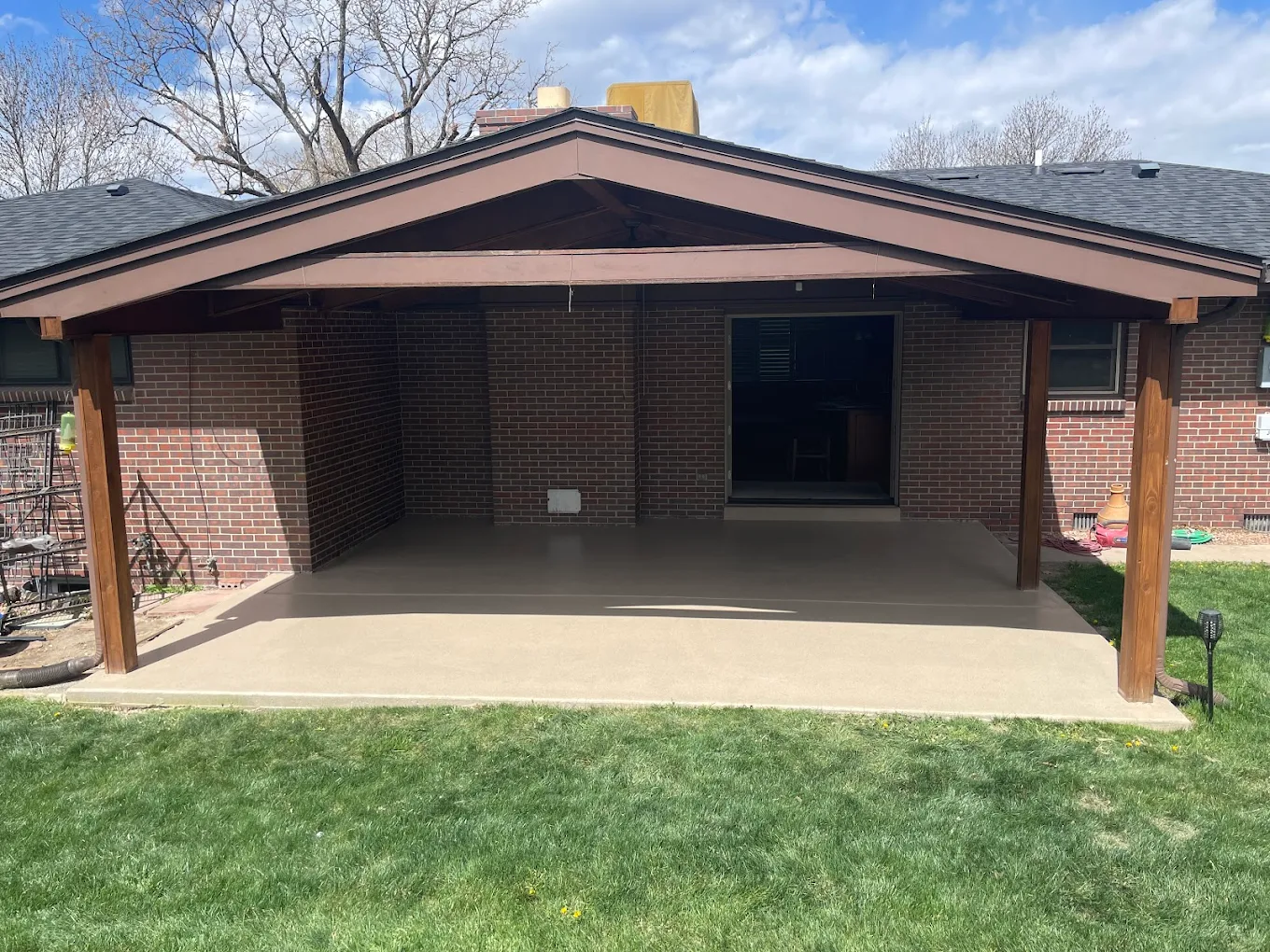
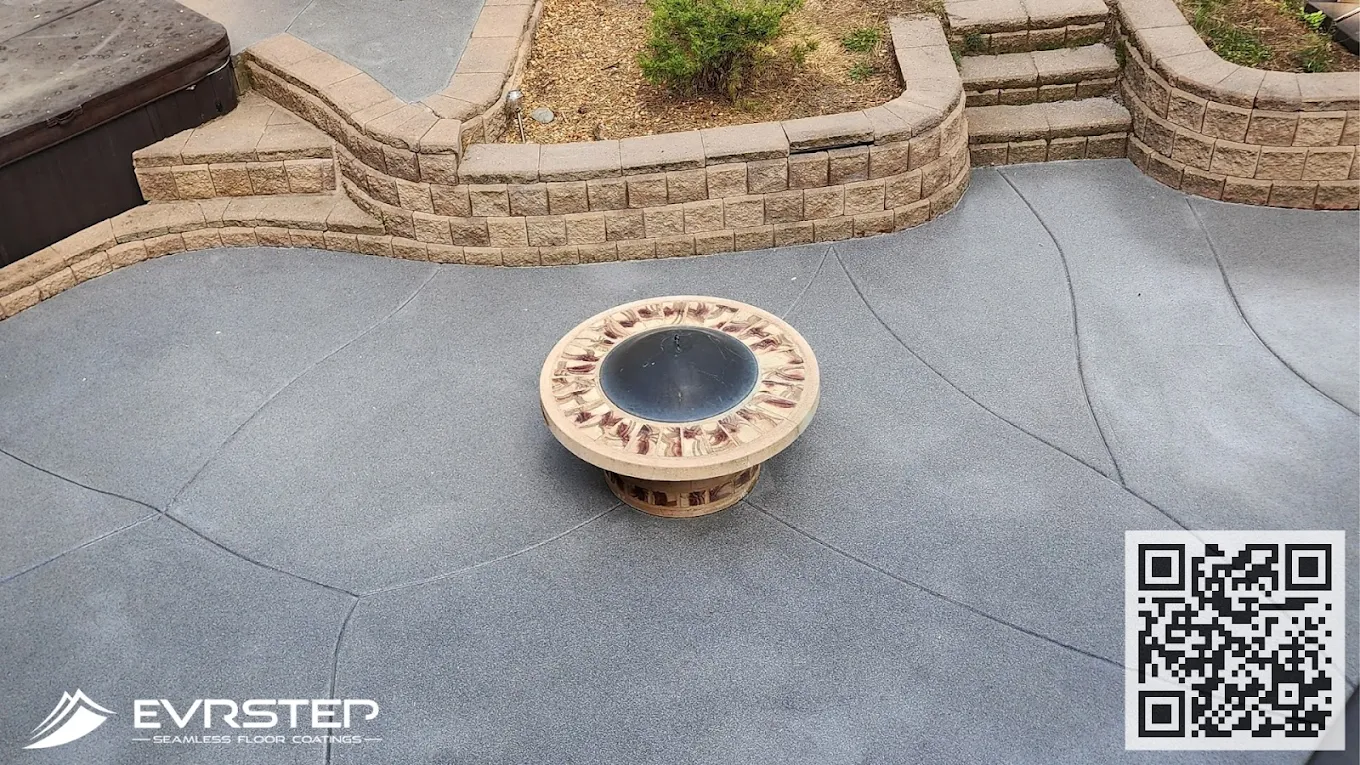
Most epoxy yellows badly under sunlight within months. UV-resistant systems prevent this degradation completely.
Standard epoxy coatings fail spectacularly when exposed to sunlight, turning yellow and chalky within six months of installation. This happens because aromatic epoxy resins break down under ultraviolet radiation, creating a costly replacement cycle that catches property owners off guard. In Parker’s high-altitude environment with over 245 sunny days annually, this degradation accelerates even faster than typical climates.
This guide walks you through evaluating UV-resistant epoxy options that maintain their appearance and performance for decades, not months. You’ll learn to distinguish between truly UV-stable systems and marketing claims, understand the chemistry behind yellowing resistance, and select the right formulation for your specific application. By following these steps, you’ll avoid the frustration of premature coating failure and ensure your investment delivers long-term value.
Step 1: Understand the Science Behind UV Degradation
Most people skip understanding why epoxy systems fail under UV exposure, leading them to choose products based on marketing claims rather than chemistry. Standard epoxy resins contain aromatic compounds that absorb UV radiation and break down into visible yellow compounds, while the polymer matrix itself becomes brittle and chalky. This degradation isn’t just cosmetic, it compromises the coating’s protective properties and adhesion to the substrate.
The key distinction lies between aromatic and aliphatic chemistry, terms that sound technical but directly impact your coating’s lifespan. Aromatic epoxy resins (the standard type) have benzene ring structures that make them vulnerable to UV attack, while cycloaliphatic epoxy systems use different molecular structures that resist this breakdown. Understanding this difference helps you identify truly UV-resistant products versus those with minimal UV additives that still yellow over time.
Chemistry Basics
- Aromatic Epoxy: Contains benzene rings that absorb UV radiation and break down into yellow compounds, causing visible discoloration within 6-12 months of outdoor exposure.
- Cycloaliphatic Epoxy: Uses ring structures without aromatic groups, providing inherent UV stability and maintaining color integrity for 10-15 years in direct sunlight.
- UV Absorbers: Chemical additives like benzotriazoles that absorb harmful UV wavelengths and convert them to harmless heat, protecting the underlying polymer matrix.
- HALS (Hindered Amine Light Stabilizers): Advanced additives that scavenge free radicals formed during UV exposure, preventing chain reactions that lead to polymer degradation.
- Yellowing Index (YI): Quantitative measurement of color change over time, with UV-resistant systems typically showing less than 5 YI units after 1,000 hours of accelerated weathering.
Grasping these fundamental concepts prevents you from falling for products that claim UV resistance through minor additive packages while still using aromatic base chemistry. True UV resistance requires either inherently stable cycloaliphatic chemistry or protective aliphatic topcoat systems that shield the epoxy base from direct UV exposure. This knowledge forms the foundation for evaluating specific product options in the next step.
Step 2: Evaluate System Architecture and Formulation Types
Many buyers focus solely on the epoxy basecoat and ignore the critical role of topcoat systems in achieving UV resistance. A properly designed UV-resistant system often combines a high-performance epoxy base with an aliphatic polyurethane or polyaspartic topcoat that provides the actual UV protection. Skipping this system approach leads to disappointment when single-component ‘UV-resistant’ epoxies still show degradation after extended sun exposure.
The architecture choice depends on your specific application, with each approach offering distinct advantages and limitations. Single-component cycloaliphatic epoxies provide moderate UV resistance but may lack the chemical resistance of aromatic bases, while two-coat systems offer maximum protection but require proper adhesion between layers. Industry research shows that properly applied two-coat systems consistently outperform single-component alternatives in accelerated weathering tests.
Here’s a comparison of common UV-resistant epoxy system architectures and their performance characteristics.
| System Type | UV Resistance | Chemical Resistance | Typical Lifespan | Cost Factor |
|---|---|---|---|---|
| Cycloaliphatic Epoxy Only | Good | Moderate | 8-12 years | 1.0x |
| Epoxy + Aliphatic PU | Excellent | Excellent | 15-20 years | 1.4x |
| Epoxy + Polyaspartic | Excellent | Good | 12-18 years | 1.6x |
| Modified Epoxy Hybrid | Very Good | Very Good | 10-15 years | 1.3x |
System Types
- Cycloaliphatic Epoxy Only: Single-component system with inherent UV stability, offering moderate protection suitable for covered areas with indirect sunlight exposure.
- Epoxy Plus Aliphatic Topcoat: Two-coat system combining chemical-resistant epoxy base with UV-protective aliphatic polyurethane, providing maximum durability for direct sun exposure.
- Polyaspartic Topcoat Systems: Fast-curing aliphatic coating over epoxy base, offering excellent UV protection with rapid return to service, ideal for commercial applications.
- 100% Solids Formulations: Zero-VOC systems that cure without solvent evaporation, providing thicker films and better performance but requiring precise application conditions.
- Modified Epoxy Hybrids: Chemically modified systems that bridge epoxy and urethane properties, offering balanced performance but potentially higher cost than traditional approaches.
Selecting the right system architecture determines both your upfront investment and long-term maintenance costs. Two-coat systems typically cost 30-40% more initially but can extend service life from 5-7 years to 15-20 years in high-UV environments. This analysis prepares you to evaluate specific performance metrics and test data that validate manufacturer claims.
Step 3: Analyze Performance Data and Test Standards
Product data sheets often contain impressive claims about UV resistance, but without understanding the testing standards behind these numbers, you can’t compare products meaningfully. ASTM G154 accelerated weathering tests provide the most reliable predictor of real-world performance, simulating years of UV exposure in controlled laboratory conditions. Products that lack this testing data or show significant color change (ΔE > 5) after 1,000 hours should raise red flags about their actual durability.
The most meaningful metrics focus on color stability, gloss retention, and mechanical property changes rather than vague marketing terms. Technical publications from coating organizations show that properly formulated UV-resistant systems maintain over 80% gloss retention and less than 3 ΔE color change after 2,000 hours of accelerated testing. These numbers translate to decades of service life in real-world applications when properly installed.
Key Metrics
- Color Change (ΔE): Quantitative measurement of color shift, with values under 3 indicating excellent UV stability and values over 10 showing significant degradation.
- Gloss Retention: Percentage of original sheen maintained after UV exposure, with quality systems retaining 80%+ gloss after 2,000 hours of accelerated testing.
- Yellowing Index (YI): Specific measurement of yellow color development, critical for clear and light-colored coatings where yellowing is most noticeable.
- Adhesion After Weathering: Pull-off adhesion strength following UV exposure, ensuring the coating maintains bond strength as it ages and weathers.
Demanding actual test data rather than marketing claims helps you identify products with proven performance records. Manufacturers confident in their UV resistance will readily provide ASTM G154 results, QUV exposure data, and outdoor weathering studies from Florida or Arizona testing sites. This data review sets the stage for evaluating how different products perform in your specific environmental conditions.
Step 4: Assess Environmental Compatibility and Regional Factors
Parker’s high-altitude location at 5,869 feet creates unique UV exposure conditions that standard product testing may not fully address. The thinner atmosphere allows more intense UV radiation to reach surfaces, while the 245+ annual sunny days provide sustained exposure that accelerates degradation beyond typical climate conditions. Failing to account for these regional factors leads to selecting products tested in moderate climates that underperform in Colorado’s intense UV environment.
Temperature cycling between Parker’s winter lows around 15°F and summer highs near 90°F adds mechanical stress that can compromise UV-degraded coatings faster than in stable climates. The combination of intense UV exposure during summer months followed by freeze-thaw cycling creates a particularly challenging environment that requires robust system selection. Understanding UV radiation effects helps you appreciate why altitude and climate patterns matter for coating selection.
Here’s how Parker’s environmental conditions compare to standard testing parameters and their impact on coating selection.
| Environmental Factor | Parker Conditions | Standard Test Conditions | Selection Impact |
|---|---|---|---|
| UV Intensity | High (altitude effect) | Sea level equivalent | Require enhanced UV protection |
| Annual Sunny Days | 245+ days | ~180 days average | Sustained exposure demands |
| Temperature Range | 15°F to 90°F | Moderate cycling | Flexibility requirements |
| Humidity Variation | 10-80% RH | Controlled conditions | Cure-tolerant formulations |
| Freeze-Thaw Cycles | 50+ annually | Limited cycling | Thermal shock resistance |
Regional Considerations
- High Altitude UV: Increased UV intensity at 5,869 feet elevation requires products tested at equivalent conditions or with safety factors for enhanced exposure.
- Temperature Cycling: Daily and seasonal temperature swings from 15°F to 90°F demand flexible systems that won’t crack or delaminate during expansion cycles.
- Low Humidity Periods: Extended dry conditions affect curing and can accelerate certain degradation mechanisms, requiring humidity-tolerant formulations.
- Seasonal Maintenance Access: Limited winter application windows in Colorado make long-term durability critical, as repairs may be delayed by weather conditions.
Matching product capabilities to regional environmental stressors prevents premature failures that occur when coatings designed for moderate climates encounter Parker’s challenging conditions. This environmental assessment guides you toward products with appropriate safety margins and proven performance in similar high-UV, high-altitude locations. Next, you’ll learn to evaluate manufacturer support and warranty coverage that backs up these performance claims.
Step 5: Review Manufacturer Support and Application Requirements
The best UV-resistant epoxy formulation becomes worthless if applied incorrectly, making manufacturer support and detailed application guidance critical selection factors. Look for companies that provide comprehensive technical data sheets, application training, and field support rather than just product sales. Jamestown Distributors’ technical guidance demonstrates the level of detail serious manufacturers provide about UV protection limitations and proper system selection.
Application requirements vary significantly between UV-resistant systems, with some demanding precise temperature and humidity controls while others offer broader application windows. Two-coat systems require careful timing between coats to achieve proper intercoat adhesion, while single-component cycloaliphatic epoxies may have shorter pot life that demands efficient application techniques. Manufacturers who provide clear application parameters, troubleshooting guides, and technical hotline support indicate confidence in their products and commitment to successful installations.
Step 6: Compare Costs and Long-term Value Propositions
Initial material costs represent only a fraction of total ownership expenses when UV degradation forces premature replacement cycles. Standard epoxy that costs $3-4 per square foot but requires replacement every 5-7 years actually costs more than UV-resistant systems at $5-7 per square foot that last 15-20 years. This math becomes even more compelling when you factor in surface preparation, downtime, and disposal costs associated with coating replacement.
The value proposition extends beyond direct replacement costs to include maintenance requirements, aesthetic preservation, and property value protection. UV-resistant systems maintain their appearance and protective properties with minimal maintenance, while degraded standard epoxies require frequent cleaning, spot repairs, and eventually complete removal. Smart buyers evaluate total cost of ownership over 15-20 year periods rather than focusing solely on upfront material expenses.
Cost Analysis
- Material Cost Premium: UV-resistant systems typically cost 25-75% more than standard epoxy but provide 2-3x longer service life, creating net savings over time.
- Replacement Cycle Costs: Include surface preparation, disposal, downtime, and labor for complete recoating, often exceeding $8-12 per square foot for full replacement.
- Maintenance Requirements: UV-stable systems require minimal maintenance beyond periodic cleaning, while degraded coatings need frequent repairs and touch-ups.
- Property Value Impact: Maintained coating appearance preserves property aesthetics and value, while yellowed or failed coatings create negative impressions and potential liability.
A comprehensive cost analysis over realistic service life periods consistently favors UV-resistant systems despite higher initial investment. Factor in Parker’s challenging UV environment, limited application windows, and the inconvenience of premature coating failure to build a complete value picture. This financial framework helps you select systems that deliver both performance and economic value for your specific application requirements.
Making Your UV-Resistant Selection
You now have the technical knowledge and evaluation framework to select UV-resistant epoxy systems that will perform reliably in Parker’s challenging high-UV environment. By understanding the chemistry behind UV degradation, evaluating system architectures, and analyzing performance data, you can avoid costly mistakes and choose products that deliver decades of service life. The key lies in matching system capabilities to your specific environmental conditions and application requirements rather than accepting generic marketing claims.
Start by requesting detailed technical data sheets and test results from potential suppliers, focusing on ASTM G154 weathering data and real-world performance records. Consider the total cost of ownership over 15-20 years, including maintenance and replacement cycles, to build an accurate value comparison. We help Parker property owners navigate these technical decisions and ensure proper system selection and installation for maximum UV protection and longevity.
Author
This article was written by the EvrStep Epoxy Coatings Editorial Team, experienced professionals serving Parker. Our team focuses on educating clients and providing valuable insights to help them make informed decisions.