
EvrStep Epoxy Coatings delivers professional porch & walkway concrete coatings in Parker, engineered to withstand Colorado’s freeze-thaw cycles and UV exposure with industrial-grade polyaspartic systems. Our family-owned team uses meticulous surface preparation and moisture vapor barrier technology, backed by a 21-year delamination warranty and 128 five-star reviews.
Porch & walkway concrete coatings are chosen for the season that punishes them hardest, not the one they are installed in, which is why porch & walkway concrete coatings quoted in June still have to answer for February.
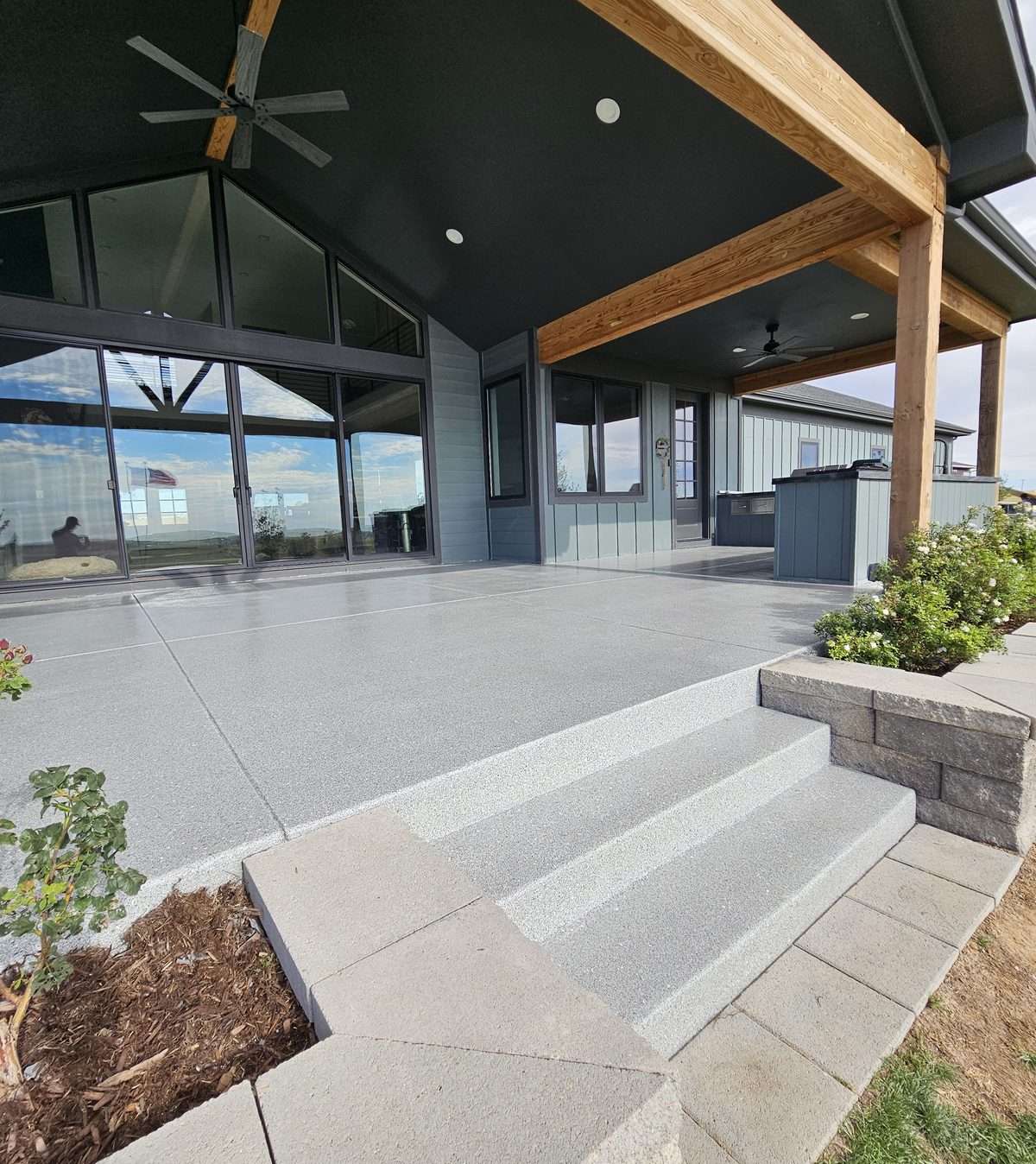
Coatings engineered for Colorado’s freeze-thaw cycles and UV exposure prevent the slip hazards and surface degradation that unprotected concrete develops within two seasons.
A porch and a walkway fail in different places even though they get quoted together. The porch holds standing snow against the house while the walkway takes the shovel, so porch & walkway concrete coatings often end up as two specifications on one invoice. Treating the two as one surface is how porch & walkway concrete coatings end up over-built in one spot and thin in the other.
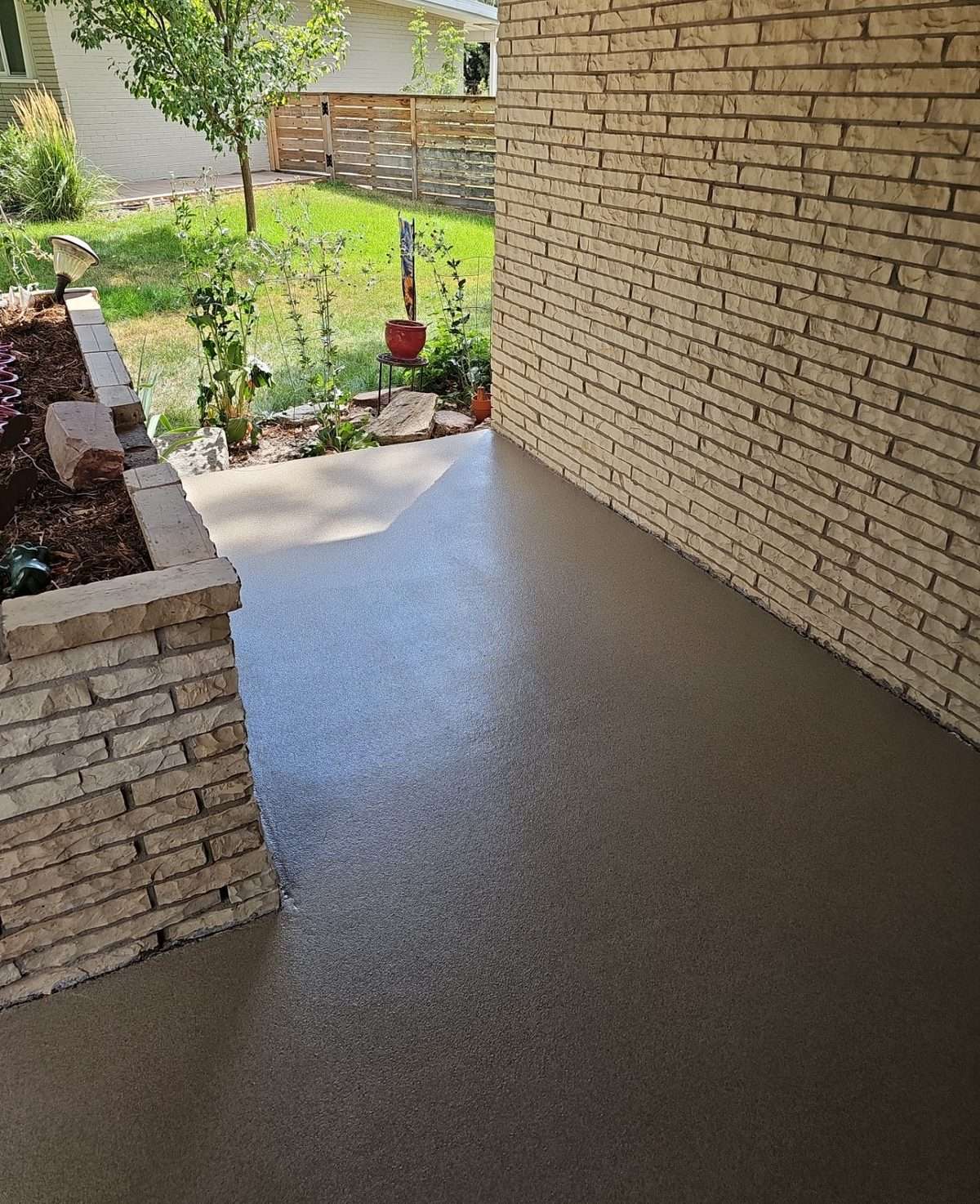
If you have ever watched a contractor skip the moisture test because the slab looked dry, then seen the coating bubble six months later, you already know why preparation determines longevity more than resin brand. Professional porch & walkway concrete coatings in Parker typically cost $7 to $10 per square foot, with the majority of that investment going into substrate work most homeowners never see.
George came to us anxious about meeting a move-in deadline after coordinating remotely. We ran ASTM F2170 testing, ground to profile, and finished ahead of schedule, and the surface held through two freeze-thaw cycles without a single lift at the threshold where most coatings fail first.
Steps are where this is decided. The edge someone plants a foot on in the dark carries the highest consequence on the whole job, so porch & walkway concrete coatings take their heaviest texture there and a lighter one across the open run. Our portfolio shows how porch & walkway concrete coatings read once that texture is down and cured.
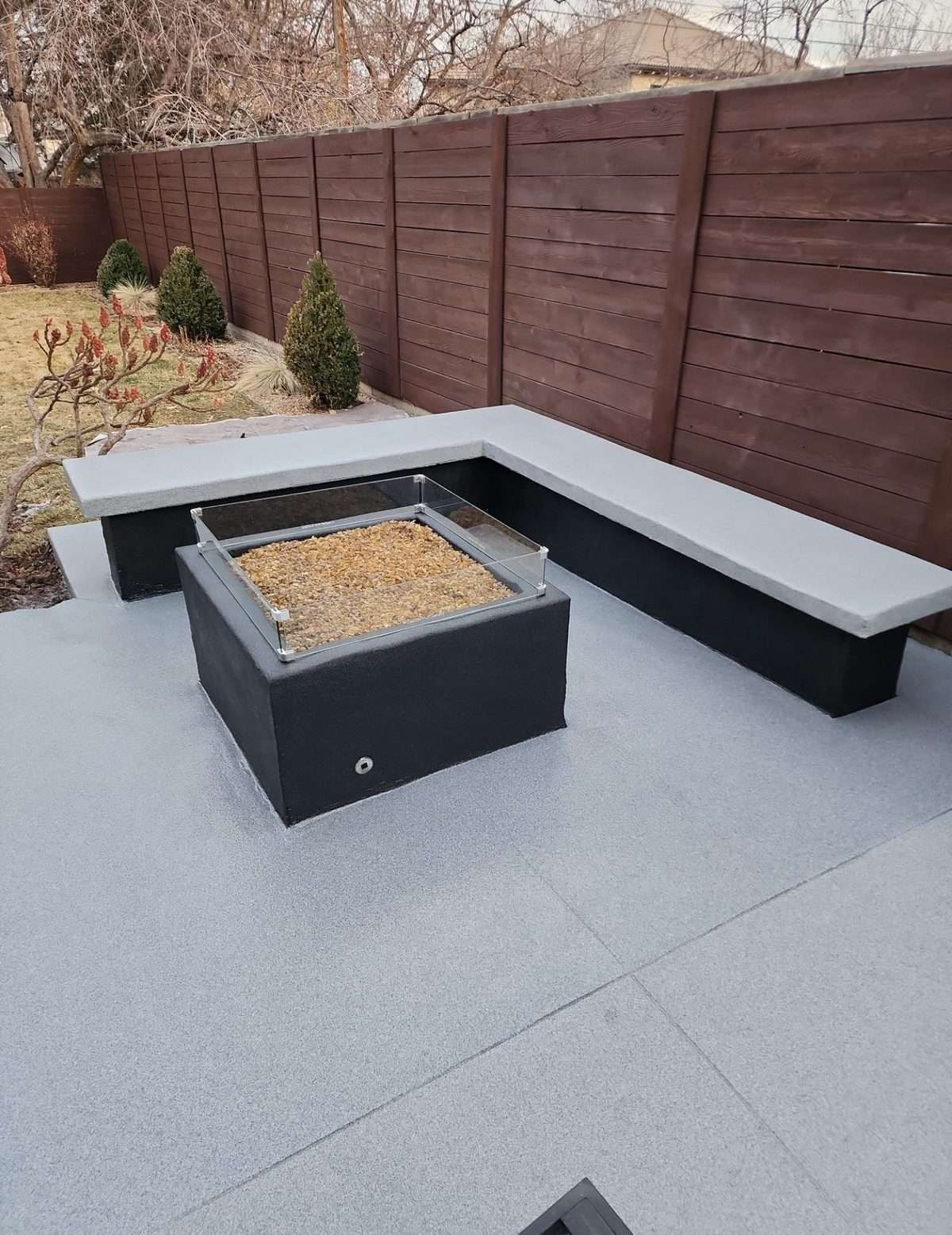
The three-stage diagnostic process prevents the most common failure mode in Parker: coatings applied over untested concrete that looked dry but carried enough subsurface moisture to push the new layer off within eighteen months.
At EvrStep Epoxy Coatings, we run ASTM F2170 in-slab RH testing before any coating touches the surface to prevent delamination from moisture migration.
We chase cracks with polyurea filler and diamond-grind to the ICRI CSP-2 profile, creating mechanical teeth that adhesion testing confirms at 300+ psi.
Diane came to us after a previous coating peeled at the threshold; we applied moisture vapor barrier primer and polyaspartic topcoat that held through two winters without lifting. Tim needed his porch ready for a family gathering; we verified cure with dew point checks and delivered the traction we had specified and it performed exactly as specified. Professional porch & walkway concrete coatings in Parker typically cost $7 to $10 per square foot depending on system complexity and surface condition.
De-icing salt is the other seasonal argument. Chloride sits in the slab and works at the bond from underneath, which is why concrete repair often comes before porch & walkway concrete coatings rather than after them. Spalled nosings do not improve under porch & walkway concrete coatings; they telegraph straight through.
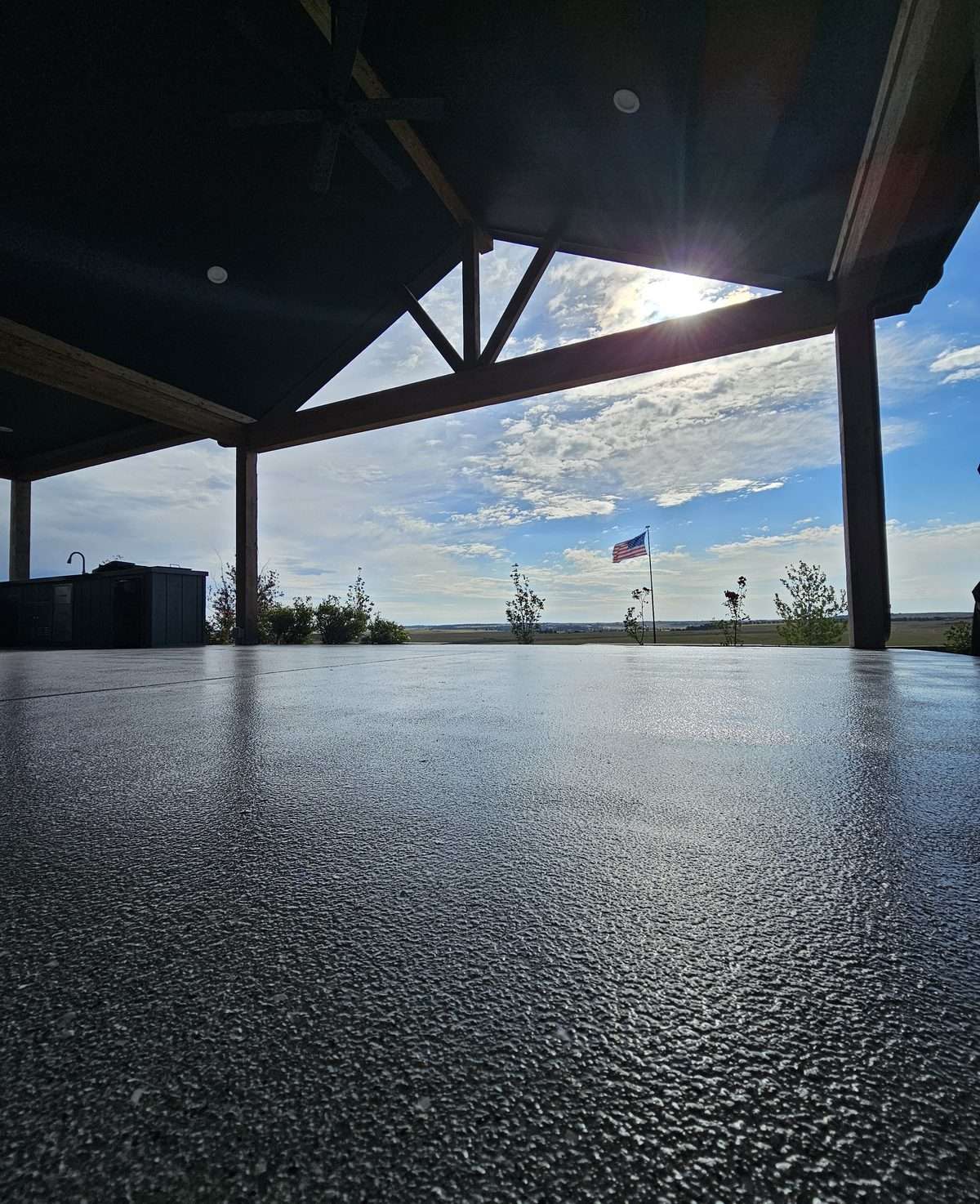
Moisture testing, mechanical surface profile, and measured traction additives determine whether a porch or walkway system survives Parker’s freeze-thaw cycles. The coating brand matters less than the substrate preparation sequence and the installer’s willingness to verify conditions before application.
Before selecting a coating, verify in-slab relative humidity with ASTM F2170. Achieve an ICRI CSP 2-3 profile by diamond grinding, then apply a moisture-barrier primer if RH exceeds product limits. These steps prevent blistering and ensure long-term adhesion.
The mechanical bond for polyaspartic systems relies on a proper concrete surface profile. Diamond grinding to ICRI CSP 2-3 creates sufficient texture, while acid etching leaves a smooth finish that fails under freeze-thaw cycles. Professional prep typically consumes half the labor budget.
Traction is achieved by incorporating measured aluminum oxide into the topcoat. Wet DCOF is measured under ANSI A326.3, which is what turns traction into a number. ASTM E303 uses a British pendulum instead and reports on its own scale, so the two sets of readings are not interchangeable. The additive maintains traction even after repeated deicing-salt exposure.
Where this fits: the exterior concrete coatings page covers the wider set. A patio behind the house sits in a completely different exposure from a porch at the front, so porch & walkway concrete coatings get specified for the side of the building they actually live on rather than for the address.
EvrStep Epoxy Coatings serves homeowners throughout Parker and surrounding Douglas County communities, installing porch & walkway concrete coatings directly at residential properties. From Stonegate to Castle Rock, the team reaches Parker-area homes via I-25, E-470, and Parker Road, covering neighborhoods across the Front Range corridor. Projects begin with on-site moisture testing and surface evaluation, followed by diamond grinding and coating application completed within a two-day window for most exterior installations.
Service Area Coverage
Installations include ASTM F2170 moisture testing and ICRI CSP-2 surface preparation performed on-site before coating application begins.
Quoting is per surface, not per address. Porch & walkway concrete coatings are priced from what each run has to survive, and two porch & walkway concrete coatings jobs on the same street can differ by a full system.
Surface preparation determines coating adhesion and longevity. Proper cleaning, crack repair, and profile creation prevent delamination, especially when moisture or contaminants remain trapped beneath the finish.
Concrete must be clean, dry, and profiled before any coating bonds correctly. Oil stains, efflorescence, and loose material cause adhesion failure within months. Diamond grinding opens the pore structure so resin penetrates rather than sitting on top. Crack repair comes next, not after. Coatings bridge hairline fissures but cannot stop active movement. Parker’s freeze-thaw cycles make this step non-negotiable. Skip it, and water migrates under the film by spring.
Substrate condition, traffic patterns, and exposure to freeze-thaw cycles determine coating selection. Porches facing south in Parker experience different wear than shaded north-facing entries, requiring different texture profiles and UV-stable formulations.
Substrate condition dictates everything. Porches with existing cracks wider than a quarter-inch need structural repair before any coating goes down, or the coating will telegraph those flaws within months. Traffic patterns matter more than most homeowners expect. A front entry that sees daily foot traffic, grocery bags, and stroller wheels needs a different texture profile than a decorative side porch used twice a month. Freeze-thaw exposure in the Parker area separates coatings that last from coatings that delaminate by the second winter. North-facing walkways that stay wet longer require moisture-vapor considerations that sunny exposures do not.
Traction becomes the first thing to settle on any surface near steps or slopes. Coatings with inadequate texture create liability, especially when wet. The right system accounts for how water drains, where ice forms, and what footwear will contact the surface daily.
EvrStep Epoxy Coatings builds traction through texture additives and finish selection matched to exposure conditions. Effectiveness depends on traffic patterns, weather exposure, and maintenance consistency.
Porches and walkways freeze in winter. They collect rain. They stay shaded under overhangs where moisture lingers. EvrStep Epoxy Coatings addresses traction by matching texture profiles to how each surface gets used and what weather it faces in Parker. A front entry path that sees morning frost needs different traction than a covered back porch. The coating system includes texture additives mixed into the topcoat, not just sprinkled on top where they wear unevenly.
Traction degrades when the texture gets clogged. A porch coating that felt secure in July can turn slick by October if pine needles pack into the texture valleys. EvrStep Epoxy Coatings selects finish options that match how much maintenance a homeowner will realistically perform, not just what sounds safest on paper.
Concrete coatings for entry paths improve traction, resist weather damage, and reduce maintenance needs. Performance depends on proper surface preparation and selecting finishes matched to foot traffic patterns and exposure conditions.
EvrStep Epoxy Coatings applies porch & walkway concrete coatings that handle freeze-thaw cycles without cracking. Textured finishes prevent slips during rain or snow. The coatings block moisture intrusion that causes spalling. Maintenance drops to occasional cleaning instead of annual sealing. Parker homeowners see entry surfaces that stay intact through temperature swings. EvrStep Epoxy Coatings matches coating systems to sun exposure and traffic volume, so durability aligns with actual use.
Texture options range from smooth to aggressive profiles, chosen based on exposure to weather and foot traffic patterns. Finish selection depends on how much traction the surface needs, aesthetic goals, and whether the surface stays wet during Colorado winters.
Smooth finishes look clean but turn dangerous when wet. Porches that stay shaded or collect snow need texture built into the coating system itself, not just sprinkled on top. A light orange peel texture handles occasional moisture without feeling rough underfoot. Walkways exposed to ice melt or constant traffic require deeper profiles, sometimes aggressive enough that you feel the grip through shoes. The texture gets locked into the topcoat during application, so it does not wear off like grit broadcast over wet epoxy. Parker winters test every finish choice. Coatings without enough tooth become skating rinks by December.
Finish clarity matters as much as texture depth. High-gloss coatings show every footprint and water spot. Satin finishes hide wear better and still reflect enough light to feel intentional. The right combination depends on how the space gets used and who maintains it.