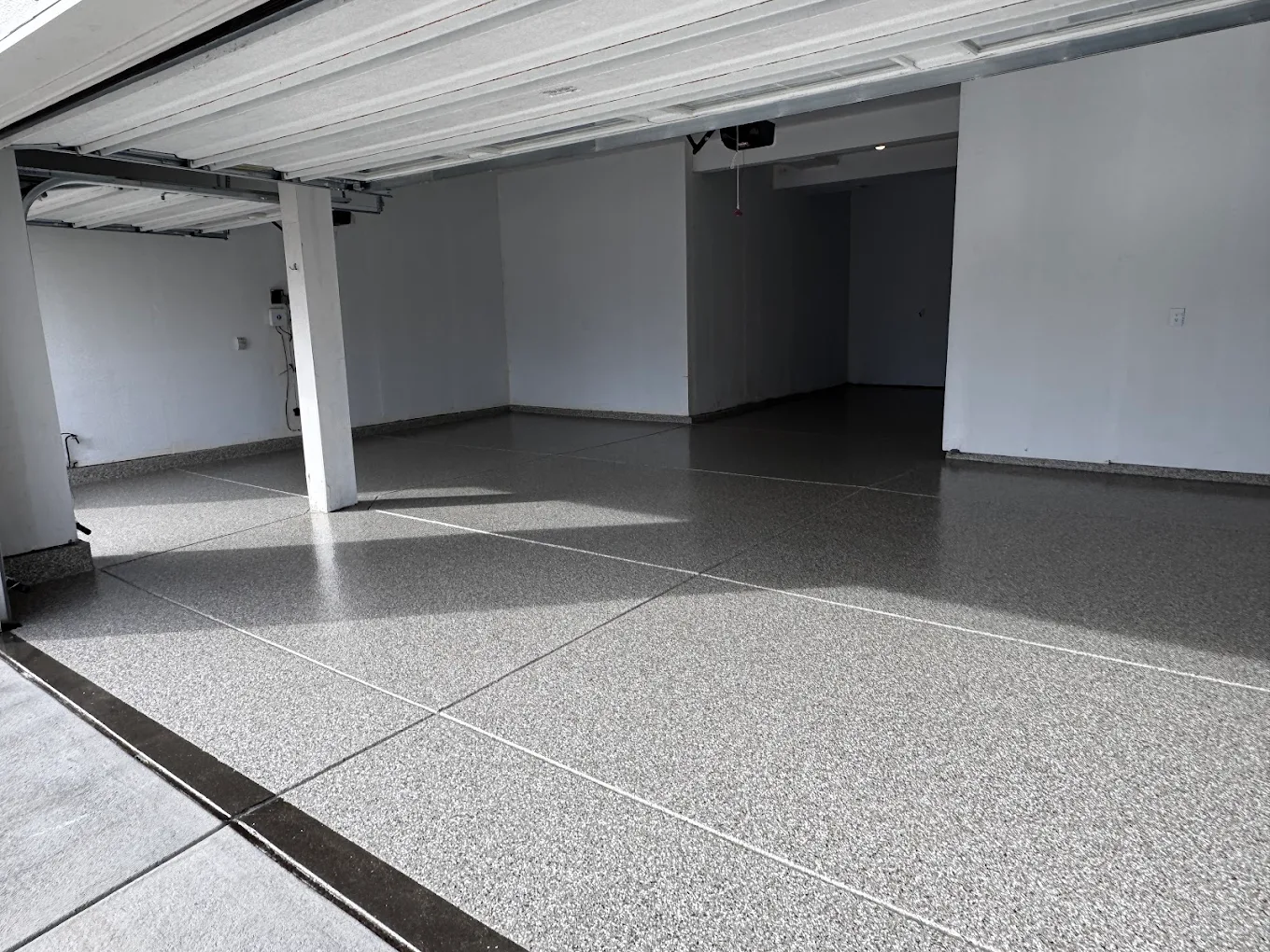
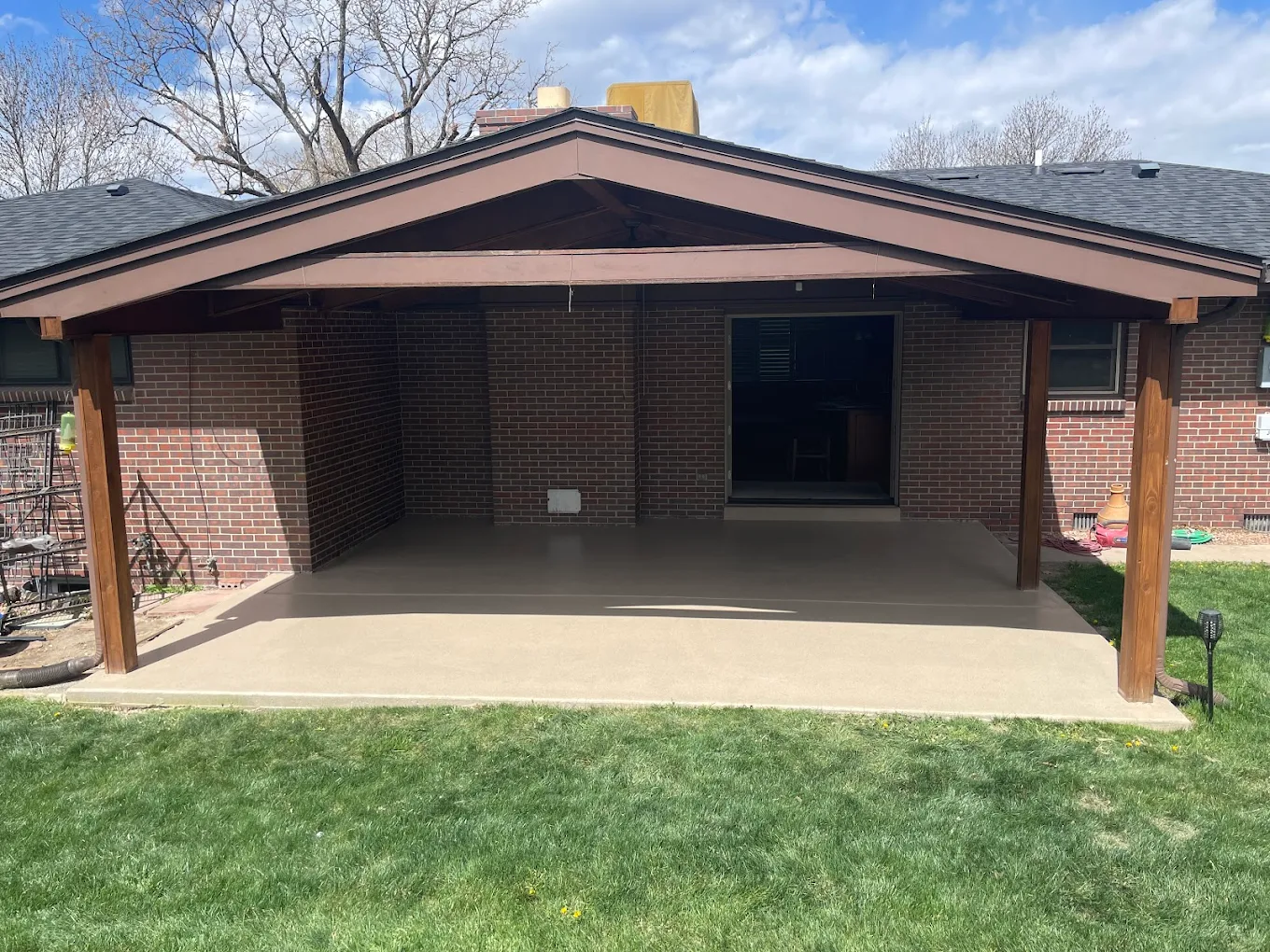
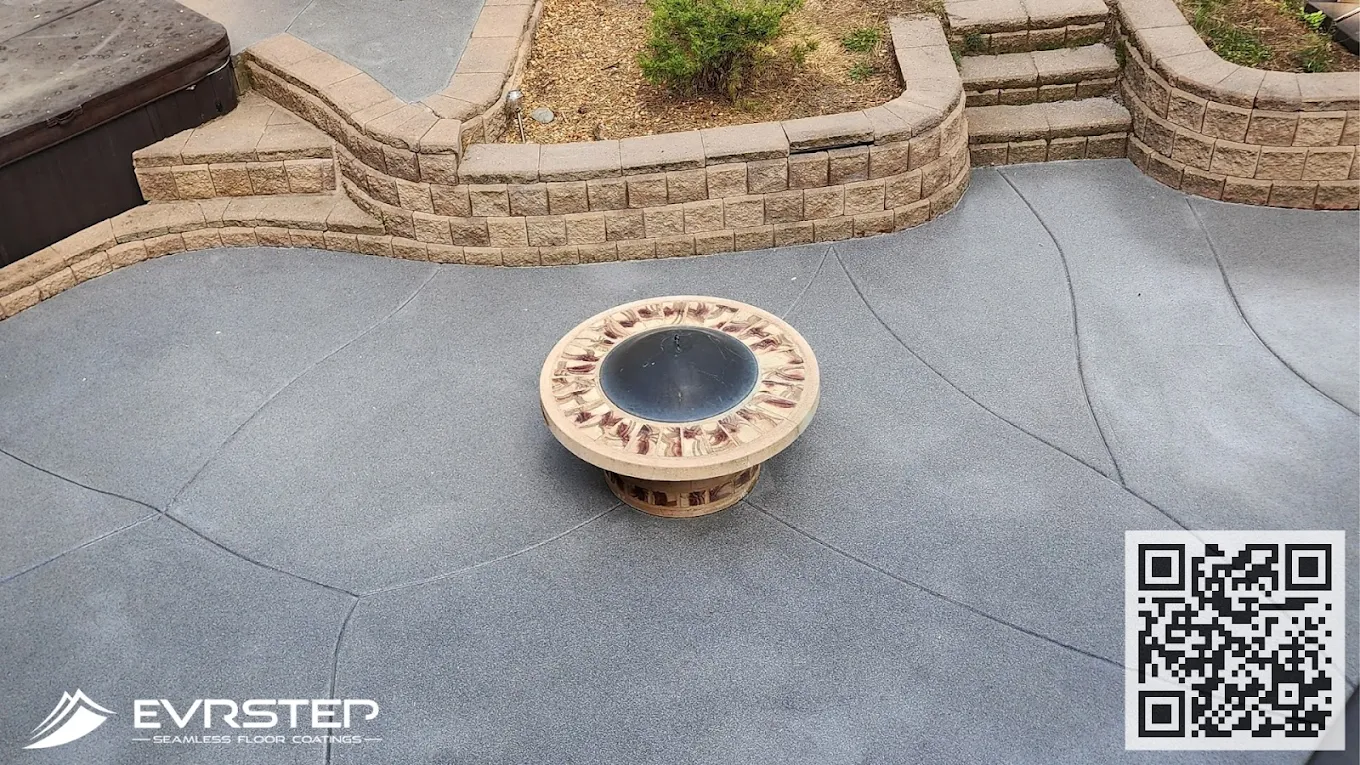
For outdoor surfaces in Parker, Kansas, sealants are highly recommended over epoxy. Epoxy is a non‑breathable, film‑forming coating that lacks UV stability. When used outdoors in Kansas’s harsh sun and freezing temperatures, epoxy will quickly yellow, chalk, crack, and peel.
Choosing the right option for your project depends on material, exposure, and maintenance expectations. Penetrating sealers such as silane, siloxane, or acrylic provide breathable protection, while epoxy excels in indoor, temperature‑controlled environments.
- Sealants: They penetrate deep into concrete, forming a breathable, water‑resistant molecular barrier that resists peeling and yellowing, ideal for driveways, patios, and sidewalks, typically needing reapplication every two to five years.
- Epoxy: Creates a thick, hard plastic‑like shell that works well indoors but degrades quickly outdoors under UV rays and freeze‑thaw cycles.
- Material Type: Identify whether you’re treating a concrete patio, wood deck, or brick surface before selecting a product.
- Sun Exposure: Consider if the surface receives direct sunlight or stays mostly in shade.
Sealants outlast epoxy on Parker’s sun‑baked slabs because they breathe and resist UV damage. Epoxy may look great indoors, but outdoor exposure quickly erodes its performance.
Ever wondered why your driveway coating flakes after a single summer? The answer often lies in the chemistry of the material you chose and how it reacts to Parker’s intense sun and winter freeze‑thaw cycles.
In this guide we’ll compare the real‑world behavior of epoxy versus sealant outdoors, break down the science behind each option, and give you clear steps to pick the right system for your concrete, brick, or wood project.
Why Most Outdoor Sealants Fail Within Two Years of UV Exposure
UV radiation breaks down polymer chains in many sealants, especially those lacking stabilizers. In Parker’s high‑altitude sun, this process accelerates, leading to chalking and loss of water resistance after just a couple of seasons.
Even premium acrylics can suffer when the topcoat isn’t formulated for UV stability. The result is a surface that looks dull, lets moisture seep, and eventually peels under traffic.
Key Failure Factors
- UV Degradation: Sunlight splits molecular bonds, causing yellowing and brittleness, which reduces the sealant’s protective ability.
- Insufficient Stabilizers: Without HALS or UV absorbers, the film cannot absorb UV energy, leading to rapid surface breakdown.
- Temperature Cycling: Freeze‑thaw stresses create micro‑cracks in the cured film, allowing water intrusion and further degradation.
- Improper Thickness: Thin applications cure too quickly, leaving a weak barrier that cracks under expansion and contraction.
- Lack of Maintenance: Skipping scheduled re‑seal allows minor wear to become major failure points.
Because these mechanisms act together, many homeowners see sealant performance drop dramatically after two years. Selecting a product with proven UV stabilizers and following manufacturer thickness guidelines can dramatically extend service life.
The Adhesion Problem That Makes Epoxy the Wrong Choice for Certain Surfaces
Epoxy’s strength comes from a tightly cross‑linked polymer network that bonds well to clean, dry concrete. However, when the substrate contains moisture or is porous, the bond can fail, especially under Parker’s freeze‑thaw cycles.
The Concrete Technology Center notes that concrete that hasn’t reached at least 75 % of its design strength can release vapor that creates blistering under epoxy films, compromising adhesion.
A quick look at how moisture content and surface preparation affect epoxy adhesion:
| Moisture Level | Recommended Prep | Adhesion Risk |
|---|---|---|
| < 0.5 % RH | Standard grinding, CSP 2‑3 | Low |
| 0.5‑1.0 % RH | Extended drying, CSP 3‑4 | Medium |
| > 1.0 % RH | Moisture barrier, moisture‑cure epoxy | High |
Adhesion Challenges
- Moisture Vapor: Trapped moisture expands during thaw, lifting the epoxy film and causing delamination.
- Surface Profile: Inadequate grinding leaves a smooth surface that limits mechanical interlock, reducing bond strength.
- Temperature Limits: Epoxy cures poorly below 50 °F, leading to soft spots that crack when temperatures rise.
- Chemical Sensitivity: De‑icing salts can infiltrate micro‑cracks, accelerating corrosion beneath the coating.
- Cure Timing: Delayed recoat windows allow contaminants to settle, weakening the final bond.
In practice, the safest approach is to test concrete humidity before epoxy application and to use a primer designed for high‑moisture conditions. When those steps are missed, the result is a brittle film that peels under Parker’s winter cycles.
How Temperature Swings Above 90°F Reveal the Real Durability Gap
When summer temperatures climb above ninety degrees, epoxy softens and can lose its hardness, while many sealants retain flexibility. This thermal softening is especially noticeable on sun‑exposed driveways in Parker.
Thermal expansion also stresses joint interfaces; sealants designed for movement absorb the strain, whereas epoxy’s rigidity leads to cracking.
Thermal Effects
- Softening Point: Epoxy’s glass transition temperature often sits near 80 °F, so higher temps make the surface more pliable and prone to abrasion.
- Expansion Coefficient: Concrete expands roughly 0.000009 in/in/°F; sealants accommodate this movement, epoxy does not.
- Heat‑Induced Curing: Rapid temperature rise can cause surface skin formation, trapping solvent underneath and leading to blistering.
- UV‑Accelerated Aging: Heat amplifies UV degradation, causing faster chalking on epoxy films lacking UV‑stable topcoats.
- Moisture Migration: Hot weather drives moisture toward the surface, increasing the risk of vapor pressure buildup under epoxy.
Because Parker’s climate swings from hot summers to icy winters, a material that stays flexible across that range proves far more reliable. Sealants engineered for high‑temperature performance often outlast epoxy in these conditions.
What Happens When You Apply Sealant Over Epoxy (and Vice Versa)
Layering sealant over a cured epoxy film can trap moisture underneath, leading to blistering and loss of adhesion. Conversely, applying epoxy over a sealant‑treated surface can prevent the epoxy from bonding properly because the sealant creates a low‑energy barrier.
Both scenarios illustrate why surface preparation and product compatibility are critical before any coating system is installed.
Compatibility Issues
- Moisture Entrapment: Sealant applied over epoxy can seal in residual moisture, causing bubbles that burst under traffic.
- Adhesion Barrier: Epoxy will not chemically bond to many silicone‑based sealants, resulting in a weak interface.
- Cure Interference: The solvent in sealants can soften the epoxy surface, compromising its hardness.
- Differing Flexibility: Mismatched movement capacities cause the top layer to crack while the underlying layer remains intact.
- Warranty Void: Most manufacturers require a clean, untreated substrate; mixing systems often voids performance guarantees.
The safest route is to choose one system and follow its full preparation guide. If a repair is needed, remove the existing layer completely before applying a new product.
The Flexibility vs. Hardness Tradeoff That Determines Which Product Survives
Hardness gives epoxy its abrasion resistance, but too much rigidity makes it vulnerable to cracking under Parker’s freeze‑thaw cycles. Sealants, on the other hand, stay flexible, allowing them to bridge small movements without breaking.
Understanding this trade‑off helps you match the material to the expected load and environmental stress.
Typical performance ranges for epoxy and sealant systems:
| Property | Epoxy | Sealant |
|---|---|---|
| Hardness (Shore D) | 80‑95 | 30‑45 |
| Elongation (%) | 2‑5 | 150‑600 |
| UV Stability | Requires topcoat | Inherent |
| Slip Resistance (COF) | 0.5‑0.6 with additives | 0.6‑0.8 |
Choosing the Right Balance
- Load Bearing: For high‑traffic patios, epoxy’s hardness resists wear, but a flexible topcoat is needed to handle thermal movement.
- Water Exposure: Sealants excel where water infiltration is a concern, as they remain permeable enough to let vapor escape.
- Aesthetic Preference: Epoxy can provide a glossy, uniform finish; sealants often leave a matte, natural look.
- Repair Simplicity: Spot‑treating a cracked sealant is easier than grinding out a failed epoxy film.
- Cost Consideration: Epoxy systems usually have higher material costs but may last longer if UV‑protected; sealants have lower upfront cost but require periodic re‑application.
When you weigh hardness against flexibility, the decision hinges on the specific stresses your outdoor surface will face. In Parker’s climate, a hybrid approach, using a thin, UV‑stable epoxy primer topped with a flexible sealant, often delivers the best of both worlds.
Why We Specify Epoxy for Horizontal Surfaces and Sealant for Vertical Joints
Horizontal slabs such as driveways benefit from epoxy’s abrasion resistance, while vertical joints need a material that can accommodate movement without cracking. Sealants are formulated to stretch and recover, making them ideal for expansion joints and control gaps.
This division of labor follows industry best practices and aligns with the performance data from the American Concrete Institute.
Application Logic
- Horizontal Load: Epoxy’s high compressive strength protects against tire wear and heavy equipment traffic.
- Joint Movement: Sealants classified under ASTM C920 Class 25 or higher handle up to six percent joint movement without failure.
- Moisture Pathways: Vertical joints act as drainage channels; sealants prevent water ingress while allowing vapor escape.
- UV Exposure: Epoxy on a flat slab can be topped with a UV‑stable coating, whereas sealants inherently resist UV on joint faces.
- Repair Frequency: Joint sealants are easier to re‑apply, reducing downtime compared to grinding and recoating a full epoxy slab.
By assigning each material to the role it performs best, homeowners in Parker achieve longer‑lasting protection with less maintenance. The key is to follow proper surface prep and product specifications for each application.
The Recoat Window That Separates Professional Results from Peeling Disasters
Both epoxy and sealant systems have a limited period after curing when a new layer can bond effectively. Applying a second coat outside this window often leads to poor adhesion and eventual peeling.
Understanding the recoat timing helps you avoid costly failures, especially in Parker’s variable climate where humidity can shift quickly.
Timing Guidelines
- Epoxy Recoat: Typically 6‑12 hours at 70 °F; humidity above 85 % can extend the window.
- Sealant Recoat: Many silicone‑based sealants allow re‑application after 24 hours, but polyurethane sealants may need 48 hours for full cure.
- Temperature Influence: Cooler evenings in Parker can slow cure, so schedule recoat during warm daytime periods.
- Surface Cleanliness: Re‑coat only after removing dust, oil, or moisture; a simple wipe‑down with is‑free solvent works.
- Testing Bond: A quick tape test after the recommended window confirms readiness before proceeding.
Following the manufacturer’s recoat window ensures a seamless bond and prevents the peeling that often plagues DIY projects. When in doubt, wait a few extra hours and test adhesion before committing to the next layer.
Choosing the Right Outdoor Protection
We’ve walked through the science behind epoxy and sealant performance, highlighted the pitfalls of UV exposure, moisture, and temperature swings, and laid out clear guidelines for preparation, application, and maintenance. By matching material properties to Parker’s climate and the specific demands of your surface, you can avoid premature failure and keep your outdoor areas looking great for years.
If you’re ready to protect a driveway, patio, or walkway, start by testing concrete moisture, select a UV‑stable system, and respect recoat windows. For personalized advice, reach out to a qualified local provider who understands Parker’s unique conditions.
Author
This article was written by the EvrStep Epoxy Coatings Editorial Team, experienced professionals serving Parker. Our team focuses on educating clients and providing valuable insights to help them make informed decisions.