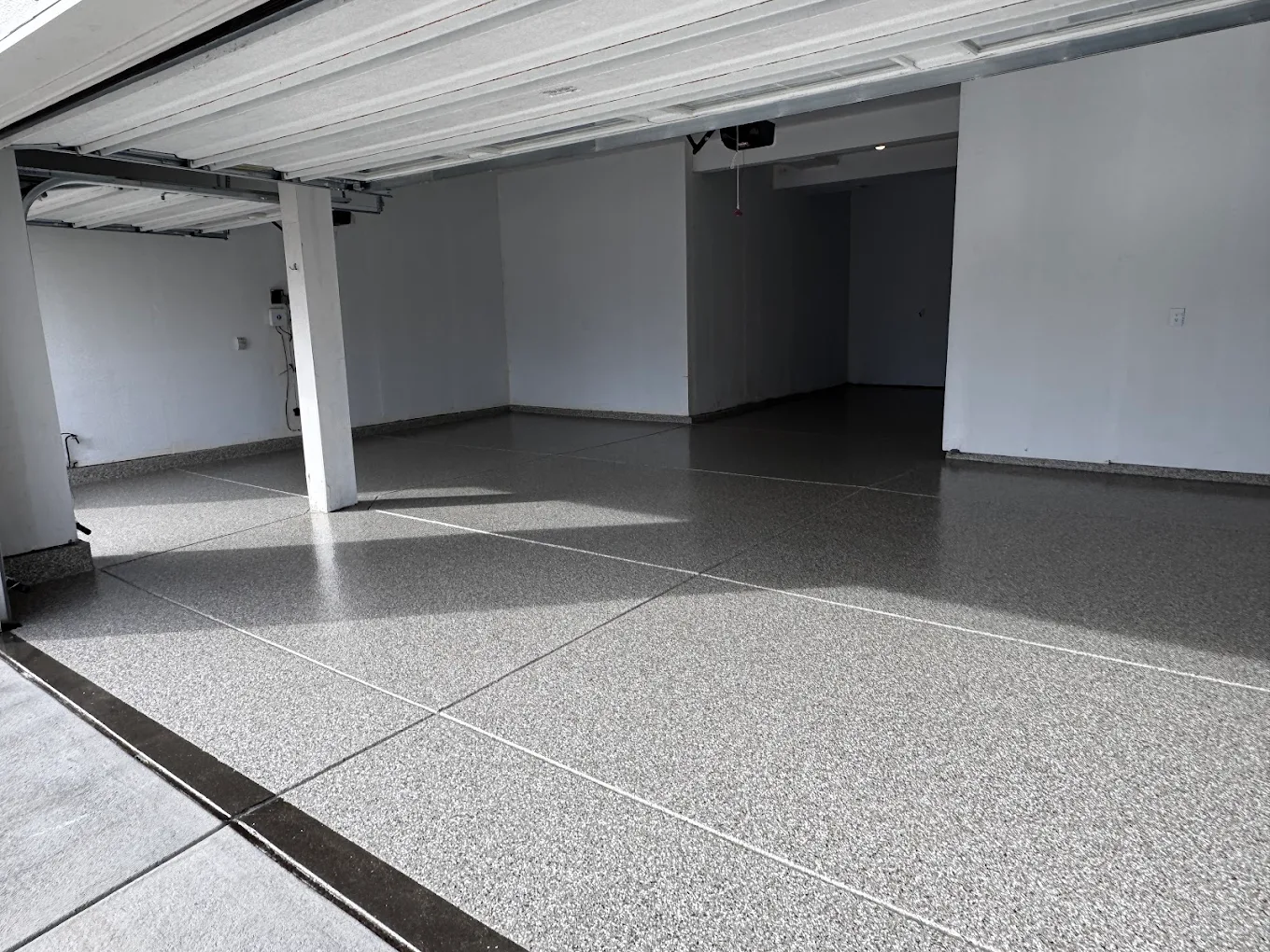
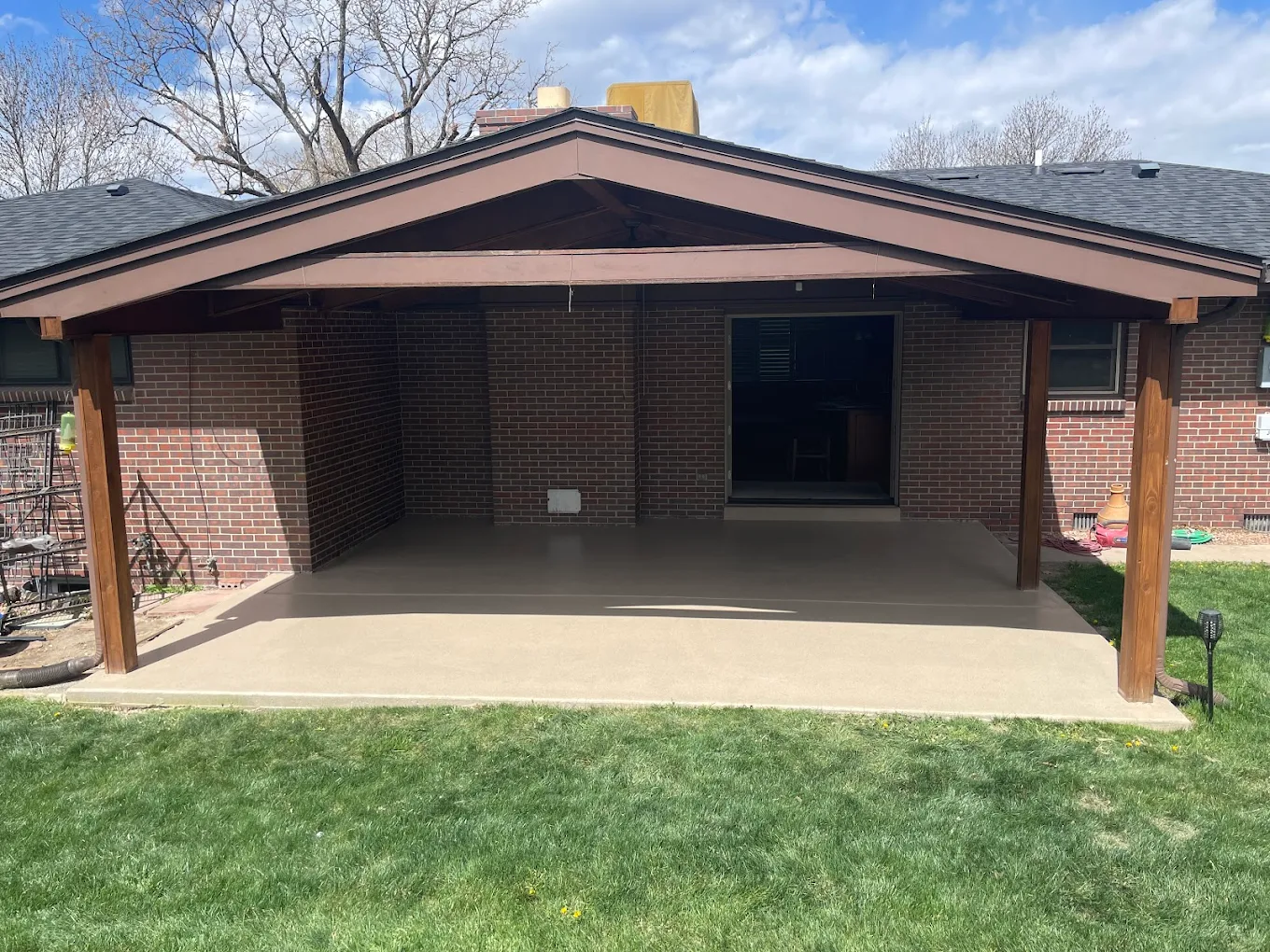
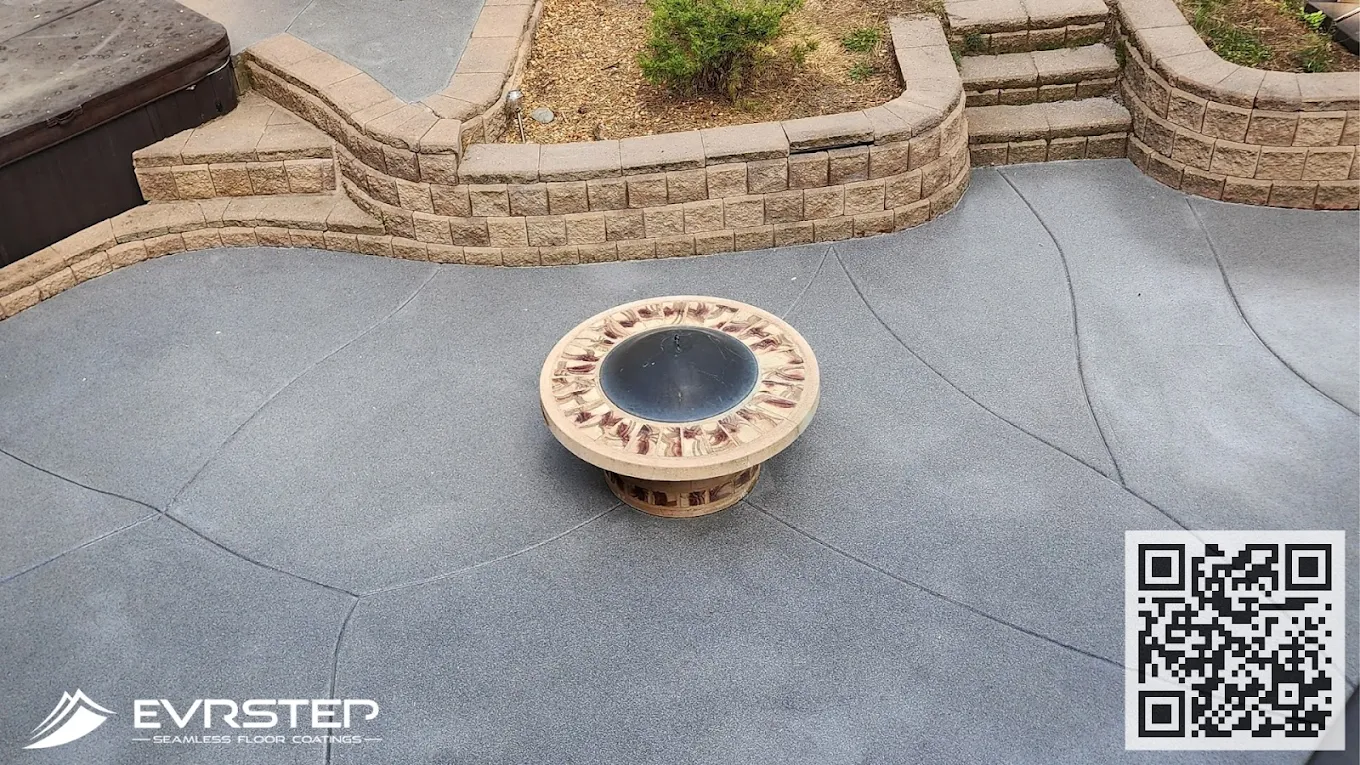
A professionally installed exterior epoxy or resinous floor system in Parker, Colorado generally delivers 10 to 20 years of full structural adhesion, though the clear topcoat typically needs maintenance or resealing every 2 to 5 years. This shorter topcoat interval stems from Parker’s intense UV exposure and high-altitude sun, which accelerate surface degradation. Specialized contractors like Elevated Epoxy Co offer anti-slip coatings engineered to handle these demanding environmental conditions.
- Factors Affecting Lifespan in Parker: High-altitude UV exposure can yellow or chalk standard epoxy without a UV-stable topcoat like polyaspartic or urethane, while freeze-thaw cycles stress the concrete and require professional surface prep and moisture barriers to prevent delamination. Applying a fresh clear topcoat every few years protects the pigmented base layer, and traffic type, whether heavy foot traffic, patio furniture, or vehicle use, determines how quickly the texture and finish wear down.
- Surface Type Consideration: The longevity and maintenance schedule vary depending on whether the surface is a patio, driveway, or pool deck, as each experiences different levels of exposure, moisture, and mechanical wear.
- Existing Substrate Condition: Performance depends significantly on whether the surface is currently bare concrete or has an old failing coating that must be properly removed or prepared before the new epoxy system can achieve full adhesion.
Exterior epoxy systems can survive a decade or more, but UV and freeze‑thaw stress shorten the clear topcoat life. Proper prep, UV‑stable topcoats and regular resealing keep performance on track.
If you’ve ever wondered why a fresh driveway looks pristine for a few summers and then starts to chalk, you’re not alone. The chemistry behind exterior epoxy systems interacts with Parker’s high altitude sun and winter cycles in ways most homeowners miss.
In this guide you’ll learn the hidden factors that dictate how long an exterior epoxy system lasts, see real‑world examples from local projects, and get a clear maintenance plan that avoids premature failure.
Why Most Exterior Epoxy Systems Fail Between Years 3 and 5
In Parker, the period from the third to the fifth year often reveals the first signs of trouble for many exterior epoxy installations. The combination of seasonal UV spikes and subtle moisture migration creates a perfect storm for delamination and surface wear.
Most owners assume that a solid bond at install guarantees a decade of trouble‑free service, yet the underlying concrete continues to breathe and shift long after the cure. When the coating can’t accommodate that movement, cracks and peeling appear, usually around the three‑year mark.
Key Failure Triggers
- UV‑Induced Chalking: Sunlight at 5,800 feet accelerates polymer breakdown, leading to a powdery surface that loses traction and aesthetic appeal.
- Moisture Vapor Pressure: Rising concrete humidity after a rainy spring pushes vapor through the coating, causing blisters that burst by year four.
- Inadequate Surface Profile: A CSP lower than 3 leaves insufficient mechanical key, so the epoxy lifts under thermal expansion.
- Improper Mixing Ratios: Slight deviations in resin‑to‑hardener proportions create weak spots that fail under traffic loads after a few seasons.
- Neglected Topcoat Renewal: Skipping the recommended reseal at the two‑year point leaves the base coat exposed to the elements, hastening degradation.
Understanding these triggers helps you spot early warning signs before costly repairs become necessary. By addressing UV protection, moisture control, surface texture, mix accuracy and timely topcoat renewal, you can push the system well beyond the typical three‑to‑five‑year failure window.
UV Exposure Does More Damage Than Traffic in the First Two Years
During the first 24 months, the sun’s ultraviolet rays are the primary aggressor on exterior epoxy, especially in a semi‑arid climate like Parker’s. Even low‑traffic patios suffer more from UV‑induced polymer breakdown than from occasional foot traffic.
The chemistry behind UV damage involves photon energy breaking molecular bonds, which leads to surface chalking and loss of gloss. A topcoat formulated with UV stabilizers or an aliphatic polyurethane shield can dramatically slow this process.
A quick comparison of common topcoat options and their UV resistance:
| Topcoat Type | UV Stability | Typical Lifespan |
|---|---|---|
| Standard Epoxy | Low | 2‑4 years |
| Aliphatic Polyurethane | High | 10‑15 years |
| Polyaspartic | Very High | 15‑20 years |
UV Impact Factors
- Altitude‑Amplified UV: At nearly 6,000 feet, UV intensity is roughly 15 % higher than sea level, accelerating yellowing of standard epoxy resins.
- Sun‑Facing Orientation: South‑facing decks receive the most direct sunlight, causing faster pigment fading and surface brittleness.
- Lack of UV‑Stabilizers: Epoxy without added HALS or UV absorbers loses up to 30 % of its tensile strength within the first year.
- Temperature‑Driven Curing: Hot afternoons speed cure, trapping internal stresses that later manifest as cracks under UV exposure.
Prioritising a UV‑stable topcoat early on protects the underlying epoxy from the most aggressive environmental factor, allowing the system to retain its appearance and performance well beyond the first two years.
The Surface Prep Decision That Adds 5+ Years to System Lifespan
Surface preparation is the foundation of any durable exterior epoxy system, and the choice of profile can add several years to the overall lifespan. In Parker, where freeze‑thaw cycles stress the concrete, a proper CSP (Concrete Surface Profile) is essential for lasting adhesion.
While some installers settle for a light grind, the most reliable results come from a CSP of 3‑4 achieved through shot blasting or diamond grinding. This creates a roughness that locks the epoxy in place, resisting both moisture intrusion and thermal movement.
Prep Options Overview
- CSP 2 (Light Grind): Quick and inexpensive, but often insufficient for high‑traffic areas, leading to premature delamination.
- CSP 3 (Medium Roughness): Provides a solid mechanical bond, suitable for most residential patios and driveways in Parker.
- CSP 4‑5 (Heavy Profile): Ideal for commercial traffic or areas with aggressive de‑icing salts, extending service life by up to five years.
- Moisture Mitigation Primer: Applying a vapor‑blocking primer after profiling prevents hidden moisture from compromising the bond.
Choosing the right prep level and adding a moisture‑control primer can be the single most effective investment, often adding a half‑decade to the epoxy’s functional life.
How Temperature Swings During Curing Predict Long‑Term Adhesion Failure
Curing temperature swings are a hidden predictor of future adhesion problems. In Parker’s spring, daytime highs can reach 80 °F while night lows dip below 30 °F, causing the epoxy to cure unevenly.
When the resin hardens too quickly in heat, it contracts and traps internal stresses. Conversely, cold nights slow the reaction, leaving uncured pockets that later become weak points under traffic.
Curing Temperature Tips
- Monitor Ambient Temperature: Aim for a stable range between 55 °F and 75 °F during the first 24 hours to avoid thermal shock.
- Use Insulating Blankets: In early spring or late fall, cover the freshly poured coating to buffer rapid temperature changes.
- Adjust Mix Ratios: Slightly increase the hardener proportion in hot weather to slow the cure, while reducing it in colder conditions for a complete reaction.
- Schedule Around Weather Forecasts: Plan installations when a three‑day window of moderate temperatures is forecasted, minimizing unexpected swings.
By managing curing conditions, you reduce hidden stresses that would otherwise lead to adhesion failure years later, ensuring the epoxy remains bonded even through Parker’s harsh winters.
What a 10‑Year Exterior Epoxy System Actually Looks Like at Year 8
By the eighth year, a well‑maintained exterior epoxy system still shows a solid bond, but subtle signs of aging appear. The clear topcoat may have a faint haze, and the aggregate texture could feel slightly smoother underfoot.
In Parker, where UV intensity and freeze‑thaw cycles are constant, the system’s visual cues help owners decide when a recoat is due. A quick visual inspection paired with a simple adhesion test can confirm whether the bond remains within acceptable limits.
Typical Condition Checklist
- Surface Gloss: Slight loss of high‑gloss finish, but no visible cracking or peeling indicates a healthy bond.
- Slip Resistance: Aggregate still provides traction; a drop in DCOF (Dynamic Coefficient of Friction) suggests topcoat wear.
- Color Consistency: Uniform hue across the slab shows that UV stabilizers are still effective.
- Adhesion Test: Pull‑off strength above 250 psi confirms the epoxy remains securely attached to the concrete.
When most of these items check out, the system is still delivering value and can safely carry on for another few years with proper maintenance.
The Topcoat Reapplication Schedule No One Follows (But Should)
Topcoat maintenance is the most overlooked step in extending an exterior epoxy’s life. Homeowners often assume the original coating will last forever, yet the clear layer bears the brunt of UV and weather exposure.
A disciplined reapplication schedule, based on traffic level and sun exposure, can keep the system looking fresh and performing at peak for a full decade or more.
A concise recoat schedule based on exposure level:
| Exposure Level | Recoat Interval | Recommended Topcoat |
|---|---|---|
| Low (Shade, Light Foot Traffic) | Every 4‑5 years | UV‑stable polyurethane |
| Medium (Partial Sun, Moderate Traffic) | Every 3‑4 years | Polyaspartic |
| High (Full Sun, Heavy Vehicles) | Every 2‑3 years | Aliphatic polyurethane |
Recommended Recoat Timeline
- Year 2‑3: Light traffic areas receive a clear UV‑stable polyurethane topcoat to restore gloss and protect against early chalking.
- Year 5‑6: Heavy‑traffic driveways benefit from a second polyaspartic layer, reinforcing abrasion resistance and color retention.
- Year 8‑9: Conduct a full surface inspection; if adhesion remains strong, a thin maintenance coat can extend life another five years.
- Post‑Winter Inspection: After each freeze‑thaw cycle, check for micro‑cracks; spot‑repair with a compatible epoxy filler prevents larger failures.
- Annual Cleaning: Gentle pressure washing removes grit that can act as a sandpaper, preserving topcoat integrity.
Following this schedule eliminates the surprise of sudden coating failure and spreads maintenance costs evenly over the system’s lifespan.
Why Cheaper Aliphatic Urethane Topcoats Outlast Premium Epoxy‑Only Systems
Many homeowners opt for a single‑coat epoxy to save money, yet the cheaper aliphatic urethane topcoat often outperforms a pricier epoxy‑only system in harsh climates. The key lies in the urethane’s flexibility and UV resistance.
In Parker, where sunrise intensity and temperature swings are relentless, a flexible urethane topcoat can absorb movement without cracking, while a rigid epoxy layer may become brittle and peel.
Urethane Advantages
- UV Resistance: Aliphatic chemistry blocks UV wavelengths, preventing yellowing for up to 15 years.
- Flexibility: Higher elongation allows the coating to expand and contract with the slab, reducing crack formation.
- Impact Tolerance: Better ability to absorb hail or stone impacts without chipping.
Choosing a high‑quality aliphatic urethane topcoat, even on a modest budget, delivers a longer‑lasting, lower‑maintenance exterior surface than a premium epoxy‑only approach.
Extending Your Epoxy Investment
A well‑planned exterior epoxy system in Parker can serve you for a decade or more when you respect the science behind UV exposure, surface preparation, and temperature‑controlled curing. Regular topcoat maintenance and the right material choices keep the coating resilient against the local climate’s toughest challenges.
If you’re ready to protect your patio, driveway or pool deck with a system that truly lasts, start by reviewing your current coating’s condition, schedule a professional inspection, and follow the maintenance roadmap outlined above. A small investment now prevents costly repairs later.
Author
This article was written by the EvrStep Epoxy Coatings Editorial Team, experienced professionals serving Parker. Our team focuses on educating clients and providing valuable insights to help them make informed decisions.