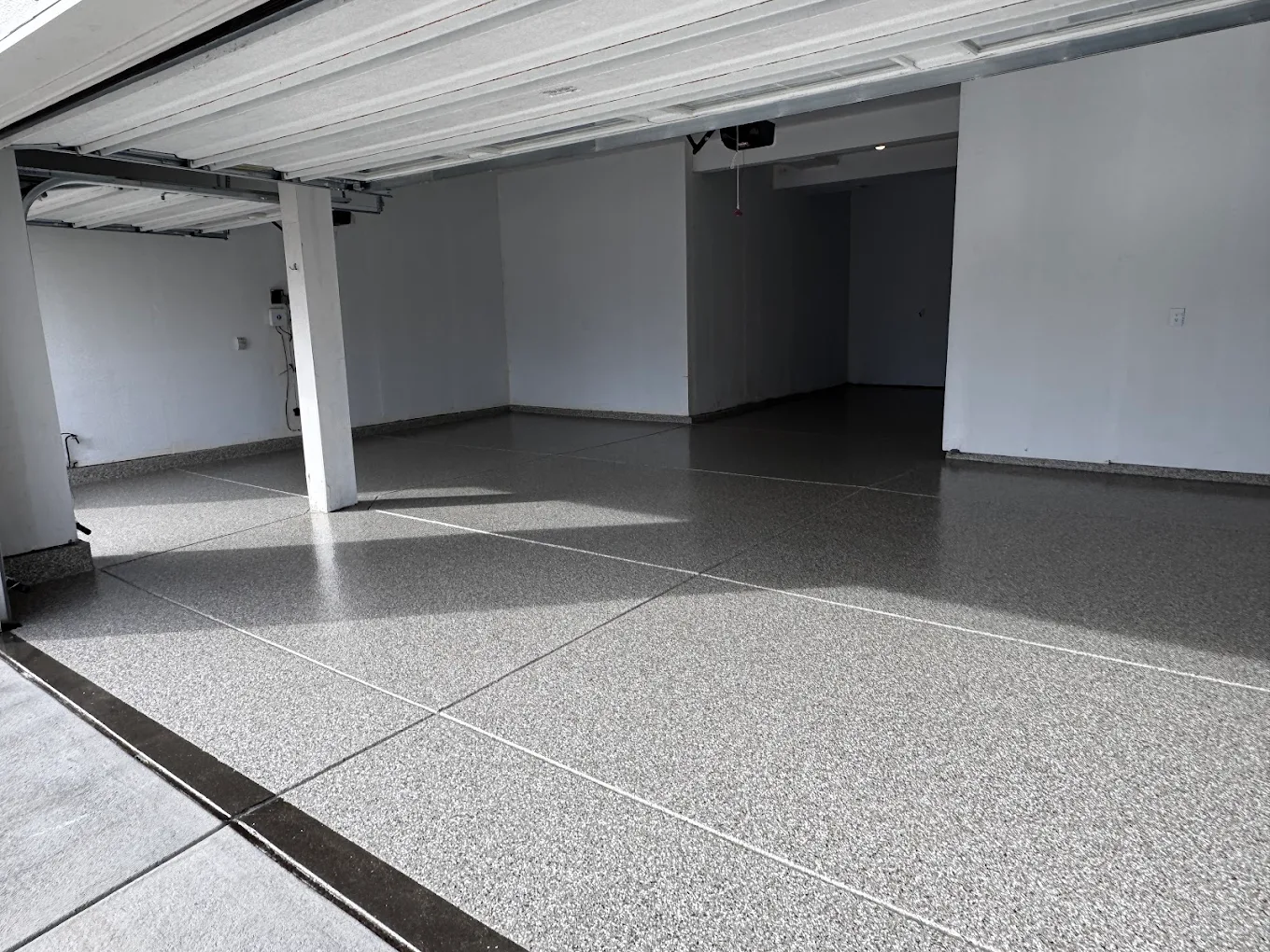
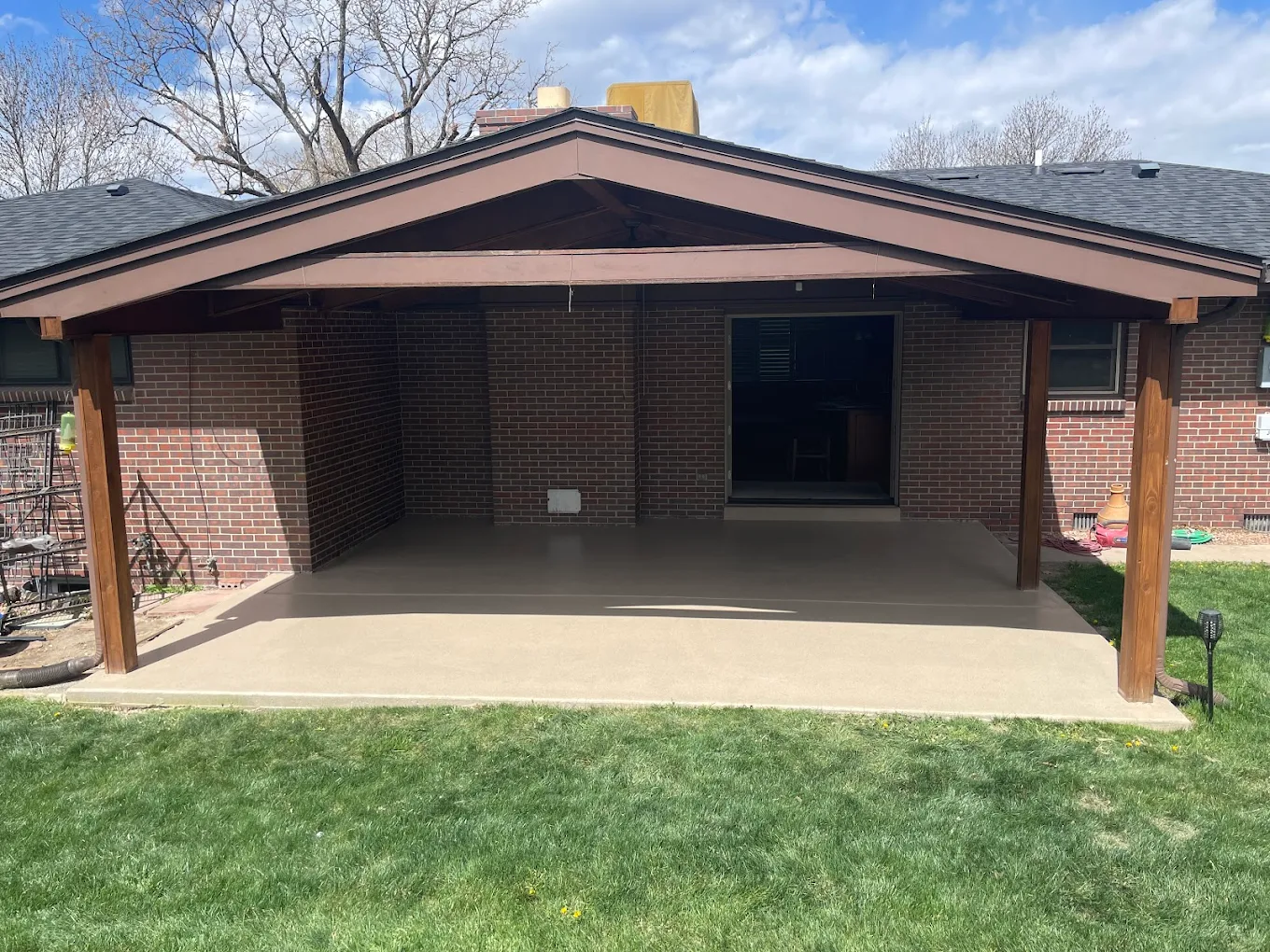
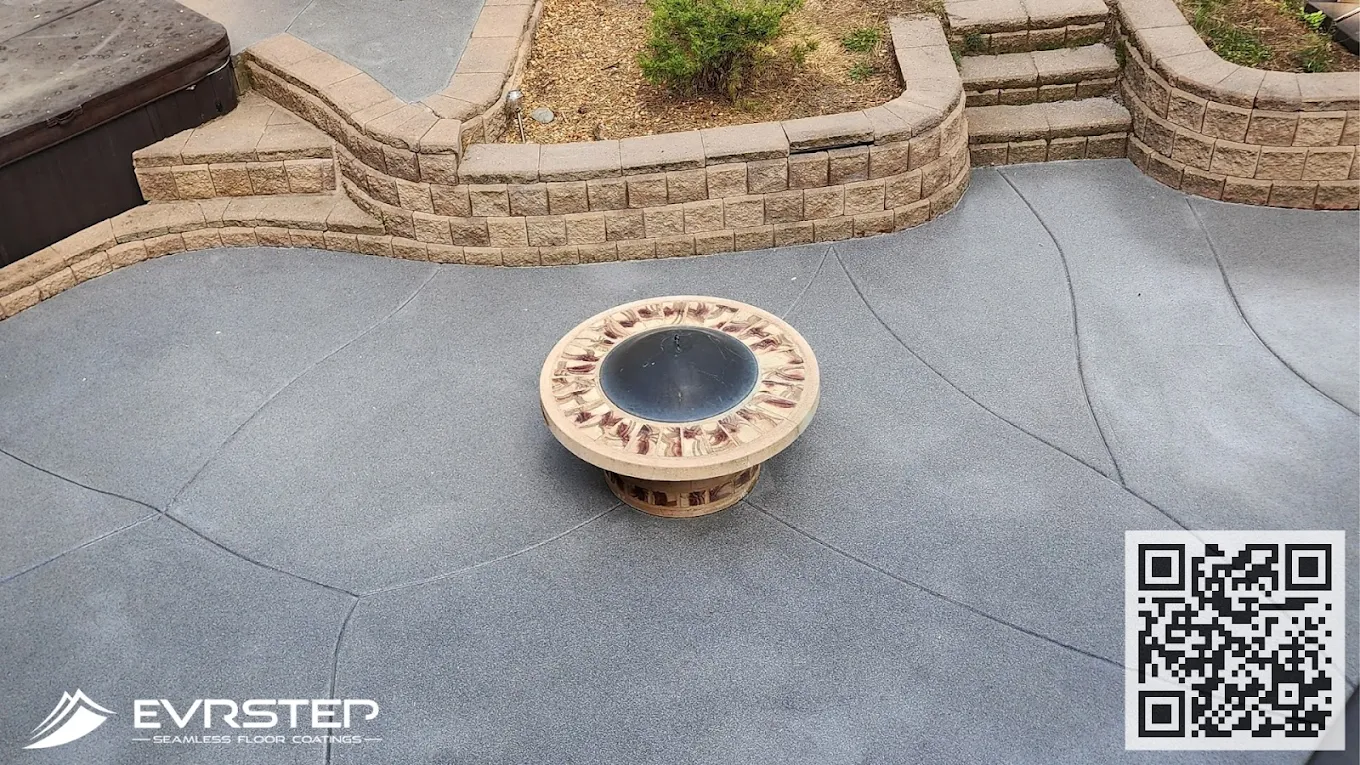
Exterior epoxy coatings in Parker, CO usually need a fresh clear topcoat every two to five years, but the exact schedule hinges on sun exposure and the epoxy type.
Understanding the factors that drive resealing helps you avoid premature wear and costly repairs.
- Direct Sunlight & Climate: Parker’s intense UV rays can yellow or degrade raw epoxy, prompting a new topcoat every two to three years in full sun.
- Shaded or Covered Areas: Epoxy on covered patios or shaded walkways can last four to five years between resealing.
- Topcoat Application: A UV‑resistant clear coat such as polyurethane or polyaspartic can stretch the lifespan to five to ten years.
- Yellow or Cloudy Surface: Discoloration signals that the coating’s protection is fading.
- Chalking, Peeling, Fading: Visible wear in high‑traffic or sun‑exposed spots indicates loss of performance.
- Water Absorption: When water no longer beads, the coating has lost its repellency.
- Surface Type: Different substrates, garage floor, driveway, patio, age at distinct rates.
- Daily Sunlight Hours: More direct sun accelerates degradation.
- Prior UV‑Resistant Topcoat: Existing UV‑stable layers can delay the next reseal.
Exterior epoxy reseal frequency varies with UV exposure, traffic, and topcoat chemistry. In Parker, plan for a new clear coat every two to five years unless a UV‑stable system is in place.
Ever wondered why your driveway looks great one season and dull the next? The answer often lies in how often the protective epoxy layer is refreshed.
In this guide we’ll break down the hidden drivers of reseal timing, show you how to spot the early signs of wear, and give you a clear plan that fits Parker’s sunny climate.
Why Most Exterior Epoxy Fails Before It Actually Needs Resealing
Many homeowners assume an epoxy coating will last forever until it cracks, but the real failure often starts with surface chemistry changes. In Parker, the combination of high altitude UV and freeze‑thaw cycles accelerates those changes.
The key is to recognize that the coating can lose its protective qualities long before any visible cracks appear. Spotting the early signs saves money and prevents costly substrate repairs.
Early Failure Indicators
- Yellowing: UV exposure breaks down the resin, turning the surface a dull amber hue.
- Surface Blistering: Trapped moisture expands during warm days, creating bubbles that burst over time.
- Loss of Slip Resistance: The aggregate broadcast wears away, reducing traction on walkways.
- Gloss Decline: A faded sheen signals that the topcoat’s UV inhibitors are exhausted.
- Edge Cracking: Thermal expansion at edges creates hairline cracks that spread if ignored.
When you notice any of these symptoms, it’s a sign that the coating’s barrier function is compromised. Acting early with a proper reseal prevents deeper substrate damage and extends the overall system life.
How UV Exposure Dictates Your Reseal Timeline More Than Foot Traffic
Sunlight is the silent aggressor for exterior epoxy, especially in Parker where altitude boosts UV intensity. Even low‑traffic areas can deteriorate quickly if they sit in direct sun.
Foot traffic adds wear, but UV degradation erodes the resin matrix, making the coating more vulnerable to abrasion. Understanding this hierarchy helps you prioritize resealing where it matters most.
UV‑Driven Factors
- Intensity: High‑altitude UV breaks down polymer chains faster than standard sea‑level exposure.
- Duration: Surfaces that receive six or more hours of sun daily age at double the rate of shaded spots.
- Topcoat Protection: UV‑stable clear coats act as a shield, dramatically slowing the degradation process.
- Temperature Swings: Day‑night temperature shifts cause micro‑cracks that UV rays exploit.
- Surface Color: Darker pigments absorb more heat, accelerating resin breakdown.
Prioritizing UV‑protected topcoats and scheduling reseals on sun‑lit zones every two to three years keeps the coating resilient, while shaded areas can comfortably stretch to five years.
The Three‑Year Mark: When Surface Wear Becomes Structural Risk
Around the three‑year point, many Parker homeowners notice subtle changes that signal deeper issues. The coating may still look intact, yet the bond to concrete weakens.
At this stage, the risk shifts from cosmetic wear to structural compromise, especially where freeze‑thaw cycles push the coating to its limits.
Three‑Year Warning Signs
- Micro‑Peeling: Tiny flakes lift from high‑traffic zones, indicating adhesion loss.
- Water Penetration: Water no longer beads, seeping into the concrete and promoting freeze‑thaw damage.
- Abrasion Pits: Small pits appear where sand or gravel traffic erodes the topcoat.
- Color Fading: Uniform fading across a surface shows UV inhibitor depletion.
- Reduced DCOF: Slip‑resistance tests reveal a lower coefficient of friction, raising safety concerns.
If any of these symptoms appear, schedule a reseal before the coating reaches a critical failure point. A timely topcoat restores adhesion and prevents costly concrete repairs.
What Daily Pressure Washing Does to Your Reseal Schedule
Pressure washing is a common cleaning method, but the force can strip protective layers if not done correctly. In Parker, where snow removal already adds abrasion, aggressive washing compounds wear.
Understanding the balance between cleanliness and coating preservation helps you extend the reseal interval without sacrificing appearance.
Pressure‑Washing Impacts
- High PSI: Exceeding 1500 psi can erode the topcoat, exposing the epoxy beneath.
- Nozzle Choice: Fan‑type nozzles spread force evenly, reducing localized damage.
- Frequency: Weekly washes accelerate wear; monthly cleaning is sufficient for most residential surfaces.
- Temperature: Washing in hot weather softens the coating, making it more vulnerable to abrasion.
- Chemical Additives: Harsh detergents can break down UV‑stabilizers, shortening the coating’s life.
Limit pressure washing to moderate PSI, use gentle detergents, and schedule washes during cooler parts of the day. This approach preserves the coating and pushes the next reseal further into the future.
Why Waiting for Visible Damage Always Costs More Than Preventive Resealing
Many homeowners postpone resealing until cracks appear, but the hidden damage often spreads beneath the surface. In Parker’s climate, water infiltration during freeze‑thaw cycles can silently corrode the concrete.
Addressing the issue early with a preventive topcoat avoids expensive substrate repairs and extends the overall system lifespan.
Cost‑Saving Benefits
- Early Intervention: A fresh topcoat seals micro‑cracks before water can penetrate.
- Reduced Labor: Preventive work requires less surface preparation than full‑scale removal.
- Longevity: Properly timed reseals keep the coating in its optimal performance window.
- Aesthetic Value: Maintaining a uniform appearance preserves curb appeal and property value.
- Safety: Early slip‑resistance restoration prevents accidents on wet surfaces.
By planning reseals based on performance indicators rather than visible failure, you protect both the coating and the underlying concrete, saving time and money in the long run.
How Climate Zone Changes the ‘Every 3‑5 Years’ Rule Completely
Parker sits in a semi‑arid climate with high UV and frequent freeze‑thaw cycles, a combination that demands a tailored reseal schedule. The generic three‑to‑five‑year rule doesn’t account for these local stresses.
Adjusting the interval based on seasonal temperature swings and precipitation patterns ensures the coating remains effective year after year.
Climate‑Specific Adjustments
- Winter Freeze‑Thaw: Schedule a reseal before the first heavy snow to protect against cracking.
- Summer Heat Peaks: Apply UV‑stable topcoats in early fall when temperatures are moderate.
- Rainfall Spikes: After heavy spring rains, inspect for moisture intrusion and reseal if needed.
- Altitude UV: Use coatings with higher UV inhibitor content to counteract intensified sunlight.
- De‑icing Salts: Choose chemical‑resistant formulations when sidewalks are treated with magnesium chloride.
Tailoring the reseal calendar to Parker’s climate nuances maximizes coating durability, reduces unexpected failures, and keeps maintenance costs predictable.
The One Inspection Test That Tells You It’s Time to Reseal
Among the many checks you could perform, the water‑bead test offers a quick, reliable indicator of coating health. In Parker, where moisture can be a hidden enemy, this simple test can save you a costly overhaul.
A few drops of water reveal whether the surface still repels liquid or has begun to absorb it, a clear sign that a reseal is overdue.
Water‑Bead Test Steps
- Prepare Surface: Clean a small area with a pH‑neutral cleaner and let it dry completely.
- Apply Droplets: Place three to five water drops spaced evenly across the test zone.
- Observe Behavior: If droplets bead and roll off, the coating remains intact; if they spread or soak in, resealing is needed.
- Temperature Check: Perform the test at 70 °F or higher for accurate results.
- Document Findings: Record the date and condition to track performance trends over time.
A quick water‑bead test each spring and fall gives you a reliable pulse on your exterior epoxy, allowing you to schedule resealing before serious degradation sets in.
Smart Reseal Planning for Parker
By now you understand that UV exposure, traffic, climate, and maintenance habits all shape the exterior epoxy reseal frequency. Spotting early signs, using the water‑bead test, and choosing UV‑stable topcoats keep your surfaces looking fresh and functional.
Take the next step: assess your current coating, schedule a moisture test, and plan a reseal that aligns with Parker’s sunny, freeze‑prone environment. A timely topcoat will protect your investment and keep your driveway, patio, or garage floor performing for years to come.
Author
This article was written by the EvrStep Epoxy Coatings Editorial Team, experienced professionals serving Parker. Our team focuses on educating clients and providing valuable insights to help them make informed decisions.