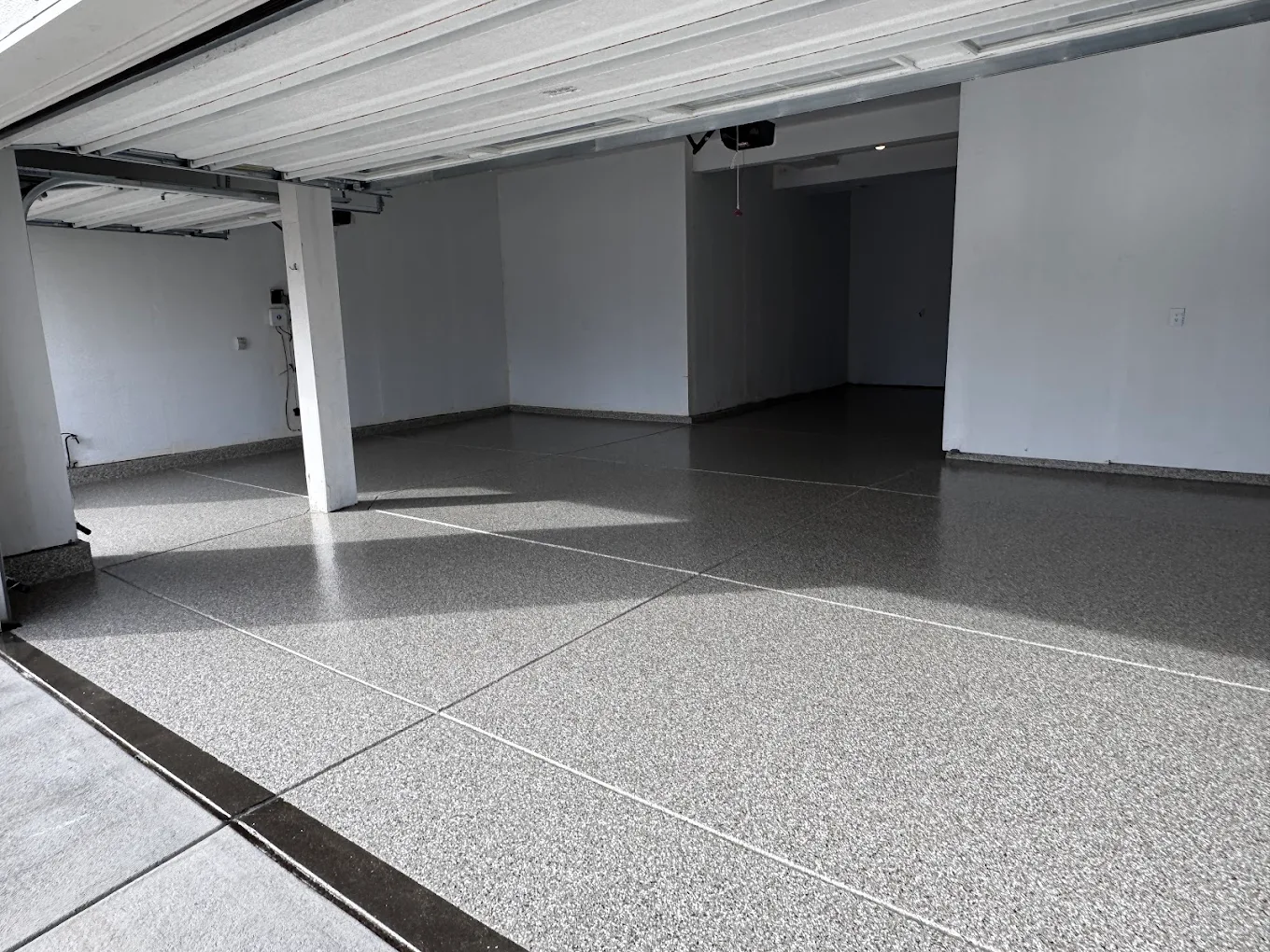
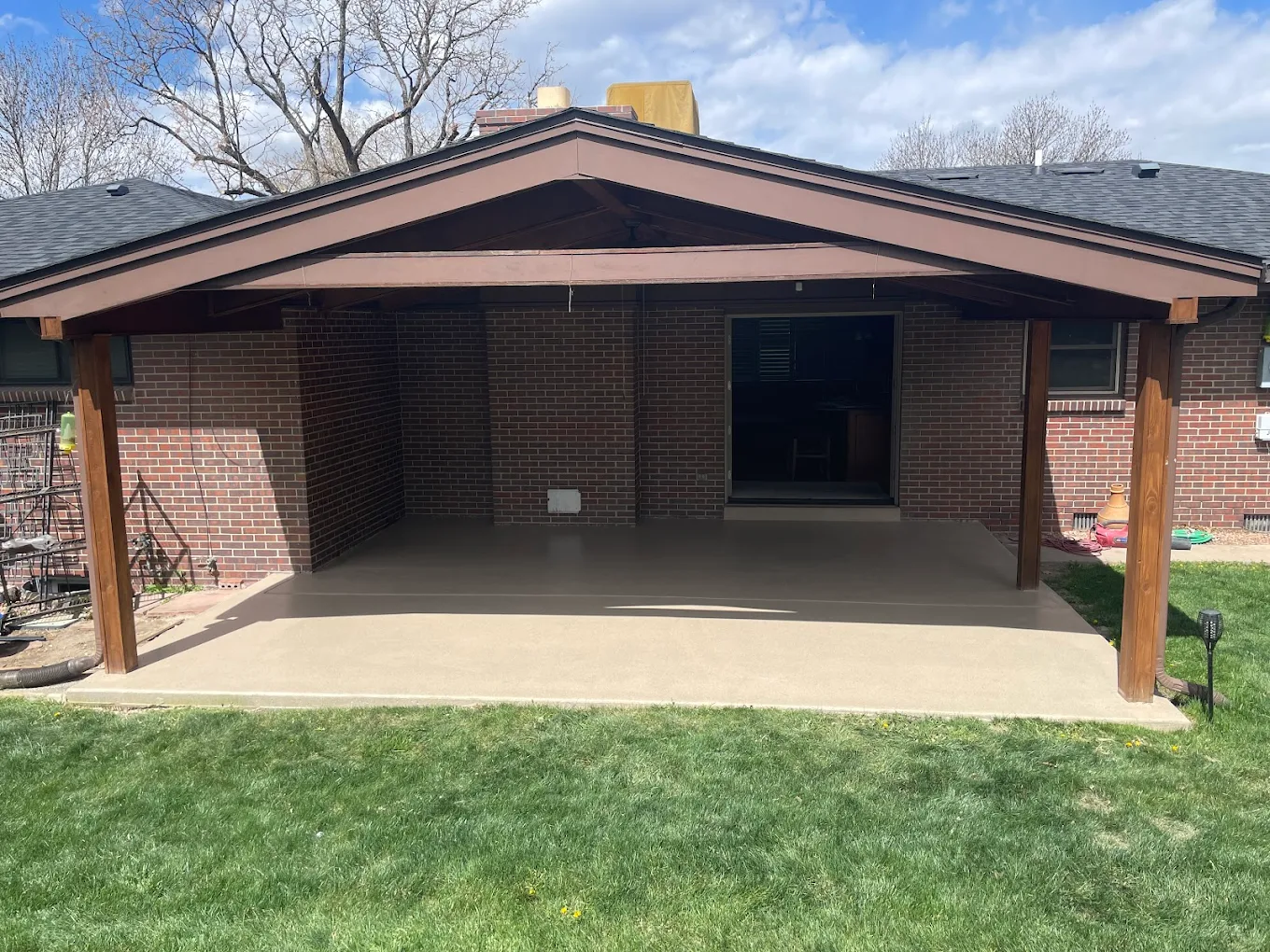
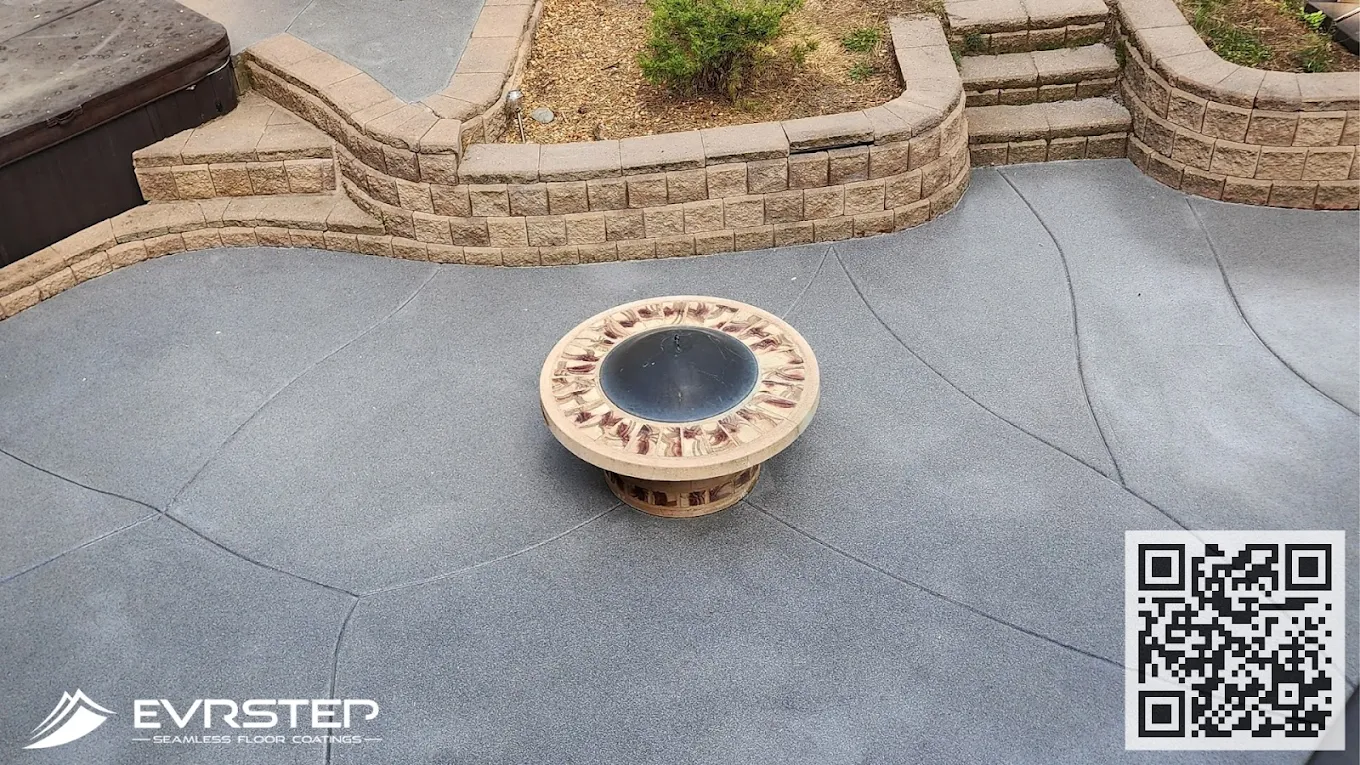
Installing an exterior epoxy or polyaspartic system in Parker, CO typically costs between $7 and $10 per square foot, with total expenses for a 500‑square‑foot patio ranging from $3,500 to $5,000.
Because Parker endures harsh freeze‑thaw cycles and intense UV exposure, a standard indoor epoxy will quickly yellow and peel, making an exterior‑grade, UV‑stable system a smarter long‑term choice.
- Crack Bridging & Moisture Resistance: Accommodates concrete expansion and protects against water intrusion.
- Slip Resistance: Professional applications include aggregate additives to prevent falls when the surface is wet.
- Longevity: A professionally installed system can last 20–30 years, resisting chipping and harsh sunlight.
- EvrStep Epoxy Coatings: Specializes in exterior polyaspartic and moisture‑barrier systems for patios and pool decks, backed by lengthy delamination warranties.
- Elevated Epoxy Coatings: Provides expert metallic, flake, and durable outdoor finishes with free quotes.
- Fineline Painters: Offers various durable epoxy, flake, and polyaspartic garage and exterior floor coatings.
- Space Type Question: What type of space are you coating (e.g., patio, pool deck, or driveway)?
- Square Footage Question: What is the approximate square footage of the area?
- Damage Assessment Question: Are there existing cracks or damage in the concrete?
Exterior epoxy system investment in Parker can cost $7‑$10 per square foot, but a UV‑stable, properly prepared system can last decades, saving money on repairs and replacements.
Ever wondered why a cheap epoxy job on your patio fades within a season while a higher‑priced install stays bright for years? The answer lies in the hidden costs of preparation, material choice, and climate‑specific performance.
In this post you’ll discover the real drivers behind exterior epoxy system investment, the preparation steps that protect your money, and how to compare options so you make a confident, long‑lasting decision.
Why Most Exterior Epoxy Projects Cost More Than the Original Quote
When you ask for a quote, many contractors focus on material price and labor hours, but they often omit critical variables that drive the final bill. In Parker, the need for extensive surface preparation and moisture mitigation can add several thousand dollars to a project.
The reality is that the initial estimate is a starting point, not a final figure. Understanding the hidden drivers helps you set realistic expectations and avoid surprise invoices.
Hidden Cost Drivers
- Moisture Testing: Conducting ASTM F2170 humidity checks can add $0.50‑$1 per square foot, but it prevents future delamination that would cost far more.
- Surface Profiling: Achieving a CSP 3‑4 profile with diamond grinding often requires specialized equipment and extra labor, increasing costs by 15‑20 %.
- Aggregate Broadcast: Adding quartz or flake for slip resistance adds material expense and requires precise timing during application.
- Weather Delays: Parker’s sudden snow or rain can pause work, leading to crew overtime and extended project timelines.
- Permit Fees: Local building permits for exterior coatings may involve fees that are not included in the base quote.
By recognizing these factors early, you can negotiate a more accurate budget and ensure the final system delivers the durability you expect. Ignoring them typically results in hidden repairs that erode the perceived savings of a low‑ball quote.
The Surface Prep Investment That Determines Your System’s Lifespan
A solid foundation is the single most important factor for any exterior epoxy system, especially in Parker where freeze‑thaw cycles stress concrete. Proper preparation not only improves adhesion but also extends the coating’s service life by decades.
Skipping steps like moisture testing or achieving the correct concrete surface profile may seem like a cost‑saving measure, but it usually leads to premature failure and higher long‑term expenses.
Prep Essentials
- Moisture Barrier Primer: Applying a moisture‑tolerant primer when relative humidity exceeds 75 % seals the slab and prevents blistering.
- CSP 3‑4 Profile: Mechanical grinding to a concrete surface profile of 3‑4 ensures the epoxy mechanically locks into the substrate.
- Crack Repair: Epoxy mortar or polyurethane sealants fill existing cracks, stopping water ingress that would otherwise lift the coating.
- Clean‑Room Conditions: Removing oil, dust, and curing compounds with a solvent wipe reduces contamination that can cause adhesion loss.
- Temperature Control: Maintaining substrate temperature between 50 °F and 90 °F during installation guarantees proper cure and film formation.
Investing in these preparation steps upfront protects the coating from moisture, temperature swings, and mechanical wear, delivering a lifespan that often exceeds 20 years in Parker’s climate.
UV‑Stable Epoxy vs. Standard Coatings: What the Price Gap Actually Buys You
Standard interior epoxy lacks the additives needed to resist Parker’s high‑altitude UV radiation. Over time, exposure leads to chalking, yellowing, and loss of gloss, forcing premature re‑coating.
A UV‑stable system, typically an epoxy base capped with a polyaspartic or aliphatic topcoat, carries a higher material cost but provides a protective shield that maintains appearance and performance for many years.
UV‑Stable Benefits
- Halogen‑Free Stabilizers: These additives absorb UV energy, reducing color shift and surface degradation.
- Polyaspartic Topcoat: Cures quickly, offers superior UV resistance, and can be walked on within 24 hours.
- Aliphatic Resin: Provides a non‑yellowing, high‑gloss finish that retains its color even after 1,000 hours of ASTM G154 exposure.
- Long‑Term Cost Savings: Fewer re‑coating cycles translate into lower total ownership cost over a 15‑year horizon.
- Warranty Support: Manufacturers often back UV‑stable systems with extended warranties, reflecting confidence in durability.
Choosing a UV‑stable epoxy investment may raise the upfront price, but the reduced maintenance, longer aesthetic life, and stronger warranty make it a smarter financial decision for Parker homeowners.
How Climate Exposure Patterns Change Your Material Selection Entirely
Parker’s climate swings from hot, dry summers to bitterly cold winters, with frequent freeze‑thaw cycles that stress concrete and coatings. Materials that perform well in a mild climate can crack or delaminate under these conditions.
Selecting a system that accommodates thermal movement and resists UV damage is essential to avoid costly repairs and maintain safety on wet or icy surfaces.
Climate‑Driven Choices
- Thermal Expansion Joint Honor: Allowing movement at control joints prevents stress buildup in the coating.
- Salt‑Resistant Formulation: Polyaspartic topcoats resist chloride attack from de‑icing salts, preserving adhesion.
- High‑UV Additives: Incorporating HALS and UV absorbers mitigates chalking and yellowing under Parker’s intense sun.
- Impact‑Resistant Topcoat: Adding silica or aluminum oxide improves resistance to hail and foot traffic.
- Low‑Temperature Cure: Selecting a resin that cures at 45 °F reduces the need for heated enclosures during winter installs.
By aligning material properties with Parker’s climate realities, you protect your investment from premature failure and ensure the surface remains safe and attractive year‑round.
The Hidden Cost of Choosing a Lower‑Grade Topcoat for Outdoor Applications
A budget topcoat may look attractive on paper, but it often lacks the UV inhibitors and flexibility needed for exterior exposure. In Parker, this shortcut can lead to rapid chalking, cracking, and loss of slip resistance.
The true expense appears months later when the coating peels or requires a full replacement, far exceeding the initial savings.
Low‑Grade Risks
- Rapid Yellowing: Without UV stabilizers, the surface turns brown within a year, reducing curb appeal.
- Reduced Flexibility: Rigid coatings cannot accommodate freeze‑thaw movement, leading to surface cracks.
- Higher Maintenance: Frequent cleaning and resealing become necessary to maintain safety and appearance.
- Warranty Void: Many manufacturers refuse warranty coverage if a non‑specified topcoat is used.
- Long‑Term Cost: Re‑coating every 3‑5 years can double the total project cost compared to a premium system.
Investing in a high‑quality, UV‑stable topcoat upfront eliminates the hidden expenses of premature failure and keeps your patio or pool deck looking fresh for a decade or more.
What a Three‑Year System Costs Compared to a Ten‑Year System
A three‑year epoxy system typically uses a basic resin and a thin, non‑UV‑stable topcoat, resulting in a low initial price but frequent re‑coating needs. In contrast, a ten‑year system incorporates a robust epoxy base, a polyaspartic topcoat, and extensive preparation.
When you calculate total ownership, the ten‑year system often proves more economical despite its higher upfront cost.
Cost Comparison
- Initial Price Difference: Three‑year systems average an estimated $8 per square foot, while ten‑year systems run an estimated $12‑$14 per square foot.
- Re‑Coating Frequency: Three‑year coatings require replacement every 3‑4 years, adding an estimated $3,000‑$4,000 for a 500‑sq‑ft patio over a decade.
- Maintenance Savings: Ten‑year systems need only minor cleaning, saving labor and material costs.
- Lifecycle ROI: Over ten years, the ten‑year system’s total cost is roughly 30 % lower than repeatedly installing three‑year systems.
- Resale Value Boost: A durable, well‑maintained exterior coating can increase property appeal, a factor often overlooked in short‑term budgeting.
Choosing a longer‑lasting system reduces cumulative spending, minimizes disruption, and offers peace of mind that the surface will perform throughout Parker’s varied seasons.
Why Delaying Your Exterior Epoxy Investment Usually Costs More in Substrate Damage
Postponing a coating project often means the concrete continues to deteriorate under weather and traffic. In Parker, moisture intrusion and freeze‑thaw cycles can cause spalling, cracking, and surface scaling.
Addressing these issues after they appear is far more expensive than protecting the slab before damage spreads.
Delay Consequences
- Moisture Penetration: Unsealed concrete absorbs water, leading to freeze‑thaw expansion and surface cracking.
- Structural Degradation: Repeated temperature swings weaken the concrete matrix, requiring costly repair before coating.
- Increased Prep Work: Older, damaged slabs need extensive patching and grinding, raising labor costs.
- Higher Material Use: More epoxy and topcoat are needed to cover uneven or repaired areas.
- Reduced Warranty Coverage: Many warranties are void if pre‑existing damage is not remedied before coating.
Acting promptly to install a high‑quality exterior epoxy system protects the substrate, reduces preparation expenses, and safeguards your investment against the harsh Colorado climate.
Smart Investment for Parker Patios
Understanding the true cost drivers behind an exterior epoxy system investment empowers you to choose a solution that stands up to Parker’s temperature swings, UV exposure, and moisture challenges. By prioritizing proper preparation, UV‑stable topcoats, and climate‑appropriate materials, you avoid hidden expenses and enjoy a durable, attractive surface for years.
Ready to protect your patio, pool deck, or walkway? Contact a qualified local provider to assess your project, get a detailed quote, and start a smart exterior epoxy system investment that pays off long after the work is done.
Author
This article was written by the EvrStep Epoxy Coatings Editorial Team, experienced professionals serving Parker. Our team focuses on educating clients and providing valuable insights to help them make informed decisions.