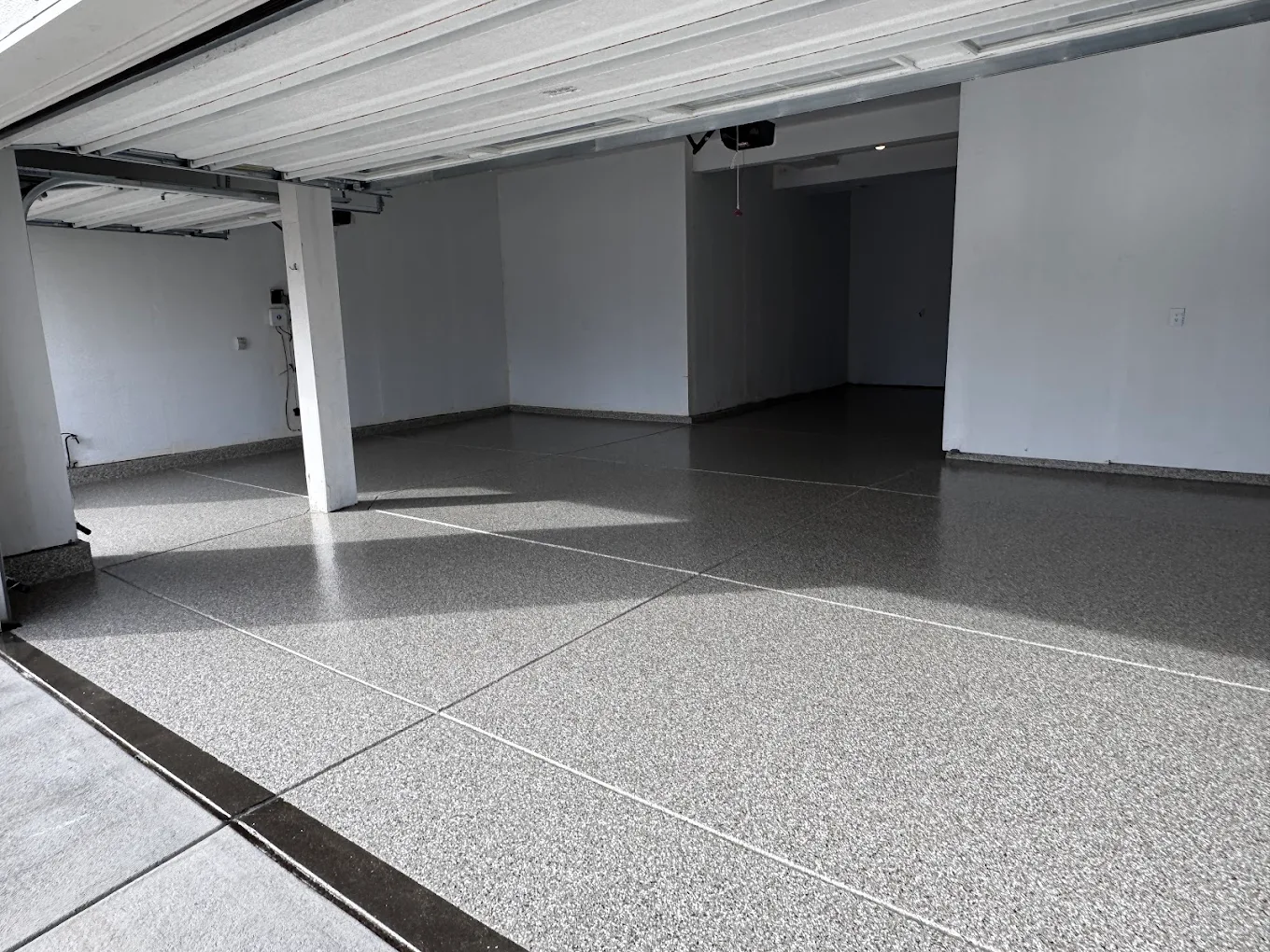
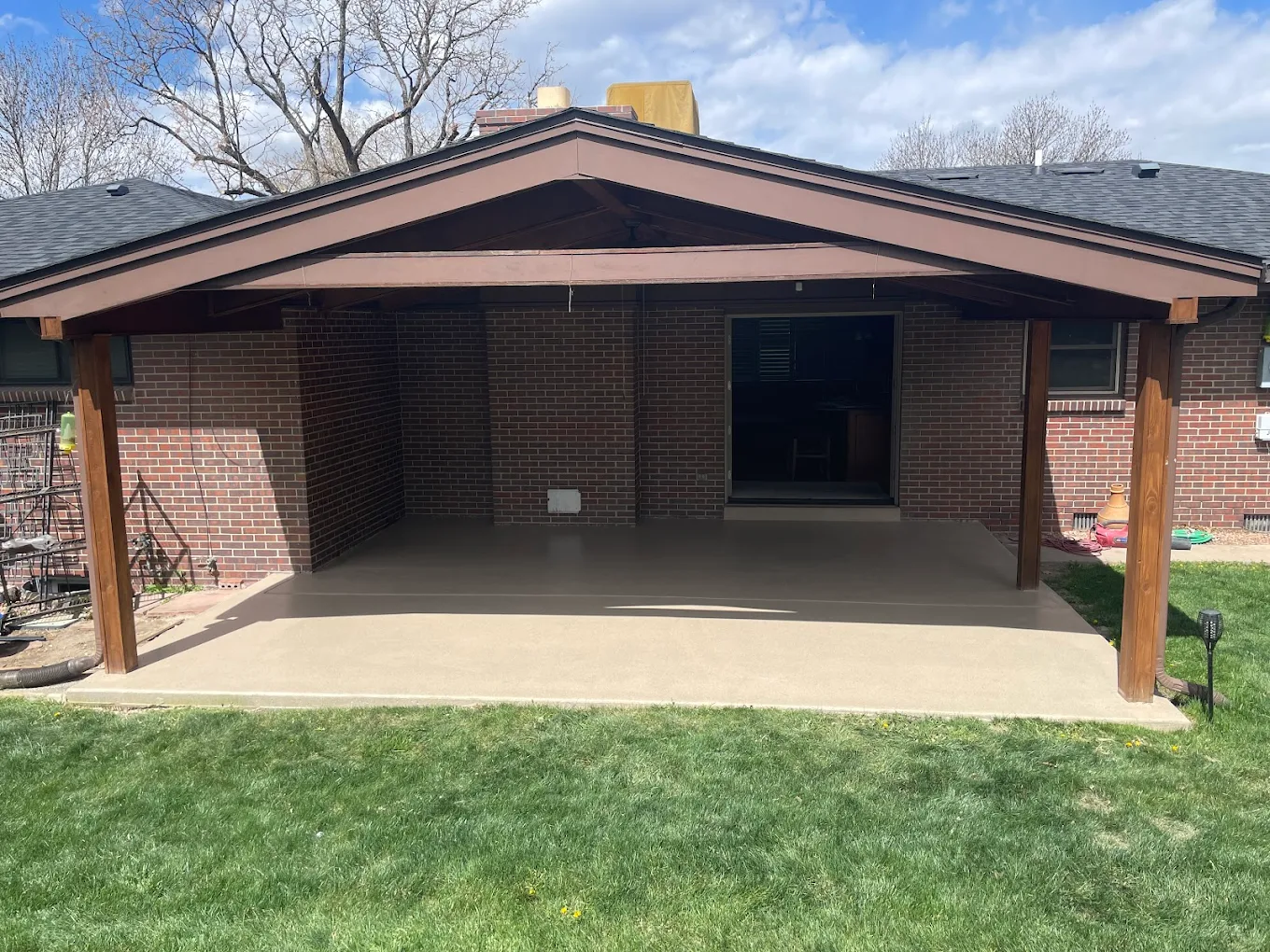
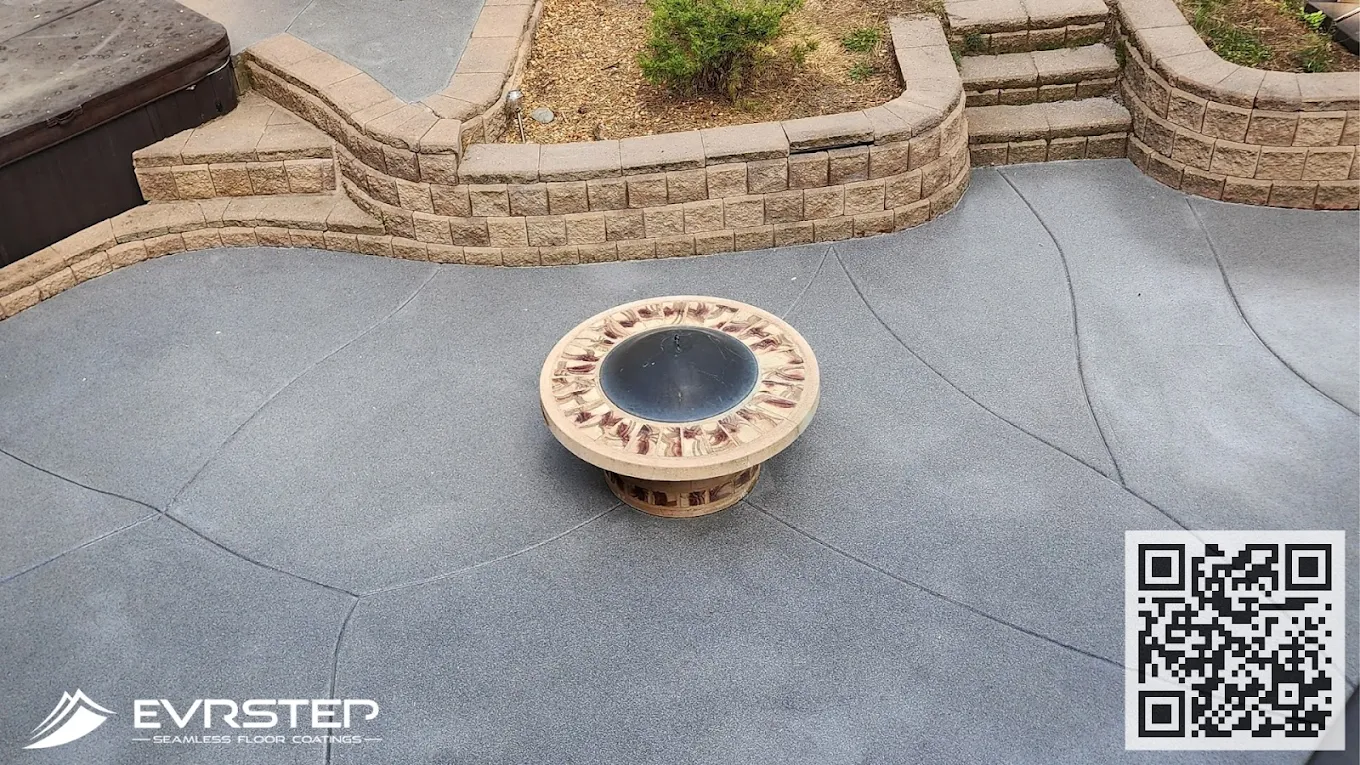
In Parker, epoxy coatings can run between $3 and $12 per square foot installed, while outdoor tiles can run from $6 up to $15 plus per square foot. The price gap looks clear at first glance, but deeper factors shift the balance.
Both options face Parker’s fierce sun and sudden winter freezes, so durability and maintenance become as important as the initial bill.
- DIY Kits: $1.45 to $5.21 per sq. ft. for high‑quality materials.
- Professional Installation: $3.00 to $12.00+ per sq. ft. includes grinding, prep, and multi‑layer flake or metallic systems.
- Materials: $1.00 to $8.00+ per sq. ft. for porcelain or interlocking plastic/rubber tiles.
- Professional Installation: Expect an additional $5.00 to $10.00+ per sq. ft. for labor, mortar, and grout.
- Climate Resistance: Parker’s severe summer heat and sudden winter freezes can yellow or make standard epoxy slippery; polyurea or polyaspartic coatings are often recommended for UV stability.
- Longevity: Quality epoxy typically lasts 5 to 10+ years, while premium outdoor tiles can reach 10 to 25+ years, with interlocking tiles allowing single‑piece replacement.
Epoxy usually starts cheaper, but hidden prep costs and climate stress can erode savings. Tiles cost more upfront yet often outlast coatings in Parker’s harsh weather.
If you’re weighing epoxy vs outdoor tiles cost for a patio, pool deck, or driveway in Parker, the decision hinges on more than square‑foot pricing. Installation prep, climate resilience, and long‑term upkeep all play critical roles.
This guide walks through the hidden expenses, labor multipliers, and performance quirks that most cost calculators overlook, helping you choose the option that truly protects your investment.
Why Most Outdoor Tile Cost Estimates Miss the Substrate Prep Reality
When you ask a contractor for a tile quote, the number you see usually covers the visible materials and labor. What rarely appears on the sheet is the work needed to ready the concrete slab.
In Parker, the concrete often carries residual moisture and uneven profiles. Ignoring ASTM F2170 testing or a proper CSP grind can lead to premature tile failure, a cost that homeowners discover only after the warranty expires.
Prep Factors
- Moisture Testing: Conducting ASTM F2170 probes can cost $0.30‑$0.70 per sq. ft., ensuring the slab is dry enough for tile adhesion.
- Surface Profiling: Achieving a CSP of 2‑4 via diamond grinding can add $0.50‑$1.00 per sq. ft., a step that prevents future delamination.
- Crack Repair: Spot‑filling hairline cracks with epoxy filler before tiling may add $0.20‑$0.40 per sq. ft., yet it avoids costly tile lift later.
- Leveling Compound: Applying a self‑leveling underlayment in low spots can run $0.40‑$0.80 per sq. ft., especially on older slabs that have settled over time.
- Regulatory Check: Parker’s building division may require a moisture barrier for exterior slabs, a compliance step that can add $0.25‑$0.50 per sq. ft.
Skipping these prep steps saves money today but can trigger expensive repairs later. A realistic budget for outdoor tiles in Parker must include both visible and hidden preparation costs.
The Hidden Labor Multiplier That Makes Tile Installation 3x More Expensive
Tile work looks simple, lay a board, set a tile, grout the joints. Yet each of those actions carries its own labor intensity, especially when the project spans a large patio.
In contrast, epoxy coating is a single‑pass system after surface prep. The labor differences become stark when you break down the tasks required for a typical 200‑sq. ft. outdoor area in Parker.
Labor Steps
- Mortar Mixing: Skilled technicians must mix polymer‑modified thin‑set to the right consistency, a task that can take 30‑45 minutes per 50‑sq. ft.
- Tile Placement: Aligning each tile, checking level, and adjusting spacing demands meticulous hand work, often extending installation by two to three days for larger areas.
- Grout Application: Applying, smoothing, and cleaning grout lines adds another full day of labor, especially when using epoxy grout for durability.
- Joint Sealing: After grout cure, sealing each joint to protect against moisture incurs additional time and material costs.
- Final Inspection: A thorough inspection for level, alignment, and slip resistance is required, adding a final labor checkpoint that epoxy systems typically bypass.
These labor layers multiply the cost of tile projects, making the overall expense three times higher than a comparable epoxy coating, even before accounting for long‑term maintenance.
How Epoxy Coatings Eliminate the Grout Line Maintenance Tax
Grout lines are the Achilles’ heel of any tiled outdoor surface. They trap dirt, moisture, and weeds, demanding regular cleaning and occasional resealing.
Epoxy creates a seamless, non‑porous membrane that removes the need for grout entirely, turning a recurring maintenance chore into a one‑time cleaning routine.
Maintenance Benefits
- Cleaning Simplicity: A simple pressure wash removes debris without worrying about grout staining, saving hours of labor each year.
- Mold Prevention: Without grout pockets, mold and mildew have no foothold, reducing the need for chemical cleaners and protective sealants.
- Weed Control: Seamless epoxy eliminates gaps where weeds can sprout, a common issue on tiled patios that requires herbicide use.
- Resale Appeal: Homebuyers notice a spotless, grout‑free surface, often translating into a higher perceived value and smoother negotiations.
- Long‑Term Cost: Over a decade, the cumulative savings from avoided grout repairs and cleaning products can equal or exceed the initial epoxy price premium.
By removing grout from the equation, epoxy coatings provide a practical, low‑maintenance solution that aligns with Parker homeowners’ desire for hassle‑free outdoor spaces.
What a $4,500 Tile Quote vs. $2,800 Epoxy Quote Actually Includes*
A headline price can be misleading. The $4,500 tile estimate often bundles materials, labor, and a series of hidden steps, while the $2,800 epoxy quote may appear lean but still covers essential prep.
Understanding exactly what each quote covers helps you compare apples to apples and avoid surprise invoices once the project starts.
*Illustrative. Actual amounts may vary.
Quote Breakdown
- Tile Materials: Includes porcelain slabs, edge trims, and a polymer‑modified thin‑set, typically accounting for $1,200 of a $4,500 quote.
- Epoxy Materials: Consists of resin, hardener, broadcast flakes, and a UV‑stable topcoat, usually costing $800 within a $2,800 proposal.
- Labor Labor Tile: Covers mortar spreading, tile placement, grout application, and joint sealing, often the largest portion of the tile budget.
- Labor Labor Epoxy: Encompasses concrete grinding, moisture testing, coating application, and a single cure period, a streamlined process that reduces labor hours.
- Warranty & Follow‑Up: Tile quotes may include a limited warranty on grout, while epoxy quotes commonly feature a 5‑year performance guarantee covering delamination.
When you dissect the line items, the price gap narrows, but the simplicity and reduced labor of epoxy still give it a compelling advantage for many Parker projects.
The Freeze‑Thaw Cycle Problem That Tiles Can’t Solve Without Constant Repair
Parker experiences frequent freeze‑thaw cycles that stress outdoor flooring. Water that seeps into tile joints expands when it freezes, pushing tiles upward and cracking the substrate.
Epoxy coatings, when properly sealed, create a monolithic surface that resists water intrusion, offering a more resilient barrier against temperature swings.
Tile Vulnerabilities
- Water Infiltration: Even low‑absorption porcelain can let water into grout lines, leading to freeze‑induced expansion and tile lift.
- Joint Degradation: Repeated freeze‑thaw cycles cause grout to crumble, requiring periodic resealing or replacement.
- Substrate Movement: Expansive clay soils under Parker slabs shift, stressing tile bonds and prompting cracks that are costly to repair.
- Maintenance Frequency: Homeowners often need to re‑grout or replace cracked tiles every 5‑7 years in this climate, adding unexpected expenses.
- Aesthetic Decline: Cracked or lifted tiles impact curb appeal, potentially lowering property value if not addressed promptly.
Because tiles cannot fully prevent water ingress, they demand ongoing attention in Parker’s freeze‑thaw environment, whereas a well‑applied epoxy system offers a more durable, low‑maintenance alternative.
Why Epoxy’s Upfront Cost Advantage Grows Wider Over a 10‑Year Timeline
Initial savings from epoxy can seem modest, but when you factor in replacement cycles, maintenance, and labor, the financial gap widens dramatically over a decade.
A simple cost‑ownership model shows how epoxy’s lower lifecycle expenses can outpace tile’s higher upfront price, especially for homeowners who value long‑term stability.
Cost Trajectory
- Replacement Cycle: Tile may need a full replacement after 12‑15 years due to grout failure, which may cost $5,000‑$7,000 for a typical patio.
- Recoat Frequency: Epoxy can be refreshed with a thin topcoat every 5‑7 years for an estimated cost of $800‑$1,200, extending life without full removal.
- Labor Savings: Epoxy’s single‑pass application eliminates the repeated labor needed for tile removal and re‑installation.
- Energy Efficiency: Light‑colored epoxy reflects more sunlight, reducing surface heat and potentially lowering cooling costs for adjacent indoor spaces.
- Resale Perception: Buyers often view a seamless epoxy finish as a modern, low‑maintenance feature, supporting a higher resale price.
Over ten years, the cumulative effect of fewer replacements, lower labor, and added energy benefits makes epoxy a financially smarter choice for many Parker homeowners.
The One Scenario Where Outdoor Tiles Still Make Financial Sense
Despite epoxy’s advantages, there are situations where tiles win the cost‑benefit analysis. Understanding that niche helps you avoid a one‑size‑fits‑all recommendation.
If a project demands a highly textured surface for slip resistance on a steep slope, or a specific aesthetic that epoxy can’t replicate, tiles may justify their higher price.
Tile Advantage Cases
- Steep Slopes: Textured porcelain tiles with high DCOF values provide superior grip on inclined surfaces, a safety factor that epoxy can only approximate with broadcast flakes.
- Design Specificity: Custom mosaics or patterned tiles create visual interest that a uniform epoxy coat cannot achieve without costly custom pigments.
- Heavy Load Areas: Porcelain tiles rated for high compressive strength can better withstand the weight of heavy equipment on a driveway compared with standard epoxy formulations.
- Regulatory Requirements: Some homeowner associations in Parker mandate tile installations for historic or aesthetic consistency, making compliance a cost factor.
- Future Modifications: Interlocking tile systems allow selective replacement of damaged sections without resurfacing the entire area, offering flexibility for evolving outdoor layouts.
When these specific conditions exist, the higher upfront expense of tiles can be offset by the functional and aesthetic benefits they uniquely provide.
Choosing the Right Outdoor Surface
Balancing epoxy vs outdoor tiles cost involves more than square‑foot numbers; it requires a look at preparation, labor, climate impact, and long‑term upkeep. In Parker’s demanding environment, epoxy often delivers lower total cost and easier maintenance, while tiles excel in steep, high‑traffic, or design‑driven scenarios.
If you’re ready to move forward, start by measuring your space, assessing sun exposure, and determining how much maintenance you’re willing to perform. For a precise budget tailored to your project, reach out to a local specialist who can factor in all the hidden costs and help you make an informed decision.
Author
This article was written by the EvrStep Epoxy Coatings Editorial Team, experienced professionals serving Parker. Our team focuses on educating clients and providing valuable insights to help them make informed decisions.