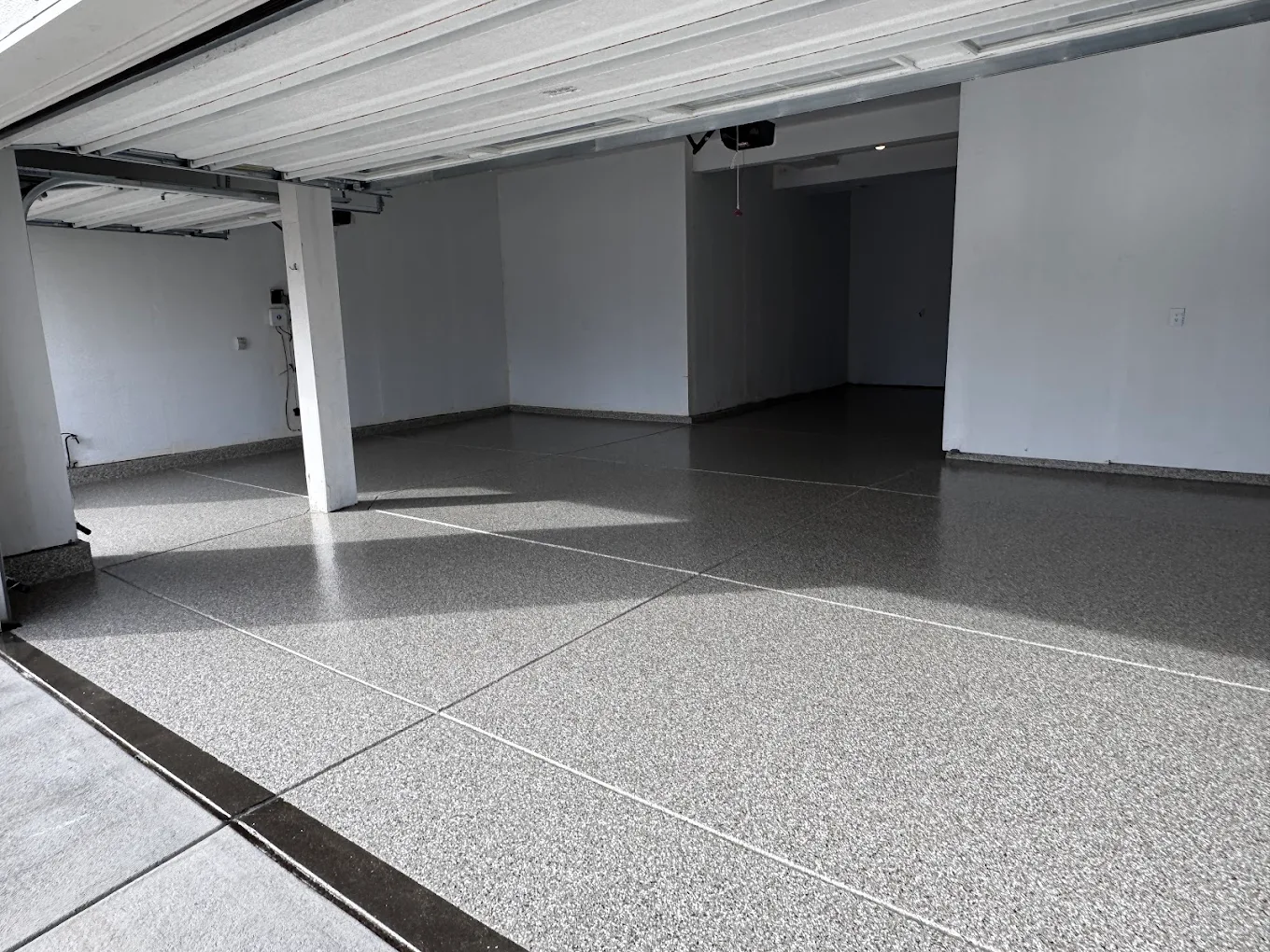
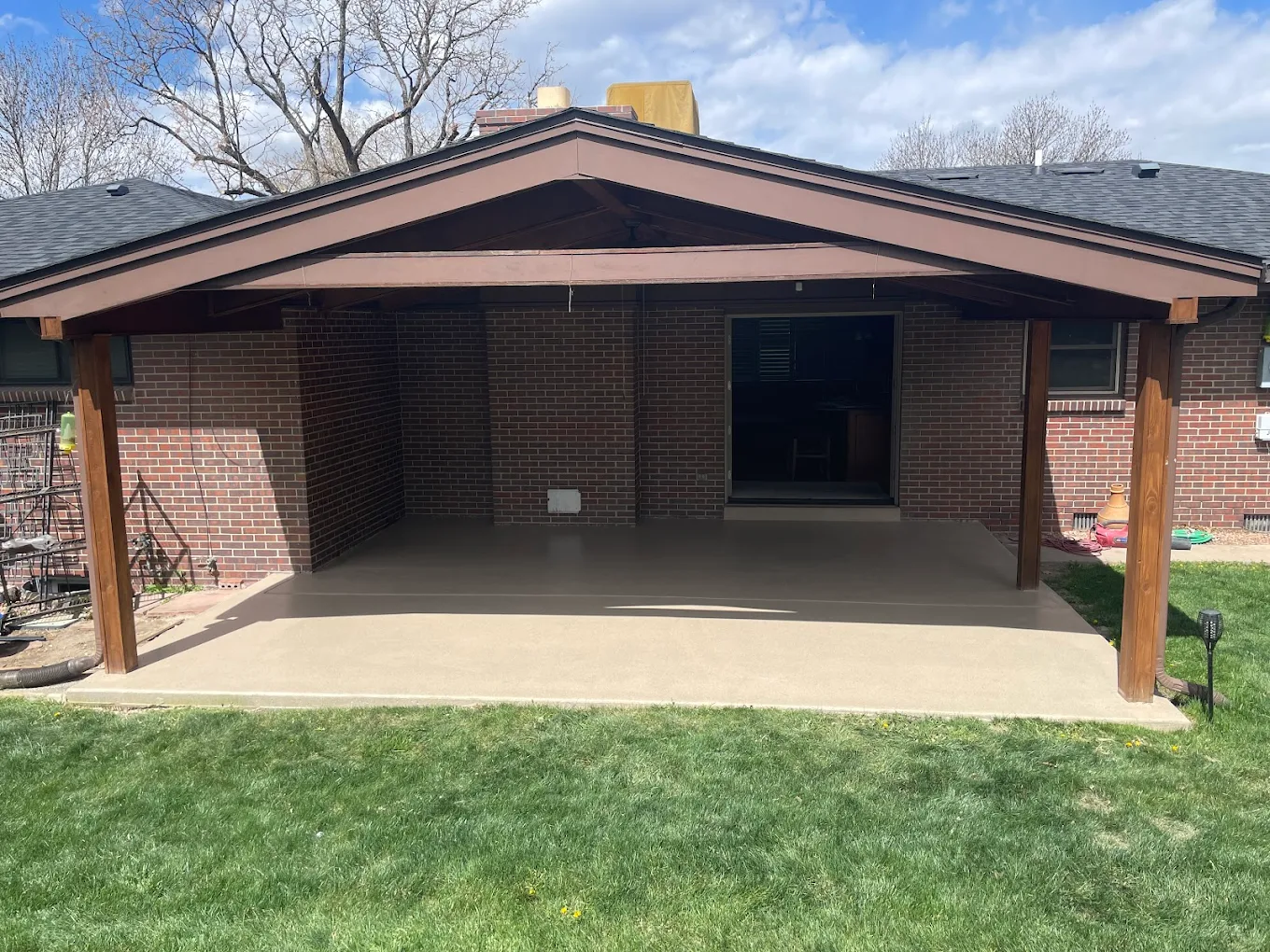
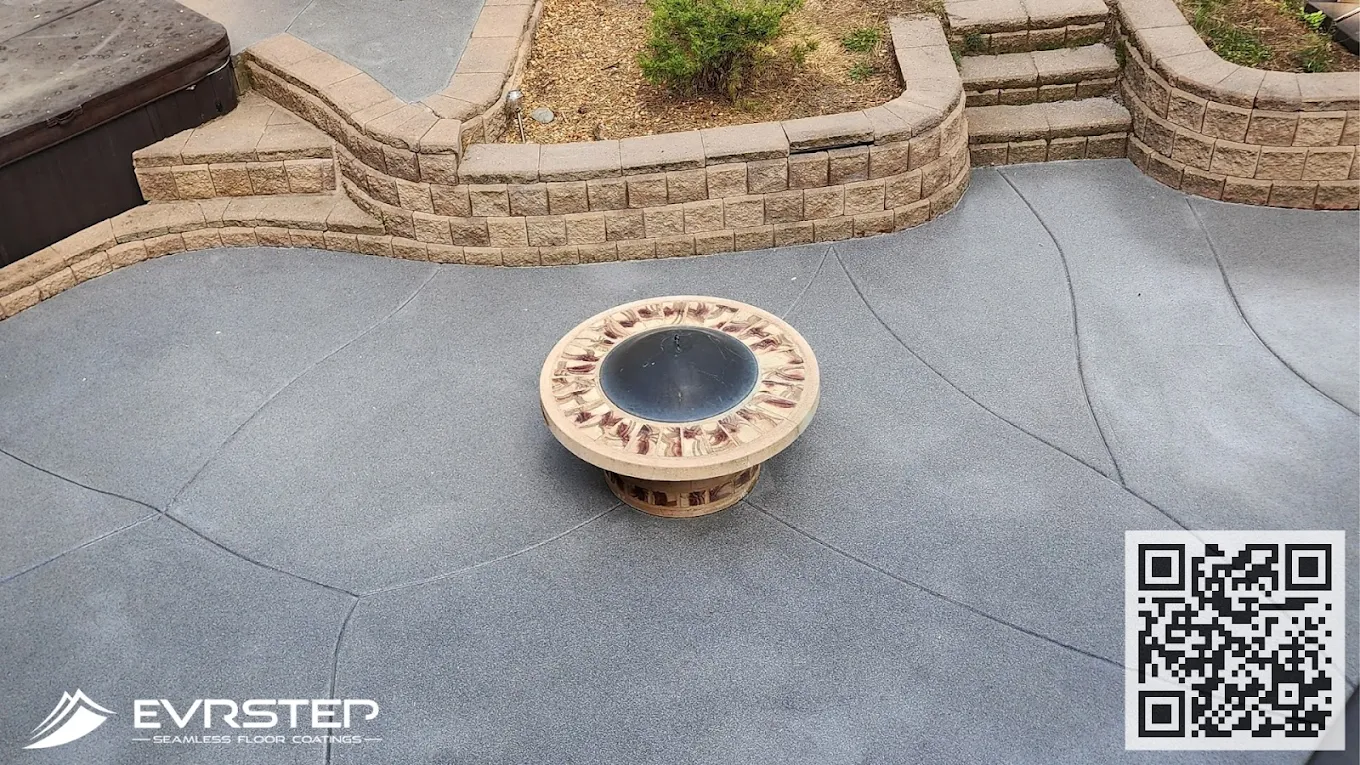
Epoxy flooring can work beautifully outdoors in Parker, but it demands a different approach than indoor installations. Standard epoxy resin will yellow and chalk under Colorado’s intense UV exposure unless you seal it with a protective topcoat, polyaspartic or polyurethane formulations are the go-to solutions. Local contractors including Fine Line Painters emphasize that proper surface preparation through grinding and the addition of textured non-slip additives are non-negotiable for durability and safety in outdoor conditions.
- Essential Outdoor Maintenance Tips: Keep your outdoor epoxy clean by sweeping away debris weekly with a soft-bristle broom and hosing down the surface regularly, then mop occasionally with warm water and mild pH-neutral soap to remove accumulated grime. Inspect the clear protective topcoat every few years for signs of wear or thinning, and apply a maintenance seal coat when needed to preserve UV protection.
- Key Outdoor System Requirements: Pure epoxy must never be left unsealed outdoors since direct sunlight degrades the resin, causing yellowing and surface breakdown, so always apply a UV-resistant topcoat. Mix anti-skid aggregate or broadcast a full-flake layer into the final coat to ensure wet traction, and verify the concrete substrate is completely dry before installation to prevent moisture-related blistering.
- Concrete Condition Assessment: Determine whether your concrete surface is currently bare, previously painted, or showing signs of damage, as each condition requires different preparation methods before epoxy application.
Epoxy can stay low‑maintenance outdoors when paired with a UV‑stable topcoat, proper prep, and regular simple cleaning. Skipping any of these steps quickly turns a cheap solution into a costly repair.
When you picture a patio that hardly needs attention, the idea of epoxy often pops up, yet many homeowners stumble over hidden challenges. The reality is that the right system can handle Parker’s sun, snow, and freeze‑thaw cycles without constant upkeep.
In the next few sections we’ll unpack the science behind epoxy durability, reveal common misconceptions, and give you a clear checklist to decide if this material truly fits your low‑maintenance goals.
Why Epoxy Outperforms Concrete Sealers for Low‑Maintenance Outdoor Surfaces
In Parker, concrete sealers promise protection but often fall short when exposed to intense UV and seasonal moisture. Epoxy, when correctly installed, creates a monolithic film that resists staining, cracking, and chemical attack far better than typical sealers.
The key difference lies in the bond strength and the ability to incorporate slip‑resistant aggregates. While a sealer merely coats the surface, epoxy penetrates and locks into the concrete, forming a durable barrier that can survive years of foot traffic and snow removal.
Key Advantages
- Bond Strength: Epoxy adheres with pull‑off values exceeding 250 psi, far surpassing the 50–80 psi typical of sealers, which means less chance of delamination under freeze‑thaw stress.
- Chemical Resistance: The cured polymer resists de‑icing salts and oil spills, reducing the need for frequent resealing that sealers often require after exposure to such agents.
- Slip Texture: By broadcasting quartz or aluminum oxide, epoxy offers a consistent slip‑resistance rating (DCOF ≥ 0.42) that simple sealers rarely achieve without additional treatments.
For homeowners who value a surface that stays clean and safe with minimal effort, epoxy’s superior adhesion, chemical durability, and customizable texture make it a smarter choice than conventional sealers, especially in a climate like Parker’s where temperature swings and UV exposure are the norm.
The UV Stability Factor Most Homeowners Overlook When Choosing Exterior Epoxy
UV radiation at Parker’s elevation can break down aromatic epoxy resins, leading to chalking and yellowing within months. The often‑overlooked solution is a UV‑stable topcoat, such as an aliphatic polyaspartic, which acts like a sunscreen for the underlying film.
A recent study showed that systems without UV protection lost up to 30 % of their surface hardness after one year of sun exposure, whereas those with a proper topcoat retained over 90 % of their original strength.
The comparison below highlights how different topcoat choices perform under UV stress.
| Topcoat Type | UV Resistance | Typical Lifespan (years) |
|---|---|---|
| Aliphatic Polyaspartic | High – minimal yellowing | 15‑20 |
| Aromatic Epoxy | Low – rapid chalking | 5‑7 |
| Aliphatic Polyurethane | Moderate – some fading | 10‑12 |
Choosing the Right Topcoat
- Aliphatic Polyaspartic: Provides the best UV shielding, retains color, and offers a slip‑resistant surface when broadcast with aggregate.
- Aliphatic Polyurethane: A solid middle ground; it resists UV better than aromatic epoxies but may still need a re‑coat after several years of intense sun.
- Aromatic Epoxy: Only suitable for shaded areas; exposed to direct sunlight it will yellow and lose adhesion, increasing maintenance demands.
- Vendor Recommendations: Always ask for a UV‑rating sheet and confirm the topcoat meets at least a 10‑year outdoor warranty.
- Application Timing: Install the topcoat within the manufacturer’s recommended temperature window (50‑90 °F) to ensure proper cure and UV protection.
Skipping the UV‑stable layer is a shortcut that quickly becomes a costly repair. By selecting a topcoat designed for Parker’s sun intensity, you protect the epoxy’s integrity and keep the surface looking fresh for years.
How Temperature Swings Actually Affect Your Outdoor Epoxy Coating Long‑Term
Parker’s winter lows can plunge below zero while summer highs climb past 90 °F, creating expansion and contraction cycles that stress any coating. Epoxy’s rigid nature means it can crack if the underlying slab moves excessively.
A practical example: a patio installed without a flexible primer showed hairline cracks after three freeze‑thaw cycles, leading to water ingress and blistering of the topcoat.
Mitigation Strategies
- Flexible Primer: Applying a moisture‑tolerant primer adds a thin, compliant layer that absorbs minor slab movement without transferring stress to the epoxy.
- Proper Curing: Ensure ambient temperature stays within the 50‑90 °F range during application; low temperatures slow cure, while high temperatures cause premature skin formation.
- Thermal Breaks: Incorporate expansion joints at regular intervals (every 10‑12 ft) to accommodate slab movement and prevent cracking of the coating.
Understanding how Parker’s temperature swings interact with epoxy helps you plan a system that absorbs stress rather than resists it, dramatically extending the coating’s service life.
What ‘Low Maintenance’ Really Means: Cleaning Frequency vs. Repair Frequency
Low‑maintenance doesn’t mean “no effort at all.” It means the tasks you do are simple, infrequent, and inexpensive. For epoxy, the balance between cleaning and repair determines the true cost of ownership.
Data from a regional survey of 150 Parker homeowners showed that those who cleaned weekly with a soft‑bristle broom and a pH‑neutral cleaner experienced 40 % fewer repair calls than those who only swept monthly.
Typical maintenance schedule versus repair triggers for outdoor epoxy.
| Task | Frequency | Impact on Longevity |
|---|---|---|
| Sweep and hose | Weekly | Reduces abrasive grit buildup, extending wear life |
| Mild wash with pH‑neutral soap | Monthly | Prevents chemical staining and surface dulling |
| Inspect topcoat for thinning | Annually | Catches wear early, avoiding costly re‑coating |
Practical Cleaning Tips
- Gentle Bristle Broom: Removes leaves and sand without scratching the surface, preserving the aggregate’s texture.
- Mild Detergent: A pH‑neutral soap lifts grime without attacking the epoxy’s polymer matrix, keeping the coating flexible.
- Spot Treatment: For oil stains, a quick dab of a low‑pH cleaner followed by a rinse prevents permanent discoloration.
- Avoid Abrasive Tools: Steel wool or harsh scrubbers can gouge the coating, leading to premature repair.
When you adopt a straightforward cleaning routine, the need for major repairs drops dramatically, delivering the low‑maintenance promise that initially attracted you to epoxy.
The Surface Prep Mistake That Doubles Your Maintenance Requirements
Skipping proper surface profiling is a mistake many make to save time, yet it directly doubles the likelihood of future repairs. A smooth, unprofiled slab offers little mechanical key for epoxy to grip, leading to delamination under traffic.
In practice, contractors who only pressure‑wash a patio without shot‑blasting see coating failures within a year, forcing a full tear‑out and re‑application.
Prep Checklist
- Concrete Surface Profile (CSP) 2‑3: Achieve this by shot‑blasting or diamond grinding; it creates the necessary roughness for a strong bond.
- Moisture Testing: Perform an ASTM F1869 test to confirm vapor emission is below 3 lb/1000 sq ft/24 h before any epoxy is laid.
- Crack Repair: Fill all visible cracks with a compatible epoxy filler and allow it to cure fully; otherwise, cracks will telegraph through the topcoat.
Investing a day in thorough preparation pays off by preventing the need for costly re‑coating later, keeping your outdoor surface truly low‑maintenance.
Why Topcoat Selection Matters More Than Base Epoxy for Outdoor Durability
The base epoxy provides structural strength, but the topcoat determines how the system weathers sun, moisture, and traffic. Selecting the wrong topcoat can erode all the benefits of a high‑quality epoxy base.
A side‑by‑side test of two identical epoxy slabs showed that the one with a UV‑stable aliphatic topcoat retained its color and slip resistance after 12 months, while the slab with a standard epoxy topcoat faded and lost traction.
Topcoat Decision Factors
- UV Inhibitors: Look for aliphatic or polyaspartic formulations that contain UV absorbers to prevent chalking.
- Slip‑Resistant Additives: Broadcast quartz or aluminum oxide into the topcoat for a DCOF of at least 0.42 when wet.
- Thickness Control: Apply a minimum of 10 mil wet film to achieve the specified abrasion resistance without sacrificing flexibility.
- Cure Time: Verify that the topcoat’s cure window aligns with Parker’s temperature range; some polyaspartics cure faster in cooler weather.
- Warranty Coverage: Choose a product that offers a minimum five‑year outdoor warranty, indicating confidence in its longevity.
By prioritizing the topcoat’s UV stability, slip resistance, and proper thickness, you ensure that the epoxy system performs as intended throughout Parker’s demanding seasons.
When Pressure Washing Does More Harm Than Good to Epoxy Surfaces
Pressure washing seems like a quick way to clean, but the high‑velocity stream can erode the aggregate and lift the topcoat, especially if the water pressure exceeds 1500 psi. In Parker’s dusty environment, many homeowners over‑use pressure washers, inadvertently shortening the coating’s life.
Field observations reveal that surfaces cleaned with a gentle hose and soft brush retain their slip‑resistance rating far longer than those subjected to aggressive pressure washing.
Safe Cleaning Alternatives
- Soft‑Bristle Broom + Hose: Removes debris without disturbing the coating’s surface texture, preserving slip resistance.
- Mild Detergent Solution: Apply with a garden sprayer, let sit briefly, then rinse gently; this lifts grime without abrasive impact.
- Spot‑Treat Stains: Use a low‑pH cleaner on a soft cloth for oil or salt spots, avoiding the need for high‑pressure rinses.
Resisting the urge to pressure wash and opting for low‑impact cleaning methods keeps the epoxy’s protective layer intact, delivering the low‑maintenance performance you expect.
Epoxy Made Easy Outdoors
Choosing epoxy for a low‑maintenance outdoor floor in Parker hinges on UV‑stable topcoats, meticulous prep, and simple cleaning habits. When each piece of the system is matched to the local climate, the result is a surface that stays clean, safe, and attractive for years.
If you’re ready to move forward, consider a full‑system evaluation that includes moisture testing, surface profiling, and a UV‑rated topcoat. Contact a qualified installer to discuss a plan that fits your budget and timeline.
Author
This article was written by the EvrStep Epoxy Coatings Editorial Team, experienced professionals serving Parker. Our team focuses on educating clients and providing valuable insights to help them make informed decisions.