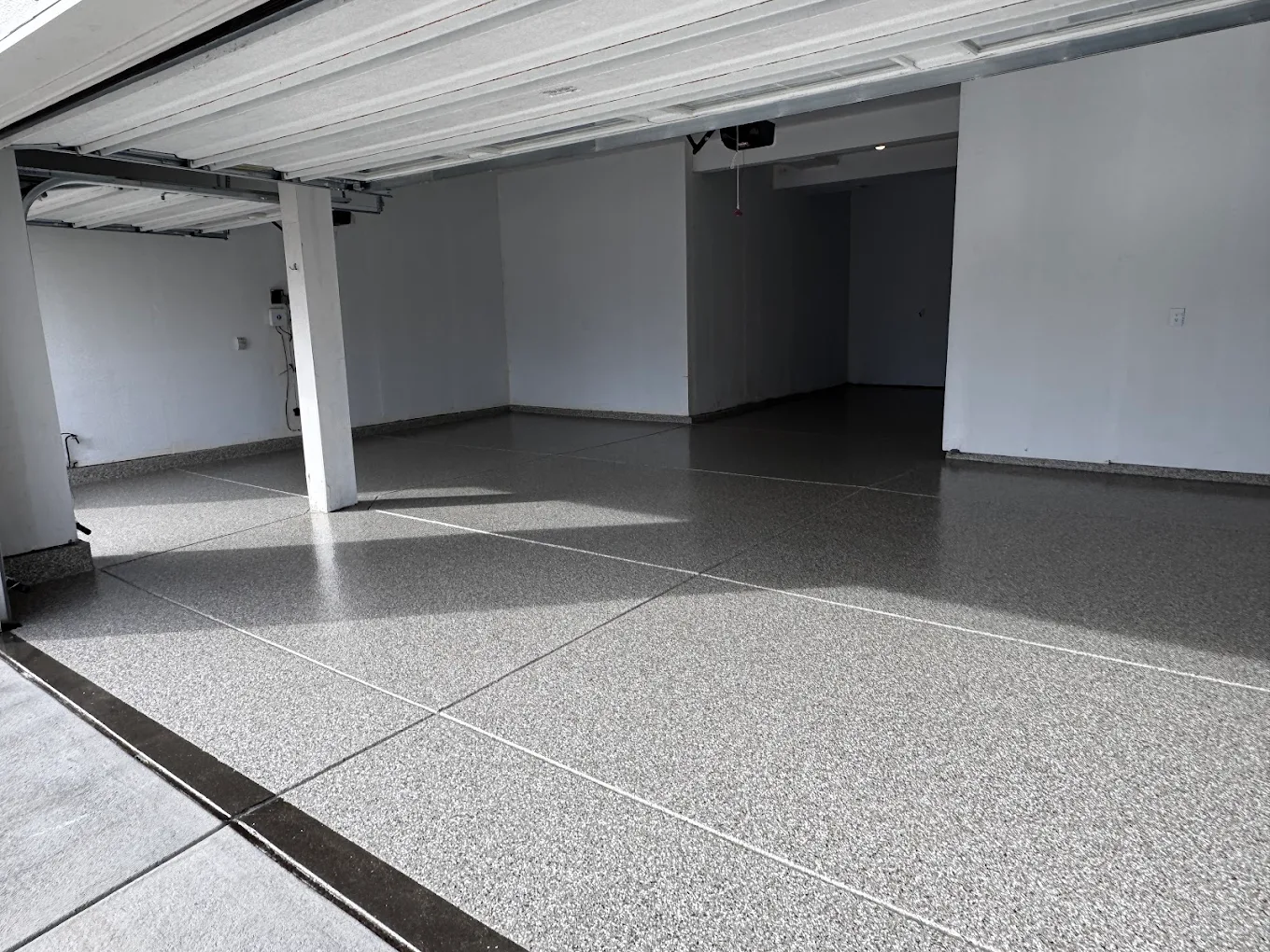
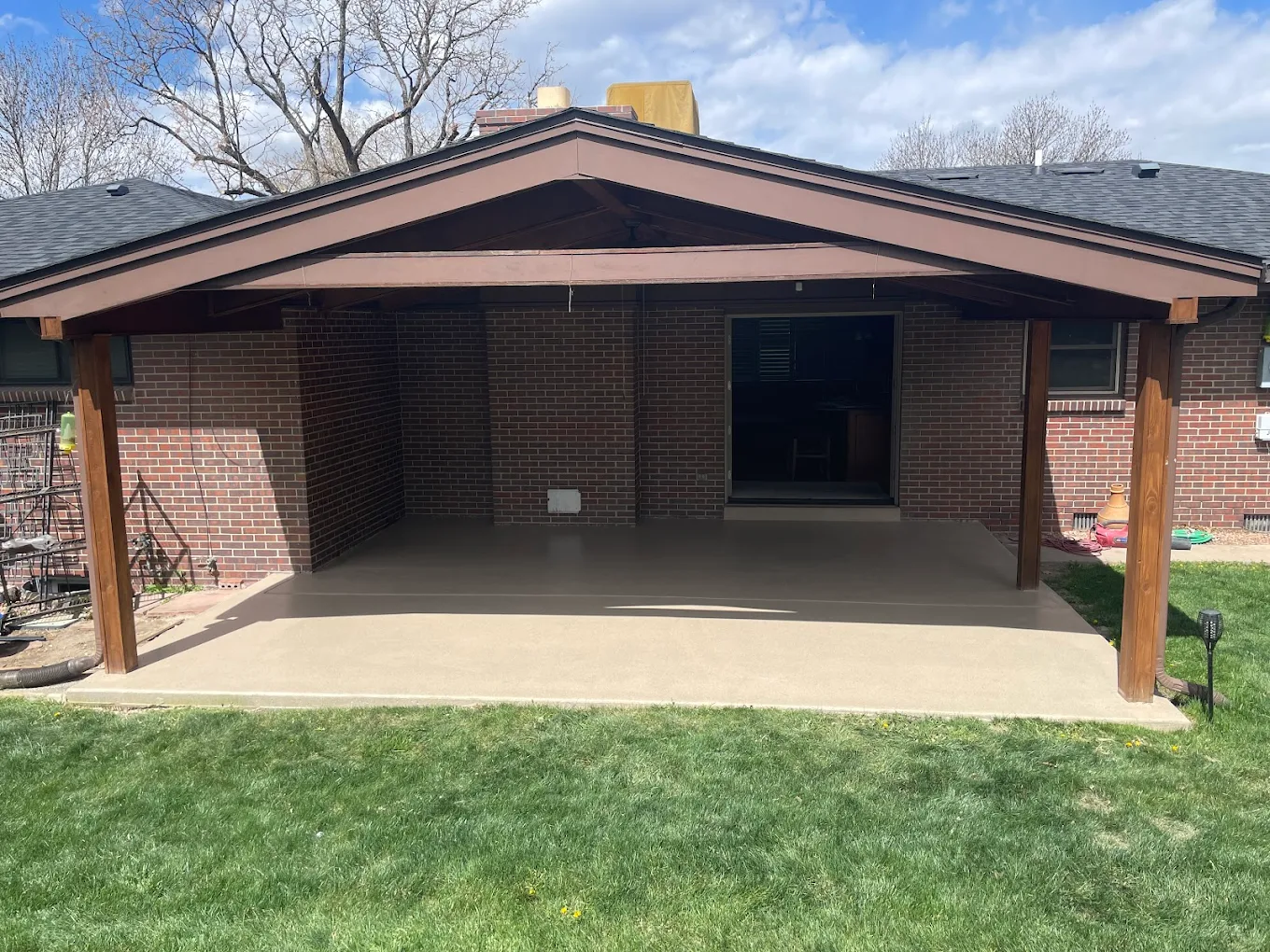
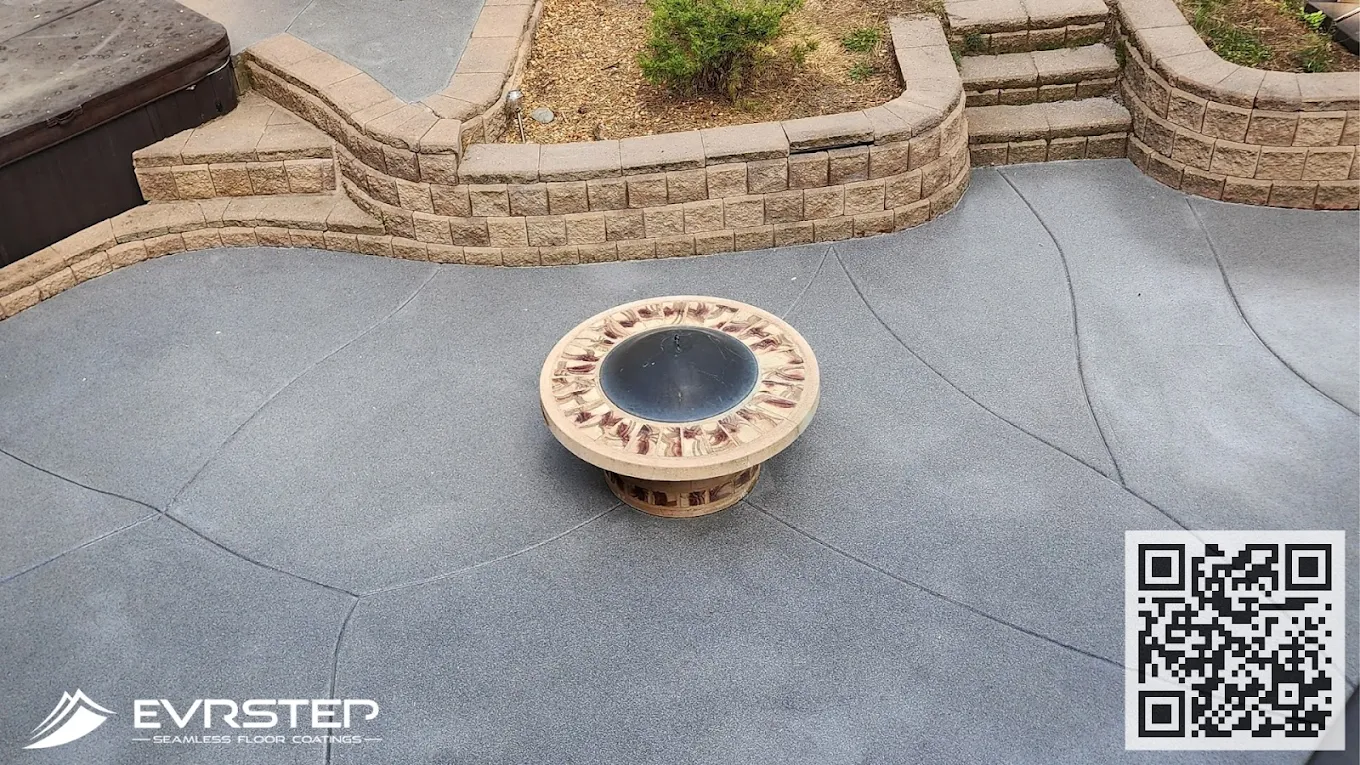
For outdoor spaces in St. Petersburg, FL, tiles are generally the better choice over standard epoxy. The intense Florida sun, heavy rain, and humidity cause standard epoxy to peel and yellow over time. Tiles are more durable and resist fading.
If you prefer epoxy’s sleek look, consider an aliphatic polyurethane or polyaspartic resin instead. Both options have distinct performance traits that affect durability, slip resistance, and maintenance.
- Look: Classic, decorative, and available in many patterns like wood or stone.
- Durability: Tiles do not fade in the sun.
- Maintenance: Tiles clean easily, but grout lines can stain or grow mold in humid climates.
- Slip Risk: Very high when wet, unless you buy textured or non‑slip outdoor‑rated tiles.
- Look: Seamless, modern, and customizable with color flakes.
- Durability: Superior to epoxy. These resins flex with temperature changes and do not yellow in the sun.
- Maintenance: Fully waterproof and seamless. There are no grout lines to scrub.
- Slip Risk: Low, because installers broadcast colored quartz or sand flakes into the wet layer for grip.
- Heat & UV: Both tiles and polyaspartic coatings handle sun well, but dark‑colored tiles can get very hot to walk on barefoot.
- Moisture: Frequent summer rain requires surfaces with a good slip‑resistant texture.
- Surface Check: Identify the current surface material, such as bare concrete, old cracked concrete, or wood.
- Exposure: Determine if the area is covered by a roof or fully open to sun and rain.
- Use: Consider whether the space is used for walking barefoot, like a pool deck.
Epoxy and tile each have strengths, but climate, slip safety, and maintenance drive the decision. Understanding hidden water issues and UV exposure helps you choose the right outdoor surface.
When you stand on a Parker patio on a hot summer day, the choice between a seamless epoxy coating and a tiled surface can feel overwhelming. You might wonder which material will stay beautiful, safe, and low‑maintenance through freeze‑thaw cycles and intense sunlight.
This guide walks you through the most common misconceptions, reveals the hidden water problem that favors epoxy, and shows how UV exposure reshapes the decision. By the end, you’ll have a clear plan for a durable, slip‑resistant outdoor floor that fits your budget and style.
Why Most Outdoor Tile Installations Fail Within Three Years
Tile installations in Parker often look perfect at first, yet many owners see cracks, discoloration, or grout decay within a few seasons. The root cause is usually a combination of inadequate substrate preparation and the region’s freeze‑thaw cycles. When water infiltrates joints and then freezes, it expands, pushing tiles apart and breaking the bond.
Another hidden factor is the mismatch between tile rigidity and the movement of concrete slabs that shift with temperature swings. Even a well‑installed tile can suffer if the underlying slab lacks proper expansion joints. Understanding these dynamics helps you avoid costly replacements.
Common Failure Triggers
- Substrate Prep: Incomplete cleaning or insufficient shot blasting leaves dust that weakens adhesion, leading to premature delamination.
- Moisture Intrusion: Without a proper moisture‑blocking membrane, water seeps through grout, freezes, and forces tiles to lift.
- Expansion Gaps: Missing or undersized control joints cause thermal stress that cracks tiles and grout lines.
- Improper Mortar: Using a non‑polymer‑modified mortar in a high‑temperature environment reduces bond strength and increases cracking risk.
- UV Exposure: Dark‑colored tiles absorb heat, causing thermal expansion that stresses the substrate and accelerates wear.
If you’re planning a new patio, prioritize a concrete slab that meets CSP‑3 profile standards, install a high‑quality moisture barrier, and include appropriately spaced expansion joints. These steps dramatically reduce the odds of early failure and keep your outdoor surface looking fresh for years.
The Hidden Water Problem That Makes Epoxy the Better Outdoor Choice
Water is the silent enemy of many outdoor flooring systems, especially in Parker where summer thunderstorms and winter snow melt create frequent moisture spikes. Epoxy coatings, when applied with a moisture‑tolerant primer, create a monolithic barrier that blocks water penetration, while tiled surfaces rely on grout that can absorb and retain moisture.
This hidden water issue becomes critical when the patio is exposed to de‑icing salts or pool chemicals, which can seep through grout and corrode the substrate. Epoxy’s seamless nature eliminates grout lines, removing the pathway for water to travel underneath the surface.
Epoxy Water‑Management Benefits
- Barrier Formation: A properly cured epoxy film prevents water from reaching the concrete, protecting against freeze‑thaw damage.
- Seal Integrity: No grout means no porous joints that can trap moisture, reducing mold and efflorescence risk.
- Salt Resistance: Epoxy formulations resist chloride ingress, preserving the underlying slab even when de‑icing salts are used nearby.
- Quick Cure: Modern polyaspartic topcoats cure within hours, allowing the surface to be exposed to light rain sooner without compromising performance.
- Moisture Testing: Conducting ASTM F2170 tests before application ensures the substrate’s vapor transmission is within acceptable limits.
When you factor in Parker’s variable weather, the hidden water problem til epoxy a compelling choice. By sealing the slab completely, you eliminate the most common cause of outdoor flooring failure and enjoy a surface that stays dry, safe, and low‑maintenance.
What Happens to Grout Lines When Your Patio Temperature Swings 80 Degrees
Temperature swings of 80 degrees are routine in Parker, where summer highs can reach 95 °F and winter lows dip below 10 °F. Grout, being a cementitious material, expands and contracts with temperature changes, but not at the same rate as the surrounding tile. This differential movement creates stress that can crack grout, leading to water infiltration and mold growth.
In addition, rapid temperature changes caused by direct sunlight on dark tiles can cause the tile surface to heat up quickly, while the grout remains cooler. This thermal gradient further stresses the grout, accelerating deterioration.
Grout Stress Factors
- Thermal Expansion: Tile expands up to 0.001 in per degree, while grout expands less, creating shear forces at the interface.
- Moisture Retention: Cracked grout absorbs water, which freezes and expands, widening the cracks over time.
- UV Degradation: Sunlight breaks down organic additives in grout, reducing its flexibility and increasing brittleness.
- Improper Mixing: Too much water in the grout mix lowers strength, making it more prone to cracking under temperature stress.
- Lack of Sealant: Unsealed grout absorbs contaminants, leading to staining and reduced structural integrity.
To mitigate these issues, consider using a high‑performance, polymer‑modified grout with a sealant, or opt for a seamless epoxy system that removes grout entirely. Either approach helps maintain a stable, water‑tight patio despite Parker’s temperature extremes.
Epoxy vs Tiles: Which Surface Actually Survives Freeze‑Thaw Cycles
Freeze‑thaw cycling is a relentless test for any outdoor flooring, especially in Parker where winter brings frequent temperature fluctuations around the freezing point. Epoxy coatings, when formulated with flexible aliphatic topcoats, accommodate slight substrate movement without cracking. Tiles, however, are rigid and rely on the substrate and grout to absorb the stress.
Research from the National Institute of Standards and Technology shows that epoxy’s monolithic nature provides superior resistance to freeze‑thaw damage compared with tile assemblies that can develop micro‑cracks in grout and eventually delaminate.
Key performance metrics from independent studies highlight the contrast between epoxy and tile under freeze‑thaw conditions.
| Metric | Epoxy Coating | Outdoor Tile |
|---|---|---|
| Freeze‑Thaw Resistance | Excellent – continuous membrane prevents water ingress | Good – low‑absorption porcelain resists water but grout may fail |
| Coefficient of Expansion | Low – flexible topcoat accommodates movement | Higher – rigid tile expands, stressing grout |
| Repair Frequency | Rare – surface can be recoated quickly | Common – grout cracks require resealing or tile replacement |
Performance Comparison
- Water Barrier: Epoxy’s seamless film blocks water, eliminating the freeze‑thaw expansion problem that plagues grout.
- Flexibility: Polyaspartic resins retain some elasticity at low temperatures, reducing the risk of cracking.
- Thermal Conductivity: Tiles conduct heat more quickly, leading to rapid temperature changes that stress joints.
- Maintenance Cycle: Epoxy can be locally repaired with a thin‑film patch, while tile repairs often involve removing and resetting whole sections.
- Longevity: Properly installed epoxy systems can last 15‑20 years in Parker’s climate, whereas tile installations may need grout renewal every 5‑7 years.
If your patio endures frequent freeze‑thaw cycles, epoxy offers a more resilient solution. Its ability to stay watertight and flexible under temperature stress makes it a practical choice for long‑term durability.
The Slip Resistance Reality That Tile Manufacturers Don’t Advertise
Slip resistance is a critical safety factor for outdoor decks, especially around pools or walkways where water is present. Tile manufacturers often highlight aesthetic qualities but may not fully disclose the wet coefficient of friction (COF) for their products. In Parker, where rain and snow are common, a low wet COF can lead to hazardous conditions.
Independent testing, such as the ANSI A326.3 standard, measures wet DCOF values. Tiles that receive a high PEI rating for abrasion may still have a wet DCOF below the recommended 0.55 for residential patios.
Slip‑Safety Insights
- Testing Standards: Wet DCOF measured by the British Pendulum Test provides a reliable slip‑resistance rating for outdoor surfaces.
- Surface Texture: Textured or non‑slip rated tiles achieve higher wet DCOF, but many smooth glazed tiles fall below safety thresholds.
- Aggregate Broadcast: Epoxy systems can embed quartz or sand aggregates, consistently reaching wet DCOF values of 0.60‑0.65.
- Maintenance Impact: Over time, worn tile glaze can become smoother, reducing slip resistance unless resurfaced.
- Regulatory Guidance: ADA recommends a minimum wet DCOF of 0.60 for public walking surfaces, a benchmark many residential tiles miss.
When safety is a priority, consider an epoxy coating with broadcast aggregates or select tiles that have been independently tested for wet slip resistance. This ensures your patio remains secure, even after a sudden rainstorm.
Why Repairing Cracked Outdoor Tiles Costs More Than Starting with Epoxy
Cracked tiles may seem like a simple fix, but the hidden costs quickly add up. In Parker, repairing a cracked tile often requires removing surrounding tiles, re‑applying mortar, and resealing grout, all of which can be labor‑intensive. Additionally, the underlying slab may have shifted, meaning the repair must address structural movement to prevent future cracks.
By contrast, epoxy can be spot‑repaired with a thin‑film patch that bonds directly to the existing coating, eliminating the need to disturb surrounding areas. This difference in repair methodology translates into lower labor costs and less disruption.
Repair Cost Factors
- Labor Hours: Tile removal and replacement typically requires 2‑3 hours per square foot, while epoxy patching takes under an hour.
- Material Waste: Broken tiles generate waste that must be disposed of, whereas epoxy repair uses only a small amount of resin.
- Surface Matching: Matching tile color and texture is challenging, often leading to visible patches, while epoxy blends seamlessly.
- Substrate Damage: Removing tiles can expose the concrete to moisture, increasing the risk of future delamination.
- Long‑Term Maintenance: Repaired grout may need resealing sooner, adding recurring costs compared to a durable epoxy surface.
Choosing epoxy from the start can avoid the hidden expenses of tile repair. Its seamless nature and easy patchability keep maintenance simple and budget‑friendly, especially in a climate like Parker’s where movement and moisture are constant concerns.
How UV Exposure Changes the Epoxy vs Tile Decision Entirely
UV radiation at Parker’s elevation is intense, and it can degrade both epoxy and tile over time. Standard epoxy resin yellowing and becomes brittle when exposed to UV without a protective topcoat. Tile, especially porcelain, is inherently UV‑stable, but dark tiles can become extremely hot, affecting comfort and potentially causing surface cracking.
The key is to select an aliphatic polyurethane or polyaspartic topcoat for epoxy, which blocks UV and maintains color. For tile, choosing light‑colored, low‑absorption porcelain reduces heat buildup while preserving aesthetic appeal.
UV‑Related Considerations
- Topcoat Choice: Aliphatic polyaspartic topcoats provide UV resistance, preventing yellowing and maintaining gloss for up to 10 years.
- Heat Absorption: Light‑colored tiles reflect sunlight, keeping surface temperatures lower than dark tiles that can exceed 120 °F in summer.
- Color Stability: Epoxy pigments can fade without UV inhibitors, while porcelain glazes retain color stability under prolonged sun exposure.
- Installation Timing: Applying epoxy in cooler morning hours reduces premature curing caused by high UV intensity.
- Warranty Impacts: Manufacturers often void warranties if UV‑stable topcoats are not used in high‑sun regions like Parker.
Understanding UV impact helps you pick the right system for long‑term performance. Whether you favor epoxy’s seamless look or tile’s classic feel, protecting the surface from sun damage is essential for lasting beauty and safety.
Choosing the Right Outdoor Surface
We’ve explored how water, freeze‑thaw cycles, slip resistance, repair costs, and UV exposure shape the epoxy vs tiles outdoor debate for Parker homeowners. By focusing on substrate preparation, material flexibility, and proper sealing, you can avoid the common pitfalls that cause premature failure.
If you’re ready to move forward, start by evaluating your patio’s exposure, traffic patterns, and budget. Contact a qualified contractor who understands Parker’s climate and can apply a UV‑stable epoxy system or install high‑performance tile with proper expansion joints.
Author
This article was written by the EvrStep Epoxy Coatings Editorial Team, experienced professionals serving Parker. Our team focuses on educating clients and providing valuable insights to help them make informed decisions.